


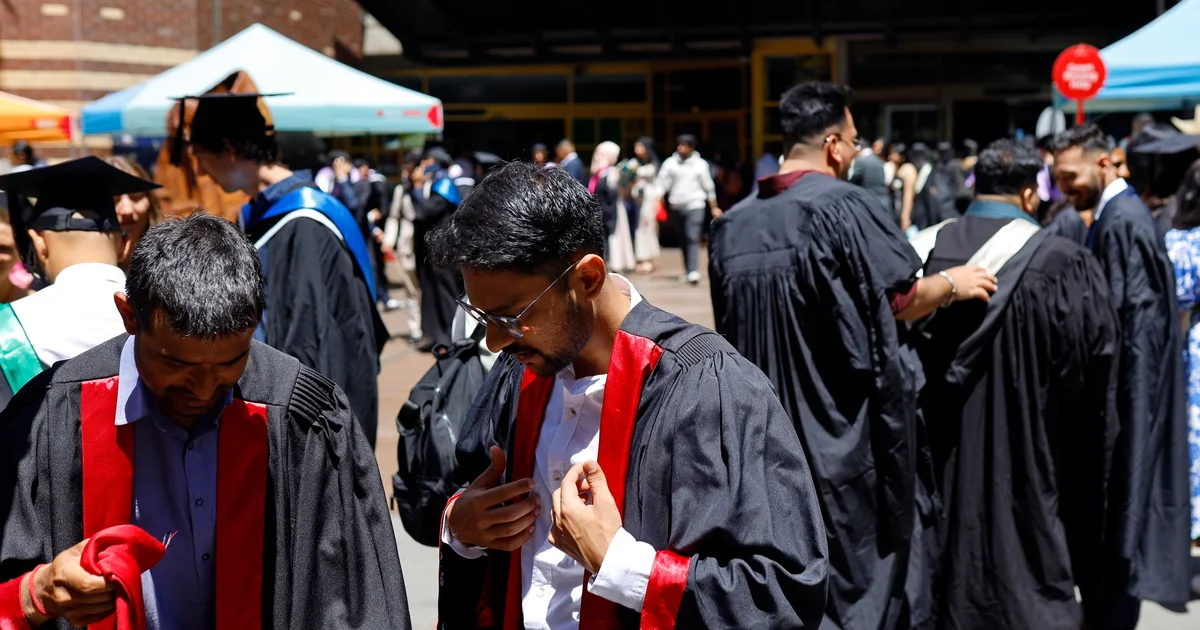
The increase hits every nationality on the pathway. But is particularly significant for India, Australia’s second-largest source of international students (Opens in new window). Indian graduates make-up up by far the largest cohort of (Opens in new window) 485 visa holders. Indian applicants face one of the highest student visa refusal rates, with 40% (Opens in new window) refused in early 2026, making the journey to study and work in Australia increasingly uncertain.
Migration is central to the Australia–India relationship, as mobility (Opens in new window) is strategically important to New Delhi. The Australia–India Economic Cooperation and Trade Agreement (ECTA) grants eligible Indian graduates an additional year of post-study work rights, reflecting both countries’ interest in greater pathways for skilled professionals. Those rights mean little if the barrier to accessing them keeps growing.
It is also strategically short-sighted. Australia’s post-study visa application fees now exceed those in competitor countries such as Canada and the United Kingdom, giving prospective students a clear incentive to look elsewhere. Losing that competition does not just mean forfeiting tuition revenue; it risks pricing Australia out of the global market for international students and eroding a major source of soft power.
This matters at a time when Australia faces persistent skills shortages and has signalled a preference for sourcing skilled migrants from within its existing onshore (Opens in new window) pool. That ambition is difficult to reconcile with policy settings that make it significantly harder for those already here to remain.
The politics are equally telling. A Senate motion (Opens in new window) to disallow the March fee increase failed to secure the support of either Labor or the Coalition, a sign, against a backdrop of rising anti-immigration sentiment and racial tension, of just how little cross-partisan will exists to advocate for a future built on temporary migration. Temporary pathways are Australia’s single largest source of permanent migrants (Opens in new window), and domestic political pressures do not change how these decisions are perceived abroad. For India, sharply increasing the cost of post-study work sends a conflicting message.
This is where soft power stops being an abstract concept. It is not built in joint statements but in the lived experiences of those who pass through a country’s institutions. A graduate who studies, works and contributes to Australia, only to face drastically rising costs at the point of transition, is unlikely to view the country as a reliable partner. Multiply that across thousands of Indian graduates each year, and the implications extend well beyond migration policy.
What’s missing on both sides is a comprehensive, long-term picture of how this diaspora moves through Australia’s migration system, beyond headline statistics on income and trade. Which visa pathways graduates rely on and their journey to residency remain poorly understood and under-researched. Treating the diaspora as a genuine pillar of the relationship starts with measuring that experience.
Modi and Albanese leave Melbourne having reaffirmed the depth of the Australia–India relationship, at least on paper. But partnerships aren’t sustained by what governments sign but by how people experience them. For Australia’s largest diaspora, migration is that experience. Eighteen agreements and outcomes, and none addressing the pathway Indian graduates rely on, is a missed opportunity.











Leave a comment