


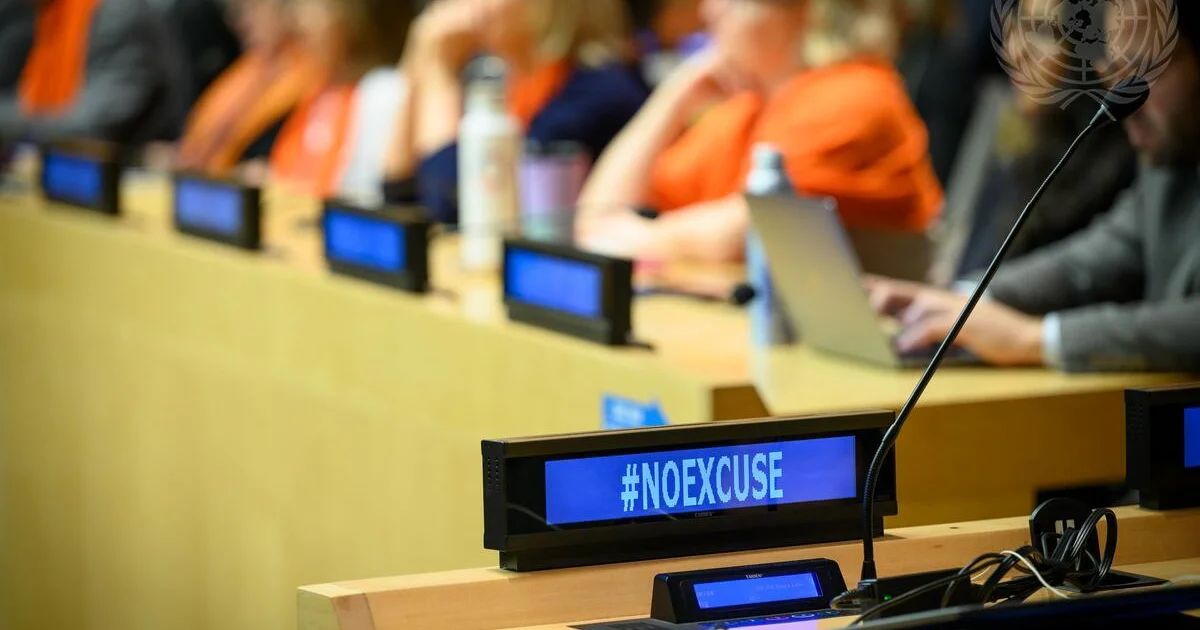
The message from 60 civil society leaders across 18 countries who gathered in Brisbane in August 2025 for a Regional Convening on WPS (Opens in new window) hosted by the Australian WPS Coalition was clear: a move must be made from policy to implementation. The task ahead is to make the WPS agenda integral to the vision for a more secure Australia and region, matched by equivalent ambition in resourcing.
Four priorities stand out.
It starts with funding plans that already exist. National Action Plans are a genuine achievement, but they are underfunded and weakly institutionalised. Without dedicated budgets, strong monitoring and evaluation, and mechanisms to support women’s rights organisations, the agenda risks stagnating.
As a leading regional donor, Australia should step up investment in women’s participation in peacebuilding, conflict resolution and humanitarian response, alongside the prevention of sexual and gender-based violence. Funding must also reach frontline women’s rights organisations as core, flexible, multi-year funding rather than short project grants. These groups deliver results on the ground yet carry a disproportionate burden in crises with the least secure funding.
The climate–gender gap must also be closed. Climate change is not an adjacent concern but a defining peace and security challenge for the region, with extreme weather already intensifying displacement and gender-based violence. Australia’s first Nationally Determined Contribution – the plan to reduce emissions and adapt to climate change – was gender-blind (Opens in new window), while the second, released in September 2025, recognises the unequal gendered impacts of climate change but lacks measurable targets (Opens in new window).
Closing the gap requires scaled-up investment in women-led climate justice initiatives and embedding climate across all four pillars of Australia’s WPS plan – participation, protection, prevention, and relief and recovery. With Australia’s Climate Minister Chris Bowen presiding over COP31 this year, there is an opportunity to ensure gender expertise is at the negotiating table rather than on the margins, and to resource Pacific and Indigenous women’s participation.
A further priority is to invest in Indigenous feminist peacebuilding at home. As part of advancing its First Nations foreign policy, Australia can embed Indigenous feminist perspectives in its WPS framework, recognising over 65,000 years of community-based models of peace, care for Country and truth-telling. This means enabling resource exchange among Indigenous feminist peacebuilders across Australia, Asia and the Pacific, and supporting Indigenous women’s engagement in domestic, regional and global WPS agendas. This framing aligns the agenda with realities First Nations women have long identified.
A priority must also be to make inclusion structural, not symbolic, matching calls across the region to move “beyond tokenism”. Representation quotas for Indigenous, youth, LGBTQIA+, refugee, diaspora women and people with disabilities mean little without resourcing for travel, interpretation, care responsibilities and accessibility. Engagement with LGBTQIA+ organisations is often inconsistent and at times unsafe, and disability inclusion is acknowledged in policy but limited in practice.
Investing in the conditions for genuine participation of diverse women – and in young women’s emerging leadership – is critical to building shared decision-making power and sustaining the agenda over the longer term.
Underlying all four priorities is a call to lift investment in the WPS agenda to at least 5% of current defence spending. This is essential to build a more secure region amid rising militarisation, climate shocks and backsliding on women’s rights. Choices about where money flows are choices about the vision underpinning regional security.
For the Australian government, stepping up looks less like new declarations and pacts and more like paying for the ones already made – including those enshrined in its Second National Action Plan on Women, Peace and Security.









Leave a comment