


Australia needs a government-led national audit to identify where it is most vulnerable to interruption of critical overseas supply. Once the audit is complete, every available policy lever should be used to implement its recommendations and achieve adequate economic resilience.
Research shows Australia would run short of essential imports, including refined fuel, water-treatment chemicals, pharmaceuticals and munitions, within weeks of a major disruption to shipping in our region. There is a plain idea in economics here: when a market cannot deliver an outcome the nation needs, the next best result usually requires the government to act. For supply chains exposed to coercion and single-source dependence, that action should be taken in anticipation of a crisis, not improvised during one.
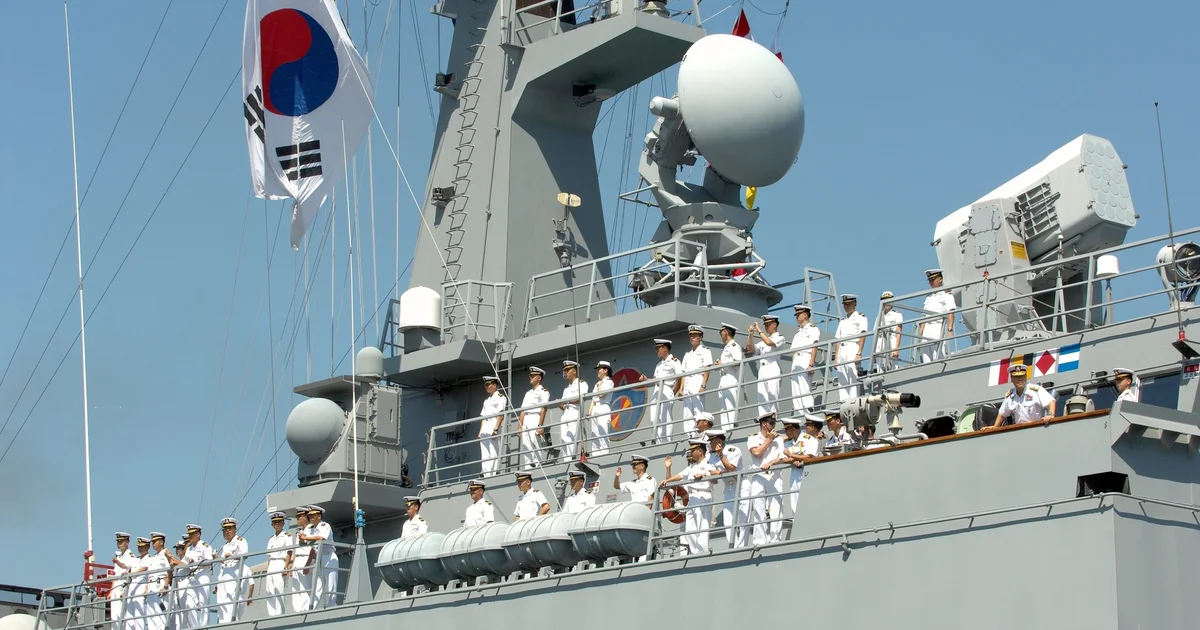
Measures should include setting up strategic sovereign industry zones to drive regional industrial renewal and a dedicated Department of Sovereign Industry to lock in long-term delivery beyond the electoral cycle. South Korea’s experience shows how coordinated state action can build globally competitive industries. After the Korean War, Seoul pursued deliberate, state-guided industrialisation through, for example, targeted investment, export incentives and technology partnerships. It built world-beating shipbuilding, electronics and automotive sectors. Coordination created the conditions for resilience.
A transparent national audit could also draw an apathetic electorate into the project of resilience by giving Australians a shared understanding. Resilience cannot be assumed. It must be measured, mapped and built.
When the Productivity Commission examined Australia’s supply-chain vulnerability in 2021, it found that most of our supply chains were more robust than the pandemic panic had suggested and that genuine vulnerabilities were few. That is reassuring for many everyday goods. It is no comfort at all for the handful of exceptions, strategic inputs that an adversary would target. These goods include fuel, key chemicals, pharmaceutical precursors and defence supplies. A peacetime test of commercial efficiency is not a wartime test of national survival, and the second can fail even when the first passes. That gap is what an audit must close.
Fuel is the clearest case. Australia has long held around 30 days of net-import cover, well under the 90 days expected of an International Energy Agency member. Petrol stocks have sat well short of that. Even with the government’s new fuel reserve, a sustained blockade or freight shock would bite within weeks. The pattern is not confined to fuel: independent wargaming of a regional conflict has found that allied munitions, precision missiles among them, would run critically low within the first week of fighting.
A national audit of Australia’s sovereign industrial resilience could be conducted through a formal inquiry process chaired by a respected captain of industry. It would call for written submissions from industry, unions, peak bodies, defence primes, critical‑infrastructure operators and state governments. Parts of the federal government – including departments such as Defence, Home Affairs, Treasury, Industry, and Foreign Affairs and Trade, and the Commonwealth Scientific and Industrial Research Organisation – would provide analytical support, modelling and risk assessments across critical supply chains. State governments and especially industry associations would be called upon to help, too. The inquiry would deliver a comprehensive evaluation of Australia’s sovereign resilience and develop a practical, staged plan of action to close capability gaps and strengthen national preparedness.
In textbook conditions, competitive markets allocate resources efficiently and governments should mostly stand back. Australia’s strategic industries do not operate in those conditions. They face monopolistic suppliers, the threat of economic coercion, and security constraints that price signals simply do not capture. When one condition for an efficient market breaks and cannot be restored, the next best result doesn’t come from leaving every other setting untouched. Reaching it usually means the government must act elsewhere to compensate.
That is not a licence to subsidise everything. It is a case for targeted action where markets alone can’t close a genuine vulnerability. The discipline of the audit is what keeps the two apart.
The audit should drive a national capability plan built on four reinforcing tools. The first is co-investment: a dedicated fund to share the risk of building domestic production of critical goods and created with public money that pulls private capital behind it through various incentives. The second is tax incentives, including accelerated depreciation, investment allowances and research credits, to make these projects commercially viable. Transparent cost-benefit tests would ensure this tool remains disciplined. The third is the Strategic Sovereign Industry Zones. These hubs in secondary cities such as Newcastle, Townsville, Whyalla, Geelong, Gladstone, Rockingham and Launceston would offer enabling infrastructure, tax holidays and fast-tracked approvals. The fourth is long-term procurement: multi-year defence and agency contracts that give manufacturers the certainty to commit and lower unit costs over time.
Tools alone do not guarantee follow-through. To survive the electoral cycle, Australia should consider creating a dedicated Department of Sovereign Industry, charged with implementing the audit’s recommendations and coordinating delivery across energy, manufacturing and technology. It would work alongside Defence, which keeps the lead on military preparedness, while embedding resilience in the everyday machinery of government.
To make all this work, the consistency and determination of policy must be as resilient as the economy we need to build.










Leave a comment