


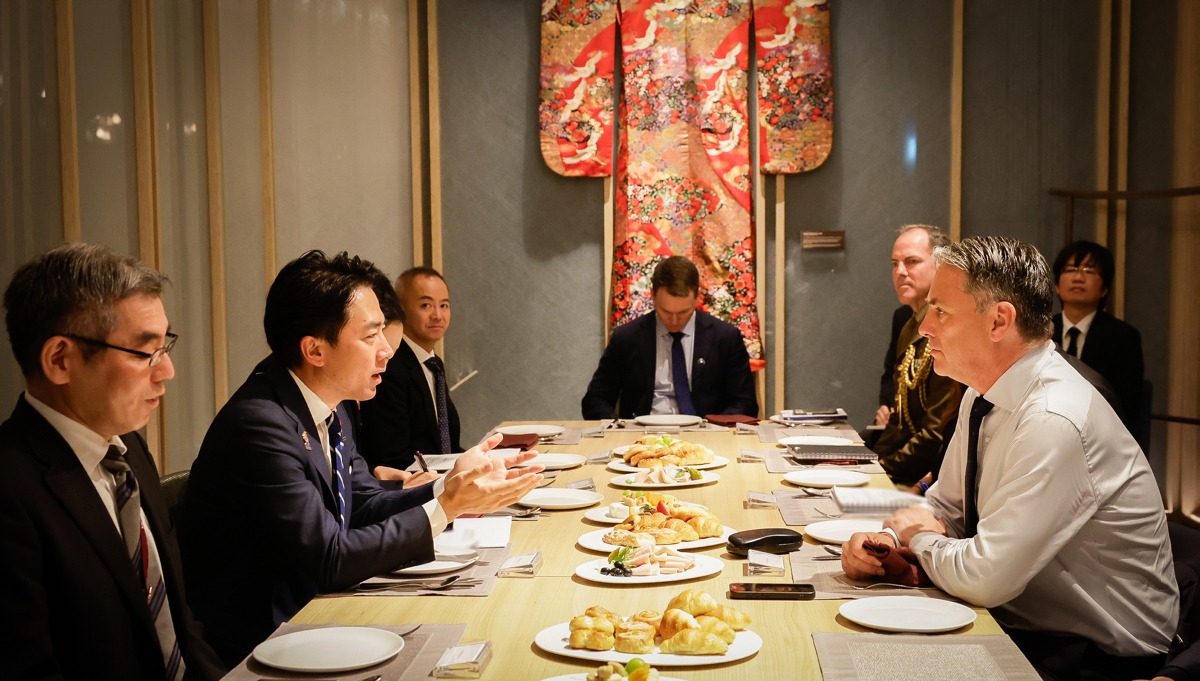
The Australia–Japan quasi-alliance is not a hedge against US unreliability, nor should it be seen in purely bilateral terms. Rather, it is emblematic of a broader pattern I call ‘stewarding’, in which core US allies in Europe and the Indo-Pacific reinforce the United States-led order independently of Washington’s leadership. Despite a growing consensus that most US allies and partners are hedging, Australia, Japan, Poland and Britain are all deepening their bonds with the US, while simultaneously building lateral bridges with one another. They are doing so to sustain the existing order and bolster regional deterrence amidst hegemonic uncertainty.
Allied disquiet with the US predates President Donald Trump. The Obama administration’s pivot to Asia promised much for allies in the Indo-Pacific, only for US boots to remain stuck in the quicksand of the Middle East and Afghanistan. President Joe Biden later pledged to restore US credibility after Trump’s erratic first term, then unilaterally withdrew from Afghanistan without consulting partners – many of whom had sacrificed a great deal in its blood-stained valleys. More broadly, US political polarisation and periodic government shutdowns are hardly reassuring.
Concerns about US reliability are therefore not new, though they have sharpened markedly under Trump. Talk of annexing Greenland and striking grand bargains with Russia and China over Ukraine and Taiwan have not helped. It’s no wonder, then, that many predict the fraying of the US alliance system and a global rise in hedging behaviour.
Yet the US’s core allies are not responding this way. In research published in early July for International Affairs, I find that they are pursuing two complementary strategies: tightening their alignment with Washington and developing lateral coalitions with other US partners. The latter – stewarding – is evident in the recent wave of treaties and defence procurement deals among them, all organised without Washington but true to the order it built. They aim to sustain regional security in the face of revisionist challengers, even as US leadership wavers.
Following years of ministerial dialogues, Japan and Australia signed a reciprocal access agreement in 2022 – the first Tokyo had extended to a partner beyond the US. Both Japan and Australia later reached similar understandings with Britain in 2023 and 2024 respectively. For its part, Britain in May signed a new security treaty with Poland that explicitly named Russia as the overarching threat to Europe – underscoring that neither ally would hedge anytime soon, regardless of any deal over Ukraine. Both states have also struck pacts with France and Germany since Trump returned to the Oval Office. Through such initiatives, these US allies are layering security guarantees onto their existing arrangements with Washington.
Stewarding is also visible in defence-industrial projects and procurement. Australia’s overhaul of its frigate fleet – pairing a derivative of the British Type 26 with the Japanese Upgraded Mogami class – marks a bet on both alliances. The Global Combat Air Programme (GCAP) – Japan’s project with Britain and Italy to develop a sixth-generation fighter – is framed explicitly in terms of maintenance of the international order, as ‘a cornerstone of global security’. Warships and fighters are not run-of-the-mill purchases. They are building blocks to sustain deterrence in the key theatres of the world. That they are willing to pay this cost, even as welfare and healthcare bills strain budgets, underscores that each decision represents a strategic choice.
Stewarding differs from hedging in that the goal is not to generate ambiguity or avoid alignment with the US. Take GCAP, for example, which Australia may yet join. The three founders emphasised the design’s future interoperability with the US at the outset – hardly the vocabulary of a hedger.
Moreover, the core allies are not abandoning Washington, even as they foster closer relationships with other US partners. They are buying vast quantities of US kit – from fighter jets and tanks to missile and artillery systems. These ties run deeper than basic buyer-seller transactions. Australia, for example, has quietly become the region’s workshop for maintaining F-35s and Abrams tanks. Similarly, all four are upgrading their basing infrastructure to host more US troops and equipment. For Canberra, nothing captures this dynamic better than AUKUS. Its Pillar One alone sees the US operating submarines from HMAS Stirling, selling Australia three Virginia-class boats and helping Australian and Britain build their SSN-AUKUS class. Stewarding therefore sits comfortably alongside a longstanding strategy of alignment with the US.
Given the turbulent state of the world, the temptation to write off the US-led order and the alliances that underpin it is understandable. Yet that impulse should be resisted. While many US partners are hedging, the core allies are doing the opposite: working with Washington and increasingly with each other to keep the existing order standing. The blossoming relationship between Canberra and Tokyo captures both a striking continuity in the core allies’ commitment to the principles of that order and a limited but substantive shift in how they reinforce it.







Leave a comment