


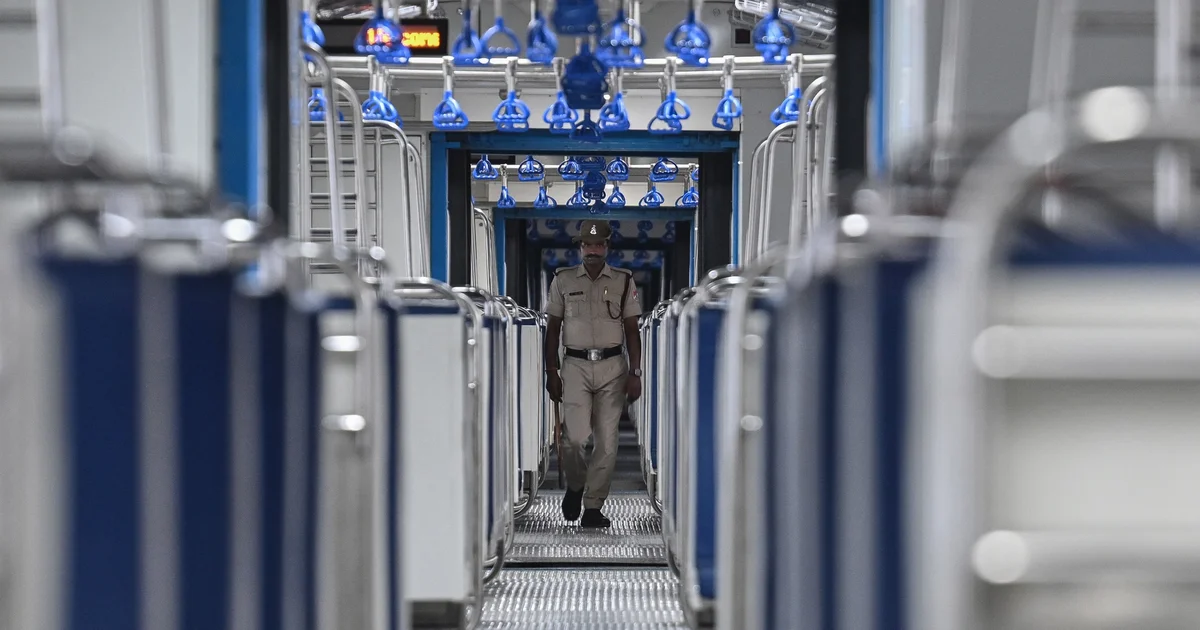
When Prime Minister Narendra Modi visited Australia this month (Opens in new window), India was presented as a critical economic partner, a top-tier security partner and central to a stable Indo-Pacific. The summit package (Opens in new window)after his meeting with Prime Minister Anthony Albanese stretched from defence and maritime security to energy, critical minerals and resilient supply chains.
For 20 years, Western governments have described India as indispensable to the 21st-century order. US President George W. Bush crystallised an emerging rapprochement in 2005 (Opens in new window), breaking with American orthodoxy to remake the relationship. But the West treated the breakthrough as diplomatic realignment, not the beginning of an industrial rebalancing.
The political pivot occurred. The capital pivot did not.
When Bush struck the civil nuclear bargain, China’s stock of inward foreign direct investment was already roughly seven times (Opens in new window) India’s. India’s stock has risen, but China’s absolute lead has expanded from hundreds of billions of dollars to more than US$3 trillion.
For more than three decades – accelerating after China entered the World Trade Organisation in 2001 – Western capital helped compound China’s industrial advantage. Each new factory strengthened logistics, deepened supplier networks and expanded technical capability. The conditions that attracted capital were increasingly the product of capital already invested.
What served Western commercial optimisation has come to align with Chinese strategy. Beijing seeks to reduce its exposure to foreign technology and disruption while preserving China’s centrality to global manufacturing (Opens in new window). The result is asymmetric dependence.
Modi has spent more than a decade trying to convert India’s demographic and geopolitical scale into industrial power, with promising but uneven results. But India cannot become a second centre of industrial gravity through domestic reform alone.
The West is trying to correct a compounded strategic error by relying on incremental corporate decisions. Companies are encouraged to adopt “China plus one”, but they face incentives that favour China. China has the ports, suppliers, components, skills and industrial density that rising industrial powers are still trying to build.
The policy failure is to mistake the accumulation of fragmented corporate decisions for strategic rebalancing. Governments now ask firms to bear the cost of reversing a concentration created by decades of collective investment and reinforced by Western policy.









Leave a comment