


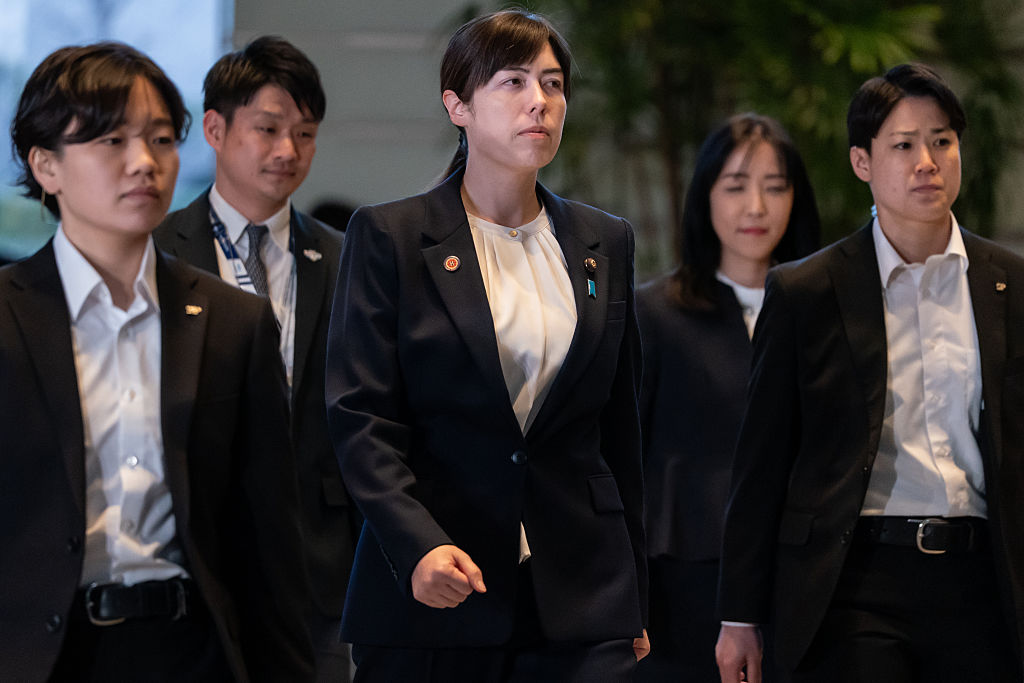
This week’s visit to Australia by Japanese Minister of State for Economic Security Kimi Onoda offers the country an opportunity to ensure its natural abundance of critical minerals can play a key role in Japan’s strategic pursuit of supply-chain resilience and security.
Last month’s G7 leaders’ declaration on securing critical-minerals supply chains may prove to be one of its most significant economic security initiatives. Leaders committed to diversify supply, strengthen allied production, improve market transparency, expand strategic stockpiles and establish the G7 Critical Minerals Resilience and Production Alliance to coordinate these efforts.
They also endorsed the objective of reducing dependence on any single non-G7 supplier to no more than 60 percent of supply by 2030. Collectively, these measures acknowledge that excessive dependence on a single supplier has become a strategic vulnerability in an era of geopolitical competition. For the European members of the G7, the declaration was about China and Russia. For the United States and Japan, it was essentially only about China. Importantly, as a major supplier of critical minerals, and with the same vulnerability, Canberra endorsed the declaration.
Japan deserves credit for shaping that agenda. Ahead of the summit, Prime Minister Sanae Takaichi argued that supply-chain resilience meant moving from reactive crisis management to coordinated stockpiling. It reflects a significant shift towards treating critical-mineral security as a shared strategic responsibility, not simply a commercial issue. Australia – with close to 30 bilateral agreements on critical minerals – is an important part of this democratic shift. And while an equivalent Australian role does not exist, the Japanese economic security minister has primary responsibility for critical-minerals supply-chain resilience.
Recognising the need to diversify is the first step. But how can governments achieve those diversification objectives while preserving the benefits that open markets have delivered for decades? Democratic governments have limited influence over private companies.
The challenge isn’t that firms behave irrationally. Rather, firms optimise for commercial resilience, while governments must also manage systemic strategic resilience.
Diversifying supply chains often requires firms to accept higher costs or greater uncertainty while alternative suppliers mature. Although every firm benefits from a more resilient trading system, the first businesses to diversify frequently bear disproportionate costs while competitors continue to benefit from lower prices available through dominant suppliers. Markets tend to diversify more slowly than may be optimal from a national security perspective, even when businesses fully appreciate commercial supply risks.
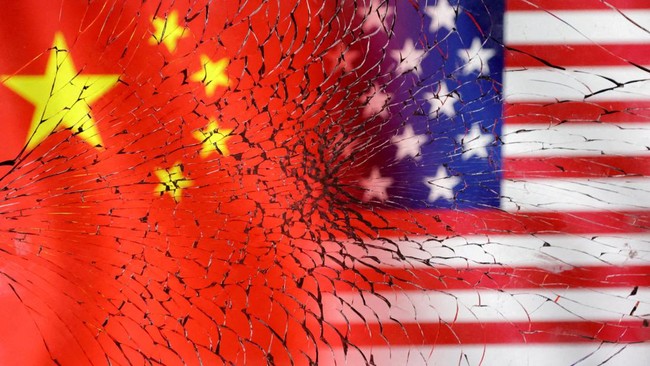
China’s export controls on gallium, germanium, graphite and rare earth elements have demonstrated how concentrated market positions can become instruments of geopolitical leverage. Beijing’s suspension of exports of selected critical minerals to Japan since December 2025 further illustrates that these measures are not simply commercial disputes but can be directed at close allies to exert strategic pressure. Similar vulnerabilities could emerge across pharmaceuticals, advanced semiconductors, battery materials, fertilisers and technologies that have yet to mature. The issue is broader than critical minerals. It is one of strategic concentration.
The G7 and observer nations such as Australia have taken an important first step by establishing common objectives for coordinating investment. The challenge now is to determine when policy intervention is justified. Without such proactive involvement, governments risk responding only after vulnerabilities have already become crises.
A logical next step that Australia and Japan should engage on and take to the G7 is a permanent Strategic Diversification Framework that measures and manages strategic concentration across allied economies. Such a framework should build on existing work undertaken by the International Energy Agency, multilateral development banks and emerging G7 initiatives. Traditional measures such as the Herfindahl-Hirschman concentration index should be extended beyond market concentration to incorporate strategic variables, including geographic concentration, processing capacity, substitutability, switching times, allied production capability and the consequences of supply disruption.
Japan’s proposal for allied nations to coordinate strategic stockpiles should be implemented. Strategic stockpiles remain an essential insurance policy, but they cannot by themselves reduce excessive concentration.
Where these approaches prove insufficient, carefully designed tariff-rate quotas deserve consideration as one policy instrument among many. Properly calibrated, they would preserve trade while creating predictable incentives for businesses gradually to diversify supply chains over time. It’s noteworthy that China is well versed in strategic use of quotas to reduce and avoid dependency on a single supplier, including most recently in relation to the import of Australian beef. China could not justifiably object to reciprocal quota policies.
This is not an argument for protectionism or widespread reshoring. Rather, it’s an argument for diversification so that we become less dependent on China and closer to alternative suppliers from trusted partners or emerging economies capable of developing competitive processing and manufacturing industries. Japan, Canada, India, Indonesia, Chile and partners across Africa and Latin America all have important roles to play in creating a more geographically diverse and resilient trading system.
Implementing such a framework won’t be straightforward. G7 members have different industrial structures, commercial interests and levels of exposure across sectors, and diversification will inevitably impose costs in some industries. But these challenges reinforce rather than weaken the case for coordinated action.
Without common rules, shared metrics and agreed analytical frameworks, governments risk competing against one another for resilience while collectively failing to reduce systemic concentration. Any intervention should remain consistent with international trade obligations, supported by transparent evidence and limited to demonstrable strategic market failures. But reliance on the free market without government intervention will not only make the current unlevel playing field worse; it will ensure China is the only player left on the field.
The G7 has established the political commitment needed to begin addressing the challenge of strategic concentration in critical supply chains. The next step is to build the analytical architecture capable of measuring concentration, coordinating diversification and intervening where markets cannot adequately manage strategic risk. That is not a rejection of comparative advantage or fair trade. It is an effort to preserve both by ensuring that open markets remain resilient in an era when economic interdependence has become a source of geopolitical leverage.













Leave a comment