


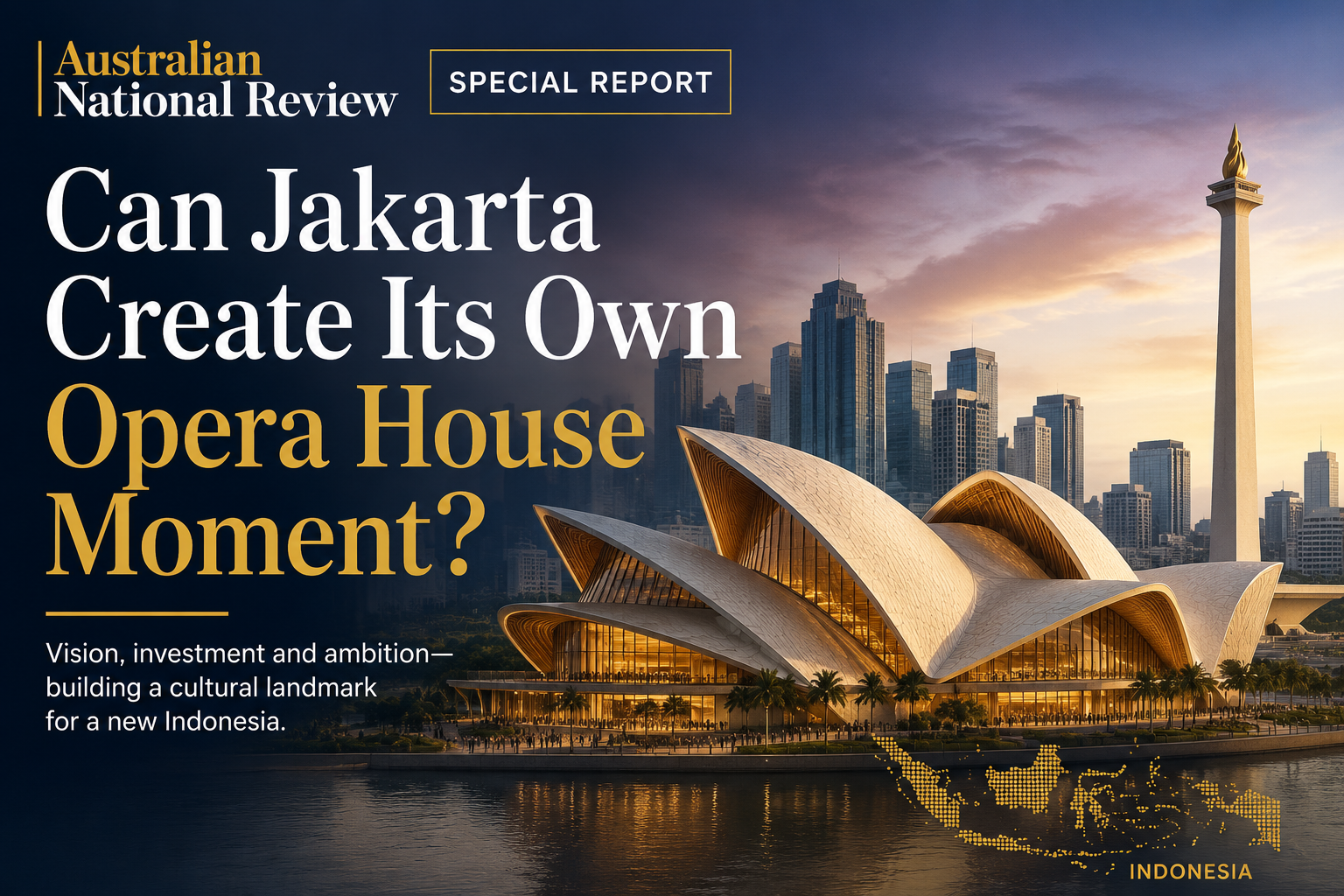
Australian National Review | Special Report
Can Jakarta Create Its Own Opera House Moment?
Why the World’s Largest Megacity Needs an Icon the World Will Never Forget
By Jamie McIntyre
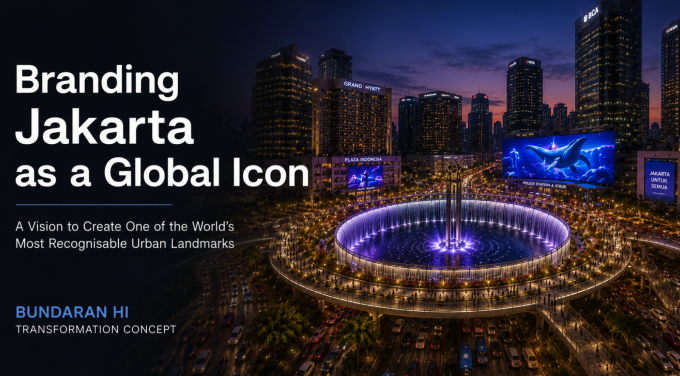
Standing above Jakarta’s famous Bundaran HI roundabout, watching tens of thousands of vehicles flow around one of Asia’s busiest intersections, one question kept coming to mind:
How can one of the world’s largest cities remain virtually invisible in the global imagination?
Depending on the methodology used, the Greater Jakarta metropolitan region is now competing with Tokyo as the world’s largest urban population, with well over 30 million residents. It is the commercial and financial heart of Indonesia, one of the fastest-growing major economies on Earth.
Yet if you ask the average person in Australia, Europe or North America to describe Jakarta, most would struggle.
Not because Jakarta isn’t impressive.
Because Jakarta has never been branded to the world.
The Power of an Icon
Cities don’t become globally recognised by accident.
Sydney understood this.
Before the Sydney Opera House was completed in 1973, Sydney was already a beautiful harbour city. But internationally, it lacked a defining image.
Today, the Opera House is one of the most recognised buildings on Earth.
Millions of tourists visit every year not simply because of the building itself, but because it gave Sydney a visual identity.
Paris has the Eiffel Tower.
New York has the Statue of Liberty and the Empire State Building.
Dubai built the Burj Khalifa and transformed its global image within a generation.
Singapore has Marina Bay Sands.
Rio de Janeiro has Christ the Redeemer.
Even cities with thousands of years of history continue investing in globally recognisable landmarks because they understand that tourism begins with imagination.
People first see a city in their minds before they ever book a flight.
Jakarta’s Opportunity
Indonesia now finds itself in an extraordinary position.
It is the world’s fourth most populous nation.
It is a G20 member.
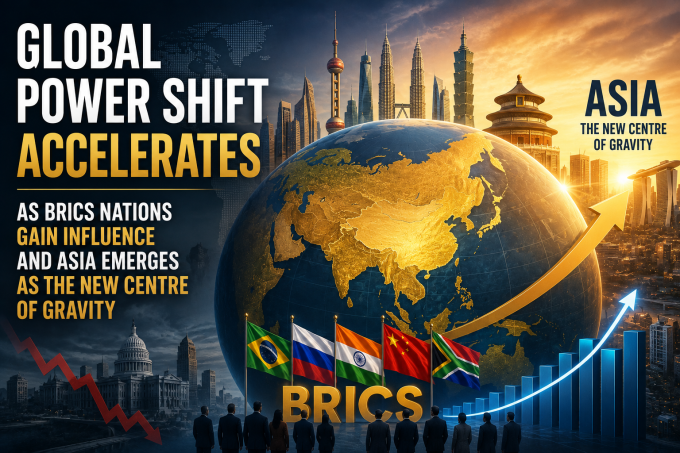
It is now part of BRICS.
Many long-term economic forecasts expect Indonesia to become one of the world’s four largest economies by around 2050.
Yet Jakarta still lacks the single defining visual symbol that instantly tells the world:
“This is Jakarta.”
The National Monument (Monas) is significant historically.
Bundaran HI is perhaps the city’s most photographed location.
Its modern skyline continues to expand every year.
But none has yet achieved the universal recognition enjoyed by Sydney, Paris or Dubai.
That represents one of Indonesia’s greatest untapped tourism opportunities.
Imagine the Possibilities
Imagine if Jakarta commissioned one of the world’s leading architects to design an extraordinary structure unlike anything else on Earth.
Not merely another skyscraper.
Not simply another observation tower.
But something uniquely Indonesian.
A masterpiece combining modern engineering with Indonesian culture, art and history.
Perhaps overlooking Bundaran HI.
Perhaps integrated with Monas.
Perhaps becoming the centrepiece of an entirely new civic precinct that celebrates Indonesia’s identity as the gateway between the Pacific and Indian Oceans.
The goal wouldn’t simply be architecture.
It would be branding.
Tourism Is Marketing
Countries often spend billions promoting tourism overseas.
Yet sometimes a single image can achieve more than decades of advertising.
The Sydney Opera House became Australia’s logo.
The Eiffel Tower became France’s postcard.
The Burj Khalifa became Dubai’s business card.
Jakarta deserves its own signature.
Changing Perceptions
One of Indonesia’s biggest challenges isn’t reality.
It’s perception.
Many people in the West still picture Indonesia through outdated stereotypes.
Those who finally visit Jakarta are often surprised.
They discover a modern financial centre.
Luxury hotels.
World-class shopping.
International restaurants.
Sophisticated infrastructure.
Friendly people.
An energetic entrepreneurial culture.
In many respects, Jakarta has evolved far faster than global perceptions have kept pace.
Creating a globally recognised landmark would help close that perception gap.
More Than Tourism
This isn’t simply about attracting more visitors.
It’s about national confidence.
It’s about investment.
It’s about creating an identity that reflects Indonesia’s growing influence in the world economy.
As Indonesia continues its remarkable rise, its capital should project that confidence to the world.
Cities compete for investment just as companies compete for customers.
Branding matters.
Identity matters.
Recognition matters.
A Vision for the Future
As someone fortunate enough to spend considerable time in Indonesia through property development and investment, I’ve watched this country’s transformation firsthand.
The growth has been remarkable.
The optimism is infectious.
Indonesia’s future looks incredibly bright.
Now may be the perfect moment for Jakarta to think bigger.
To create something future generations will instantly recognise.
Something that every traveller wants to photograph.
Something that becomes synonymous with Indonesia itself.
Sydney had its Opera House.
Dubai had the Burj Khalifa.
Singapore had Marina Bay Sands.
Perhaps the time has come for Jakarta to create the next great global icon.
Not simply for Indonesia.
But for one of the world’s greatest cities that, until now, has remained one of its best-kept secrets.
Jamie McIntyre is the founder of Australian National Review and co-founder of LUX Property Group, a property developer with projects across Bali and Lombok. He has also advocated for major urban development initiatives in Indonesia, including proposals for new master-planned cities and landmark projects designed to strengthen Indonesia’s position as a global tourism and investment destination.









Leave a comment