


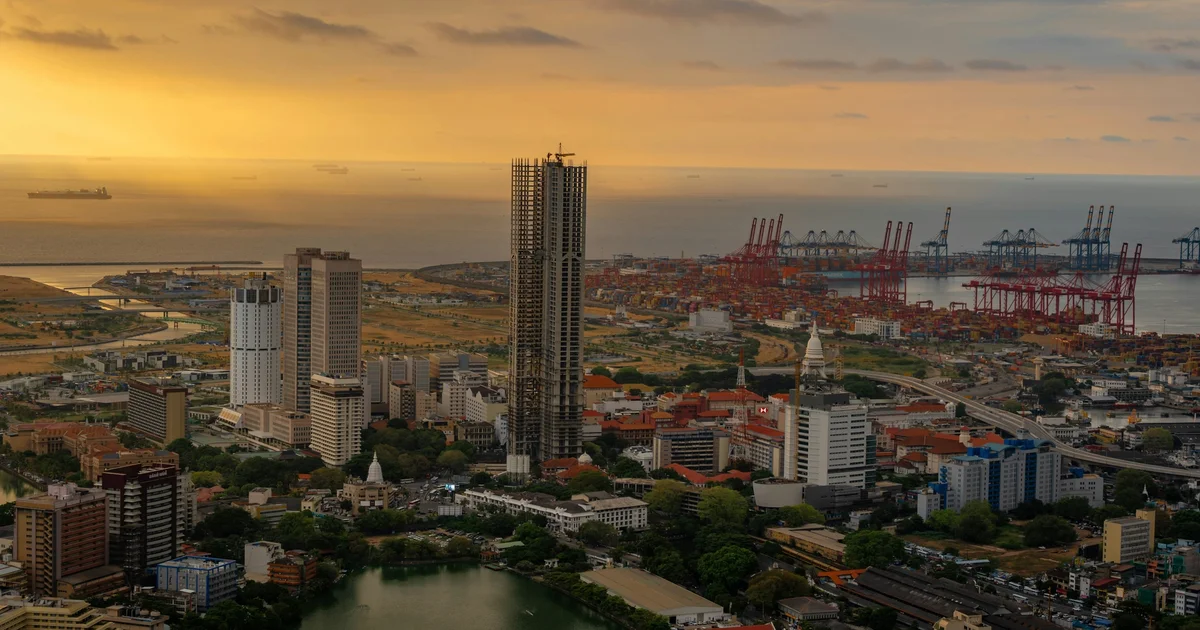
In May 2021, the X-Press Pearl container ship caught fire near Colombo and subsequently sank, triggering one of the country’s worst maritime environmental disasters.
Plastic pellets, chemicals and other pollutants affected coastal communities and fishing livelihoods.
The United Nations Environment Program’s assessment (Opens in new window) set out the scale and complexity of the disaster, including the risk of pollution spreading beyond Sri Lanka’s waters.
Although Sri Lankan and Indian authorities responded to the emergency, the incident demonstrated why maritime countries need strong emergency-response systems, environmental regulators and the technical capacity to manage major shipping accidents.
For Australia, the lesson is straightforward: building modern ports without investing in the institutions responsible for maritime safety leaves serious risks unresolved. Supporting them is a long-term investment in a safer and more resilient Indian Ocean.
Australia’s first priority should be helping Sri Lanka strengthen the institutions responsible for managing its maritime economy. Ports require more than construction. They need transparent contracts, capable regulators, skilled professionals and financially sustainable management.
Australian expertise in maritime safety, port administration, environmental protection and infrastructure governance could strengthen these foundations. There is already a practical model. The Australian Maritime Safety Authority’s regional cooperation programmes (Opens in new window) help neighbouring countries improve maritime safety, search-and-rescue capabilities and responses to marine pollution.
Australia could expand this experience across the Indian Ocean, beginning with Sri Lanka.
Canberra could also use the Quad Ports of the Future Partnership (Opens in new window) to coordinate investment expertise with India, Japan and the United States.
India brings geographical proximity, Japan offers infrastructure know-how, and the United States could help mobilise financing. Australia could coordinate these strengths while supporting transparent investment arrangements and local expertise.
This would demonstrate to Washington that effective regional leadership requires more than countering China’s influence. It requires building partnerships that deliver lasting economic and security benefits.
Without sustained cooperation, smaller maritime countries may continue to face gaps in surveillance, technical expertise and infrastructure governance.
These weaknesses can make it harder to prevent maritime accidents, combat illegal fishing and negotiate sustainable infrastructure agreements.
They can also increase dependence on whichever external partner offers immediate financial or technical assistance.
The concern is not simply which major power gains influence. It is whether smaller countries develop the ability to manage their own maritime futures.
Australia cannot guarantee regional stability. But it can help reduce risks by strengthening the countries whose ports and waters support international trade.
Sri Lanka should not be expected to choose between China and Australia. Maintaining relationships with multiple partners allows smaller countries to pursue investment opportunities while protecting their national interests.
Australia’s contribution should be to expand those choices, not restrict them.
Its existing development partnership with Sri Lanka (Opens in new window) provides a foundation for this approach.
China’s Colombo Port withdrawal may have created the immediate opening, but Australia’s response should outlast this particular project.
A secure Indian Ocean cannot be built by Australia alone. It requires capable maritime partners. Helping smaller countries become stronger is therefore not simply good regional diplomacy; it is an investment in Australia’s own future.










Leave a comment