


Welcome to the latest edition of ASPI’s Fault Lines.
Every fortnight, ASPI’s Defence Strategy Program monitors the actions and developments shaping the regional order and Australia’s security.
This edition covers the period from 16 October to 29 October 2026. Subscribe here to receive every edition of Fault Lines direct to your inbox.
Northeast Asia
Made in Taiwan (with Chinese parts)
Taiwan is putting serious money behind its drone ambitions, but keeping China out of the supply chain is proving to be easier said than done. On 16 October, Taiwan’s cabinet approved T$44.2 billion (A$1.94 billion) for domestic drone production over the next six years. This will support its hedgehog strategy, using numerous, easily hidden and mobile equipment to fend off invasion. The funding approval followed months of budget ping-pong between the cabinet and the opposition-controlled parliament, which finally agreed to a compromise in August to release T$240 billion over six years for drones. Not quite the discretionary money President Lai Ching-te was after, but nothing to scoff at. Given that Taiwan has so far allocated less than a fifth of this money, we can expect more announcements in the near future.
Taiwan wants to be Asia’s democratic drone supply-chain hub, drawing on its advanced manufacturing capabilities to reduce dependence on Chinese components. But there’s a catch: Chinese technology keeps turning up where it shouldn’t.
Taiwanese prosecutors accused local defence contractor Jiin Meng Industry Co this month of breaching the National Security Act by knowingly using prohibited Chinese-made chips and camera lenses in military drones. Two senior executives were arrested for allegedly falsifying certificates of origin. In August, another military drone supplier, Han Jian Technology, was found to have used Chinese parts.
The availability and low cost of Chinese parts might explain the company’s decisions. But a third case is more troubling. A routine cybersecurity audit of the Taiwan’s Ministry of Foreign Affairs in December 2025 identified China-developed source code in IT management software used at its overseas missions. Three Taiwanese companies allegedly collaborated to repackage the software developed by Chinese company Guangzhou Yixin Technology, marketing it as Taiwanese-developed to secure government contracts – presumably quite the costly exercise. All three cases are either in court or under investigation. The lesson for Taiwan is that building a domestic drone industry is only half the battle – securing its supply chain is the other.
News from abroad
- On 15 October, the new Yalu River Bridge linking North Korea to China opened after a 12-year delay. The opening was followed by Kim Jong Un crossing it into Dandong, China, where he met with Wang Huning, one of the Chinese Communist Party’s highest-ranking officials.
- Exercise Keen Sword 27 kicked off in Japan on 19 October. This year’s iteration is the largest to date, bringing together 45,000 Japanese and 11,000 US personnel alongside forces from seven other countries, including Australia. The multi-domain exercise involves more than 40 vessels and 260 aircraft, with opening activities held on Ishigaki, an island near Taiwan at the southern end of Japan’s Ryukyu island chain. During the exercise, a Chinese strike group built around the aircraft carrier Liaoning sailed through the waters of the Ryukyus before continuing on to waters around the Philippines, where it remains as of Wednesday. Chinese and Russian military intelligence aircraft have also reportedly operated near Japan. Japanese fighters scrambled to monitor Russian intelligence-gathering aircraft before and after Keen Sword kicked off.
- President Donald Trump’s halt on US–South Korea military exercises has proved temporary. Two of the seven combined exercises postponed in August, when Trump cut short the annual Ulchi Freedom Shield exercise amid efforts to improve relations with Pyongyang, are back on the calendar. They’re being conducted alongside South Korea’s annual Hoguk exercise, aimed at strengthening combat readiness. Hoguk runs from 19 to 30 October and involves the US. According to South Korea’s Joint Chief of Staff, the remaining five exercises will take place before the end of 2026.
- On 18 October, Taiwan’s coast guard announced that it had driven away 16 Chinese coast guard, research and fishing vessels in what the government in Taipei described as an ‘unusually large’, coordinated ‘maritime harassment’ operation around the main island and Pratas, a disputed island to its south-west. Only days later, a spokesperson for China’s Taiwan Affairs Office said Beijing had ‘indisputable sovereignty’ over the South China Sea islands, including Pratas, and that Taiwan must ‘bear the consequences’ of its coast guard’s use of water cannons against a Chinese fishing boat in a separate incident earlier this month.
Southeast Asia
The missing link
Australia signed a defence cooperation framework with Timor-Leste on 22 October, adding what Defence Minister Richard Marles called the ‘last link in the chain’ of security agreements in its immediate neighbourhood. The agreement follows a series of new or strengthened security arrangements with Indonesia, Papua New Guinea and Pacific island countries.
Signed in Dili by Marles and Timor-Leste Prime Minister Xanana Gusmao, the agreement builds on January’s Parseria Declaration and is accompanied by A$62 million in Australian security assistance over five years. The package includes Australian provision of cybersecurity advisers, incident-response support, assistance with digital forensics and disaster preparedness and three maritime patrol vessels for Timor-Leste’s police. The framework is also expected to enable more Australian exercises in Timor-Leste and more Timor-Leste Defence Force personnel to train in Australia.
The agreement might not sound like much now, but for Timor-Leste and Australia a little could go a long way. Marles said the agreement was part of Australia’s bid to be Timor-Leste’s ‘natural partner of choice’ for security cooperation.

Curious combo
Indonesia has joined Pakistan, Qatar and Turkey in an unlikely new defence-industrial cooperative agreement. Signed on 21 October, the Badr memorandum of understanding brings together a diverse quartet with ambitions for joint weapons production, technology transfers, technical training and military research and development. But the agreement’s full text hasn’t been released, and no specific projects have been announced.
So what’s it about? A key driver is Qatar’s interest in diversifying its defence-industrial partnerships, since the Iran war has exposed vulnerabilities in Gulf security arrangements and raised questions about dependence on traditional defence suppliers. Analysts suggest that the four countries could combine Gulf investment with Turkish technology and Pakistani and Indonesian manufacturing capacity.
And what’s in it for Indonesia? In its coverage of the pact, Indonesian state media reported Jakarta’s interest in inward technology transfers, investment and greater access to global defence supply chains. Indonesia already has substantial defence-industrial ties with Turkey, including the jointly developed Kaplan MT tank and an agreement to buy 48 Turkish Kaan fighters, with plans for Indonesian industrial participation. The Badr agreement also fits Jakarta’s longstanding ‘free and active’ foreign policy of cultivating diverse relationships across regions while pursuing its own interests.
Whether this new grouping offers Indonesia anything it couldn’t already secure through existing bilateral partnerships remains unclear. With no projects, budgets or production timelines announced, the Badr memorandum of understanding is, for now, a statement of industrial ambition rather than a demonstrated partnership.
News from the neighbourhood
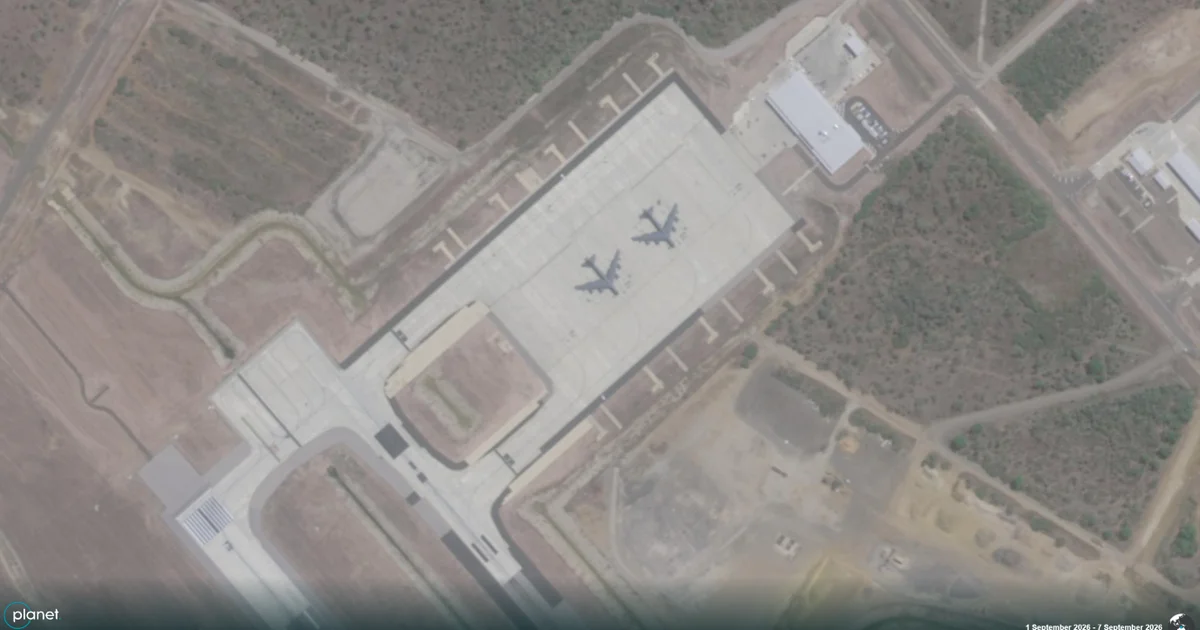
- Australia deployed and fired Himars rocket launchers overseas for the first time during Exercise Keris Woomera, which ran in Indonesia from 12 to 20 October. Two launchers were flown from Darwin to East Java and then North Sulawesi on Royal Australian Air Force C-130J Hercules, testing Australia’s ability to move and employ long-range artillery across the archipelago. The exercise also featured combined live-fire, amphibious and maritime operations involving more than 2,200 Australian and Indonesian personnel, providing further opportunities to develop interoperability between the two forces.
- Vietnam and Malaysia held their first defence policy dialogue in Hanoi on 20 October, building on their comprehensive strategic partnership established in 2024. Discussions covered military cooperation, defence industry and maritime security, deepening ties between the two neighbours despite overlapping claims in the South China Sea.
- Manila summoned Chinese Ambassador Jing Quan on 19 October after remarks he made suggesting China could ‘easily win’ a conflict with the Philippines. The remarks came after repeated confrontations between Philippine and Chinese vessels in the South China Sea this year.
Oceania
A nickel for your troubles
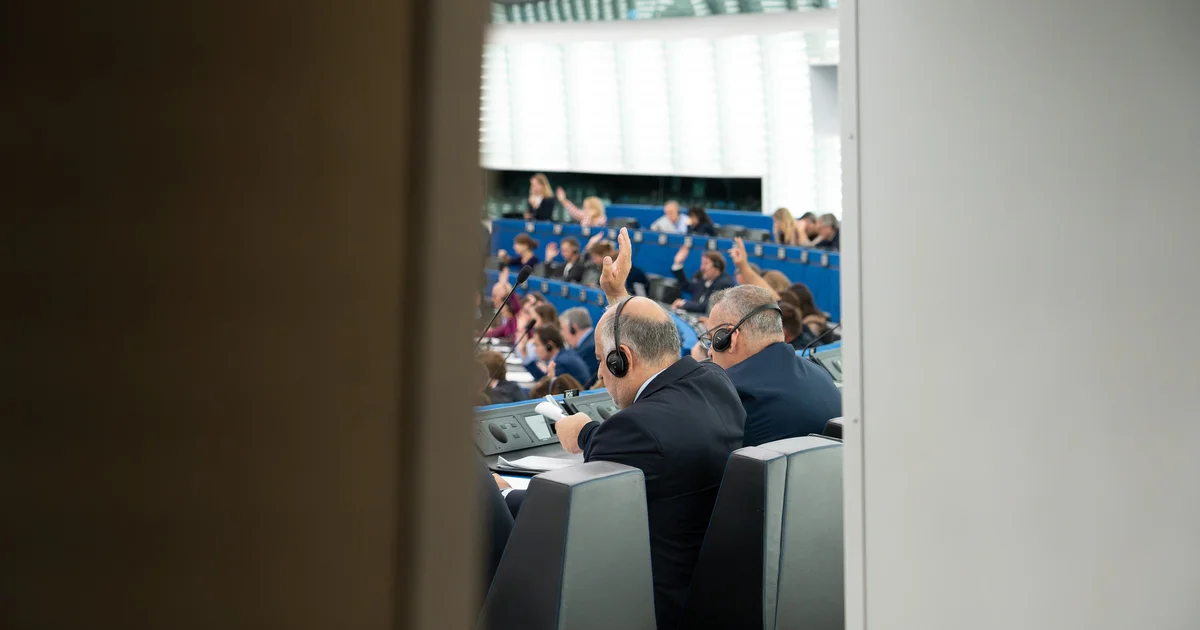
Last week, New Caledonia’s pro-independence opposition boycotted the signing of a memorandum of understanding on critical minerals, including nickel, with the European Union. According to the EU’s executive vice-president for prosperity and industrial strategy (long-hand for the high-ranking bureaucrat sent to Noumea to shore up the deal), Stephane Sejourne, the goal is ‘to make New Caledonia a preferred supplier for European industry while making Europe a partner of choice for investment financing and new industrial opportunities’. New Caledonia’s independence parties said they were not opposed to partnership with the EU but that its nickel strategy should be set on New Caledonia’s terms in tandem with the provinces whose economic livelihoods depend on the industry. Sejourne struck back during a speech to the territory’s congress, saying ‘those empty seats will not help me convince my European colleagues to bring support to projects’.
Nickel is New Caledonia’s bread-and-butter critical mineral: the country is one of the world’s top five sources of the metal. Nickel is a key component in many strategically important products such as stainless steel, rechargeable batteries and jet engine and rocket parts. Even though the percentage the commodity contributes to New Caledonia’s GDP normally sits somewhere in the single digits even in good years, roughly one in five jobs and 94 percent of exports depended on the industry in 2025.
New Caledonia’s nickel industry has found itself in a bit of a pickle in recent years. Indonesia burst onto the scene in 2020, so far capturing more than 60 percent of the global market and driving down the global price of the commodity by 40 percent. This rocked the New Caledonian economy and led to the closure of several nickel mines, devastating communities once dependent on them. This economic downturn was further exacerbated by large scale pro-independence riots in 2024, which saw the economy go into free fall as investors pulled out.

At the same time, EU members are looking to diversify their imports. Nickel is one of the few commodities that the EU still imports in large quantities from Russia – not an ideal situation. If only there were a European external territory looking for new buyers, bureaucrats in Brussels may well have thought to themselves. Sejourne suggested as much, saying that New Caledonia could be a backup source of nickel if supply were to be blocked due to ‘sudden tension or diplomatic conflict’ – something the EU is apparently concerned about. It’s likely for this reason that it doesn’t want to simply replace Russian supply with Indonesian imports, as roughly 75 percent of Indonesia’s refineries are controlled by Chinese firms, according to some estimates. From the EU’s perspective, reinvigorating New Caledonia’s nickel industry could also help allay economic hardship on the island, in turn bringing stability to the territory over which France seeks to maintain sovereignty. This is something that could prove useful given that New Caledonia is the EU’s ‘geostrategic stake in the Pacific’, as Sejourne put it.
The memorandum is only a roadmap for future cooperation, and no investment commitments or supply agreements have been secured. It’s unclear how the EU and New Caledonia plan to circumvent Indonesia’s ongoing dominance. One thing’s for sure: New Caledonia’s challenges run deeper than a simple lack of capital investment.
News from the family
- Vanuatu appears to be sending mixed messages about Chinese police presence in its territory. Internal Affairs Minister Andrew Napuat pushed back on suggestions that Chinese police advisors would be phased out, just days after a Vanuatuan joint statement with Australia said that they would. The apparent contradiction highlights the political sensitivities surrounding the Australia-Vanuatu Nakamal Agreement and the challenge Australia faces in translating its preferred-partner status into influence over Vanuatu’s other security relationships.
- On 16 October, the Pacific Island Forum’s Fisheries Agency wrapped up Operation Kurukuru, a major ocean surveillance exercise. The exercise covered roughly 30.5 million square km of ocean, with support from Australia, France, New Zealand and the United States. While primarily focused on detecting illegal fishing, the exercise also identified potential transnational criminal activities. All in all, the two-week exercise resulted in 149 vessel sightings, 82 at-sea dockside boardings and inspections, 13 identified vessels of interest and one apprehension.
- The Pacific Community of Policing, or Pacpol, was formally launched in Saipan in the Northern Mariana Islands during the 53rd Pacific Islands Chiefs of Police Conference, held from 13 to 16 October. Pacpol’s inaugural chair, Papua New Guinea, said the body would be judged by its collective work to dismantle transnational criminal networks, intercept illicit drugs and firearms and work together as one region. Manning said the ambition for Pacpol was to become the Pacific’s own version of Interpol, connecting police forces across 23 Pacific island states and territories to share intelligence and coordinate efforts against transnational crime. Only a week later, on 21 and 22 October, Pacpol representatives attended the inaugural US–Pacific Islands Conference of Police Ministers in Los Angeles to discuss transnational crime and regional policing cooperation.

This article was originally published in , ASPI’s fortnightly newsletter that monitors the actions and developments shaping the regional order and Australia’s security.









Leave a comment