


Last week’s US midterm election furnished us with yet another example of the redemptive power of democracy. It’s a reminder that democracy’s greatest strength is not that it prevents political mistakes but that it gives citizens a way to challenge them and, sometimes, to change course.
Those who insist on applying false equivalence to the United States and China should consider that nothing like that is possible under the regime of President Xi Jinping.
Last month the Chinese Communist Party’s authoritarian model focused on punishing a French football star for daring to utter the truth about Mao Zedong’s dictatorship more than half a century after his death. Kylian Mbappe’s comment wasn’t a political statement, just a simple response to online references to his dictator-like dominance of games. Yet it received a full-throated CCP-orchestrated backlash.
The incident highlights China’s role in undermining global norms and stability. The CCP has worked assiduously since January 2025 to present China’s authoritarian model as a more responsible international stakeholder than President Donald Trump’s America. Yet all the while it has pushed authoritarianism at home and abroad, and it has so far got away with undermining the international system that has underpinned our prosperity and security since 1945.
Xi Jinping’s expansion of party control and suppression of dissent since becoming Communist Party general secretary in November 2012 have made him China’s most authoritarian leader since Mao, which further explains the enraged response to Mbappe’s comment.
Xi has consolidated power. He removed the two-term limit for the state president in 2018 and added Xi Jinping Thought as guiding ideology in the constitution. In 2022, Xi secured a third term as party leader, breaking the post-Mao practice of orderly leadership succession. He’s now on track to secure a fourth term at next year’s party congress.
This has been complemented by the CCP’s expanded control over public life. Under Xi, the party has rolled back previous civic and economic liberalisation, further restricting civil society, academia, independent activism, religious and ethnic groups, speech and media. It has used an increasingly extensive internet censorship and surveillance system and the party-controlled legal system to punish its critics.
Xi’s tenure has also seen the mass repression in Xinjiang, where the UN human-rights office found large-scale arbitrary detention of Uyghurs, restrictions on religious and other rights, credible allegations of torture or ill-treatment and indications of coercive birth-control and labour practices.
Xi’s China has dismantled Hong Kong’s political opposition by imposing national-security laws that enabled prosecution of pro-democracy figures, disqualifying legislators and changing election rules to restrict who could serve.
A hallmark of Xi’s tenure is a continuing series of high-level purges under the banner of anti-corruption. His campaign has brought down senior political and military officials, political opponents and once-close allies. While fighting corruption is a legitimate government aim, the opaque nature of investigations and the concentration of disciplinary power have also reinforced Xi’s control over the party and state.
And that should give us all pause for thought. Mao’s rule was characterised by mass political upheaval and human catastrophe. He presided over the greatest number of premature deaths of China’s citizens in the modern era. In the 21st century, when China has great weight in the global economy, its return to rule centred on one leader, with no clear succession and few if any independent checks, should alarm everyone.
But it’s not only China’s domestic sphere where this increasingly authoritarian model threatens us. For what the party has perfected at home, it exports abroad. Xi’s China supports regimes resisting democratic ideals, helping spread surveillance technology, capacity and state-centred ideas about digital governance across the globe. And China’s securitisation of everything in pursuit of the party’s interests has infected our own systems, undermining open trade and globalisation and reintroducing geostrategic competition to our post-Cold War bliss. The unspoken truth of Xi’s national rejuvenation project is that it must come at other countries’ expense, whether that be territorially, economically or otherwise.
Most visibly egregious and revelatory is Xi’s no-limits partnership with Vladimir Putin, Russia’s kleptocratic strongman (or former strongman). China’s deep assistance to Russia’s imperialist and genocidal ambitions in Ukraine, and its prolonging of Europe’s largest conflict since 1945, is part of an anti-Western axis that seeks to weaken and reshape the global order more systematically than Trump’s America. Xi’s China is currently the only country with the intent and capability to supplant the post-1945 order, and it is laying the foundations for one that gives preference to its authoritarian interests.
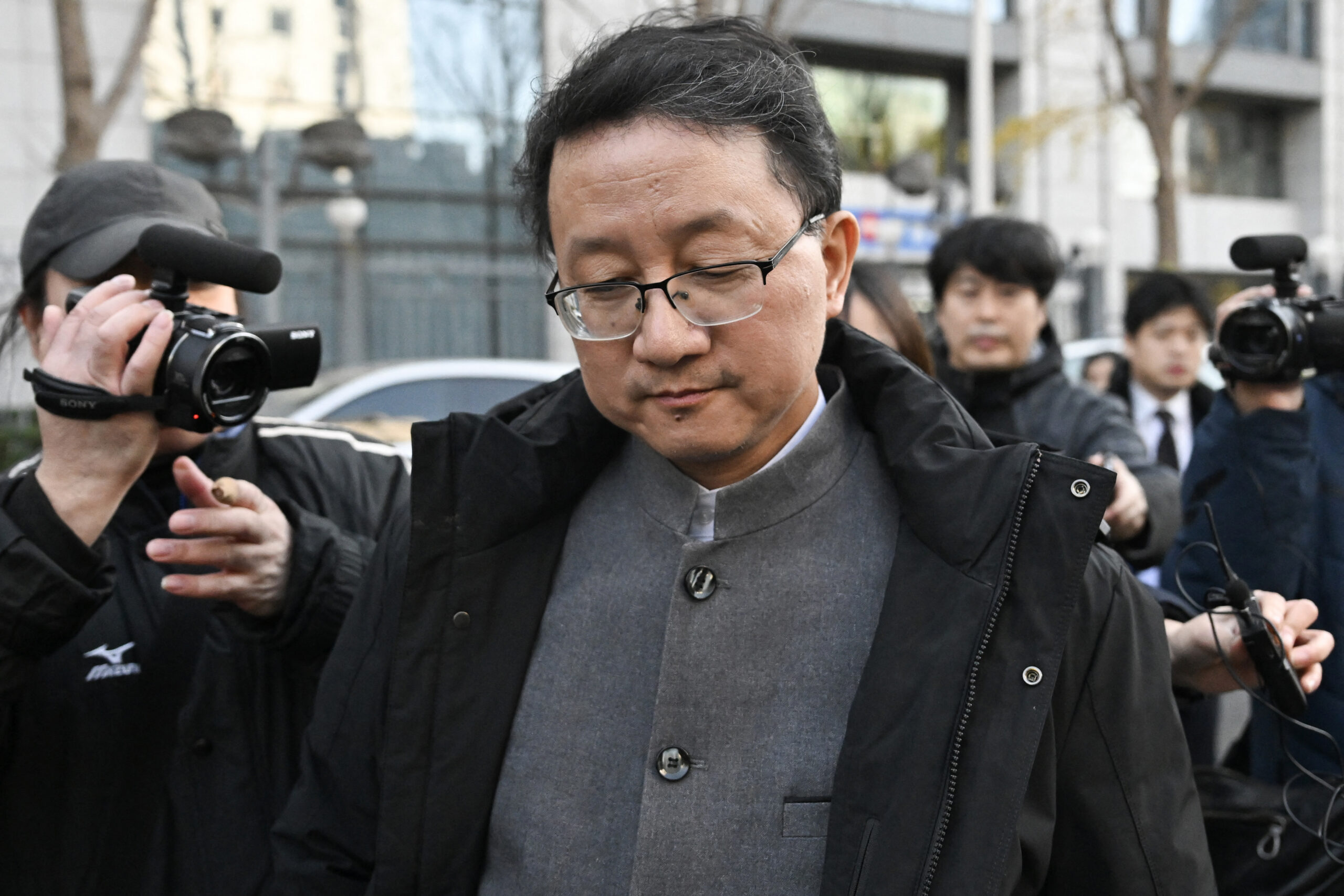
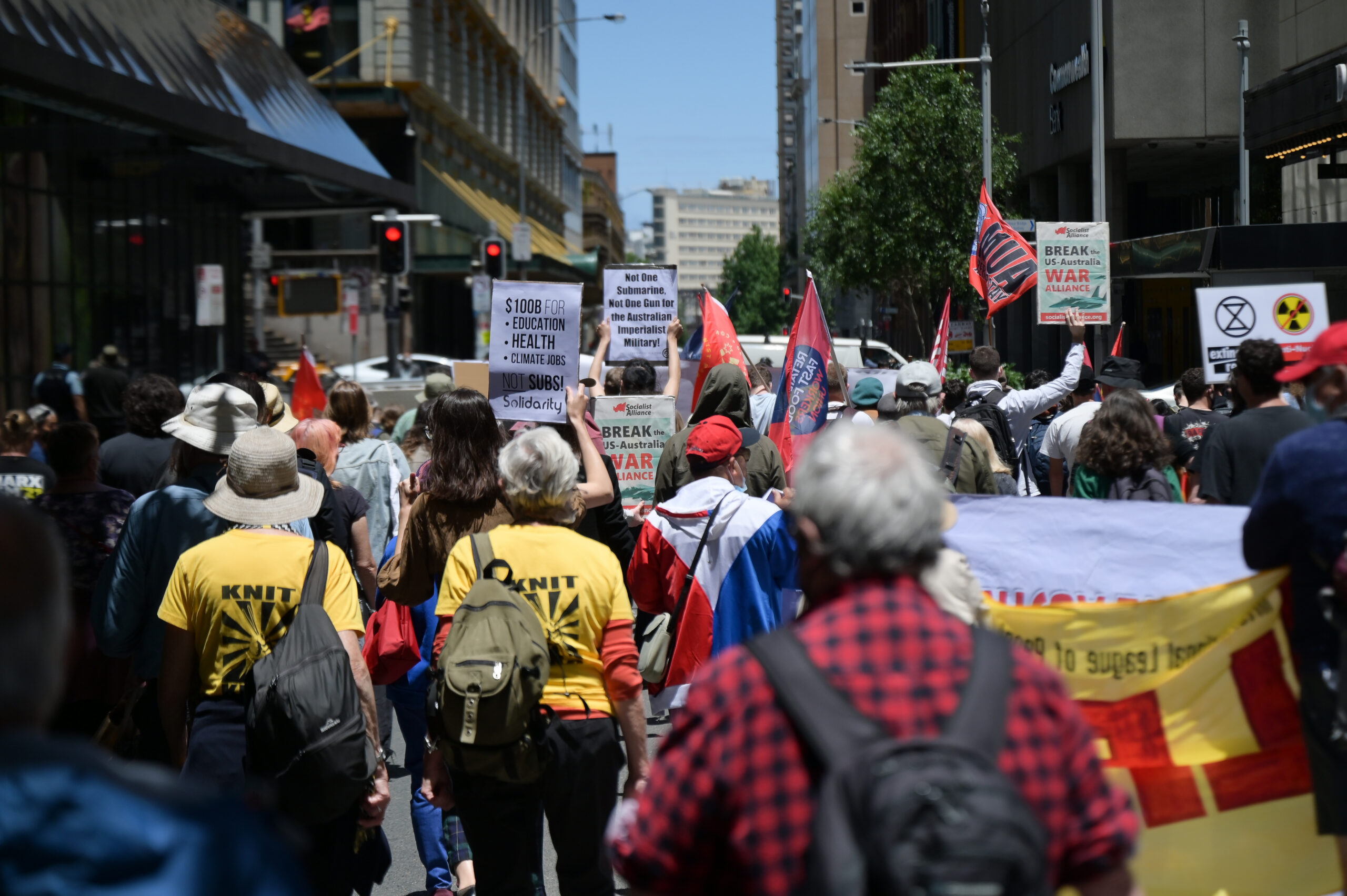
Given all of that, it is remarkable that there are still some in Australia who make a false equivalence between the US and China or who believe Xi’s China presents little threat to us. The recent so-called independent inquiry into AUKUS was more an exercise in anti-American ideology than a substantive debate over military capability and threats to national security. Even sadder is how seldom anyone refers to an Australian citizen, Yang Hengjun, being held arbitrarily and under a suspended death sentence in China. His supposed crime was advocating political reform, for which he received a trial held behind closed doors – underscoring that in Xi’s China, democratic redemption is a sin.
For all the angst about Trump’s America – and there has been plenty to be angsty about – democracy has shown that a government’s worst impulses can be curbed, checked and held accountable. There’s nothing within China that can check Xi’s trajectory. In that sense, if one must compare the two great powers, US democracy, for all its imperfection, offers a far healthier model to which the world should aspire.









Leave a comment