


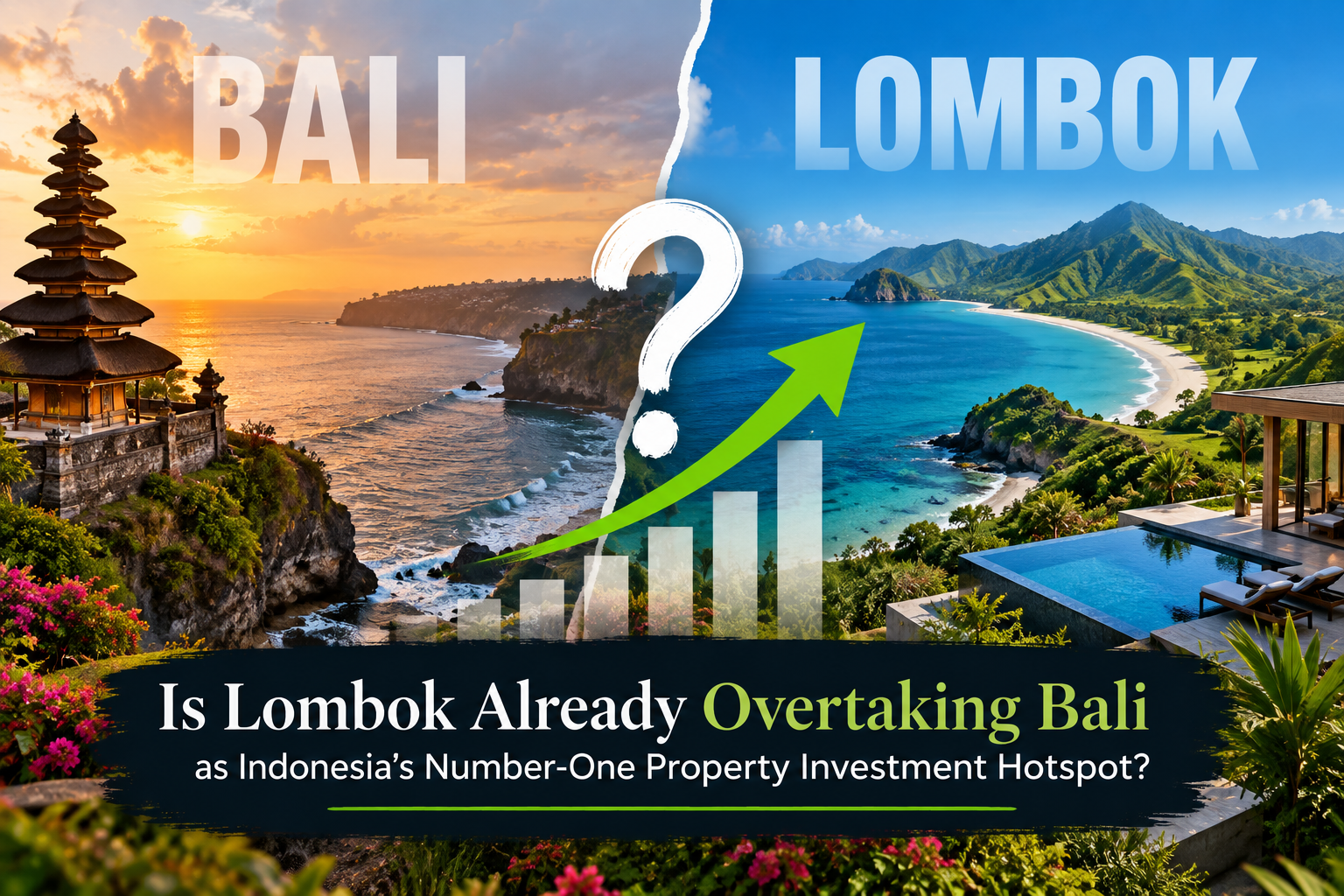
Is Lombok Already Overtaking Bali as Indonesia’s Number-One Property Investment Hotspot?
For years, Bali has been Indonesia’s undisputed property-investment capital. Its combination of tourism, lifestyle, international accessibility and strong rental demand has attracted investors and developers from around the world.
Bali remains an exceptionally strong market, particularly in established areas such as Seminyak, Canggu, Uluwatu and Tabanan. However, after several years of rapid growth, parts of the island are becoming increasingly congested and heavily developed. Land prices have risen sharply, traffic has intensified and a substantial volume of new accommodation is entering the market.
That is prompting investors to ask an important question: is Lombok beginning to overtake Bali as Indonesia’s next major property-investment destination?
Smart Money Is Moving Earlier
Experienced property investors understand that the greatest opportunities are often found before a destination becomes fully developed.
Bali has already experienced enormous growth. Lombok, by comparison, remains at a much earlier stage of its property cycle. It offers many of the same fundamental attractions—spectacular beaches, tropical weather, surf, natural beauty and proximity to Bali—but with considerably more undeveloped land and greater scope for carefully planned communities.
As Bali becomes more crowded, an increasing number of investors, hotel groups and developers are either entering Lombok or actively searching for opportunities there.
The shift does not necessarily mean that Bali is declining. Rather, Bali’s success may be accelerating Lombok’s emergence as an alternative destination for tourists, residents and investors seeking more space, better value and longer-term growth potential.
South Lombok Is Emerging as the New Development Corridor
South Lombok is at the centre of this transformation.
Kuta Lombok has already experienced substantial tourism and construction growth. Villas, boutique hotels, restaurants, beach clubs and hospitality businesses continue to appear throughout the area.
However, suitable land close to Kuta is becoming increasingly limited and expensive. This is encouraging development to expand farther along the southern and southwestern coastline, creating what could become a much broader tourism and property corridor.
The area extending from Kuta toward Sekotong and the proposed Nesara Bay City development is attracting growing attention. If development continues at its current pace, this coastline could eventually become one of Indonesia’s most important resort and investment regions.
Unlike some of Bali’s more congested districts, Lombok still has an opportunity to plan major developments before urban pressure becomes overwhelming. That creates the potential for larger sites, integrated infrastructure, lower-density communities and more environmentally sensitive development.
Nesara Bay City Signals a New Scale of Ambition
One of the most significant examples is the proposed Nesara Bay City project, a large-scale integrated development planned for South Lombok.
The vision is not simply to build another villa estate or resort. Plans include the creation of a new coastal mini-city incorporating residential communities, hotels, retail and dining precincts, recreational facilities, a convention centre and other tourism infrastructure.
At a media briefing on Friday, LUX Property Group said the project was approaching its final approval stages and that it intended to open the development to at least 10 additional Indonesian and international developers.
This multi-developer model could enable different precincts to be constructed simultaneously, substantially accelerating the delivery of the wider city.
LUX said the objective was to bring together experienced developers, investors, hotel operators and specialist partners rather than relying on a single company to build every component of the project.
Proposed facilities reportedly include a convention centre and a sports stadium with capacity for approximately 10,000 spectators. A Rafael Nadal-branded tennis academy or training facility has also been proposed or approved for the surrounding region, adding to South Lombok’s potential as a sports-tourism destination.
If these projects proceed as planned, they could significantly increase employment, infrastructure investment, visitor numbers and demand for property throughout the surrounding area.
Mandalika Is Giving Lombok Global Exposure
The Mandalika development has already demonstrated Lombok’s capacity to attract major international attention.
The annual MotoGP event brings global television coverage and thousands of visitors to the island. It has also helped establish Lombok as more than a quiet alternative to Bali—it is becoming an internationally recognised tourism and events destination in its own right.
There has also been discussion about Indonesia seeking to host a Formula 1 event in the future. While no Lombok Formula 1 race should be regarded as confirmed unless officially announced, even the possibility reflects the scale of ambition surrounding Mandalika and the wider region.
Major sporting events can act as powerful catalysts for infrastructure, hotels, hospitality businesses and residential development. They also introduce destinations to global audiences that may previously have known little about them.
Why Lombok Is Attracting Property Investors
Several factors are driving interest in Lombok:
-
Land and property can still offer better comparative value than equivalent locations in Bali.
-
The island has substantial room for future tourism and infrastructure development.
-
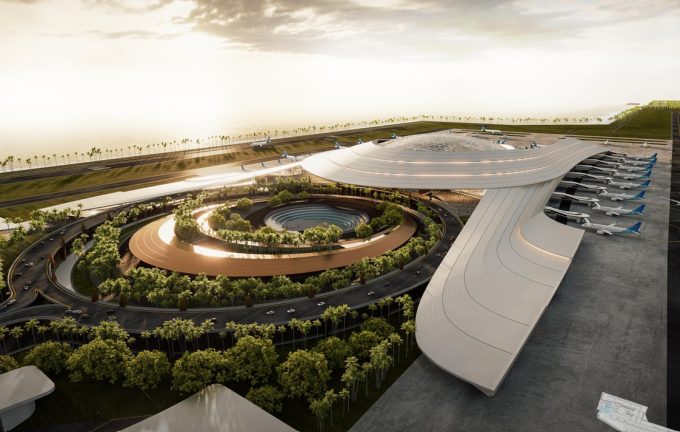
Lombok International Airport provides direct access to South Lombok.
-
Mandalika is attracting government investment and international exposure.
-
The island offers beaches, surfing and natural attractions without the same level of congestion found in parts of Bali.
-
Large projects such as Nesara Bay City Home could establish entirely new tourism and commercial centres.
-
Early investors may benefit from long-term land and property appreciation as infrastructure improves.
For investors, the attraction is not merely today’s rental return. It is the opportunity to enter a developing market before it reaches the maturity—and pricing—already seen in Bali’s most popular districts.
The Opportunity Must Be Balanced Against the Risks
Lombok’s potential is significant, but investors must still conduct careful due diligence.
Major projects can be affected by permitting, zoning, infrastructure, construction and delivery risks. Investors should independently verify land titles, development approvals, contractual protections, access arrangements, project funding and realistic construction schedules.
Potential buyers should also distinguish between formally approved infrastructure and proposals that remain subject to government or commercial decisions.
Lombok may offer greater upside because it is less developed, but that same characteristic can create greater execution risk. The strongest opportunities are likely to be projects with secure land control, credible planning, appropriate approvals and the financial capacity to complete construction.
Is Lombok Already Number One?
Bali remains Indonesia’s most established tourism and property market. It has the international brand, visitor numbers, hospitality ecosystem and proven rental history that Lombok is still developing.
However, Lombok may now be the more compelling frontier market.
Bali offers maturity and established demand. Lombok offers space, comparative value and the possibility of stronger long-term growth from a lower base.
For investors seeking completed properties and established rental markets, Bali may remain the preferred option. For investors and developers seeking larger opportunities, earlier entry points and exposure to a rapidly emerging destination, South Lombok is becoming increasingly difficult to ignore.
Lombok may not yet have overtaken Bali by visitor numbers or total property activity—but when it comes to where forward-looking investors and developers are positioning themselves for the next decade, the transition may already be underway.










Leave a comment