


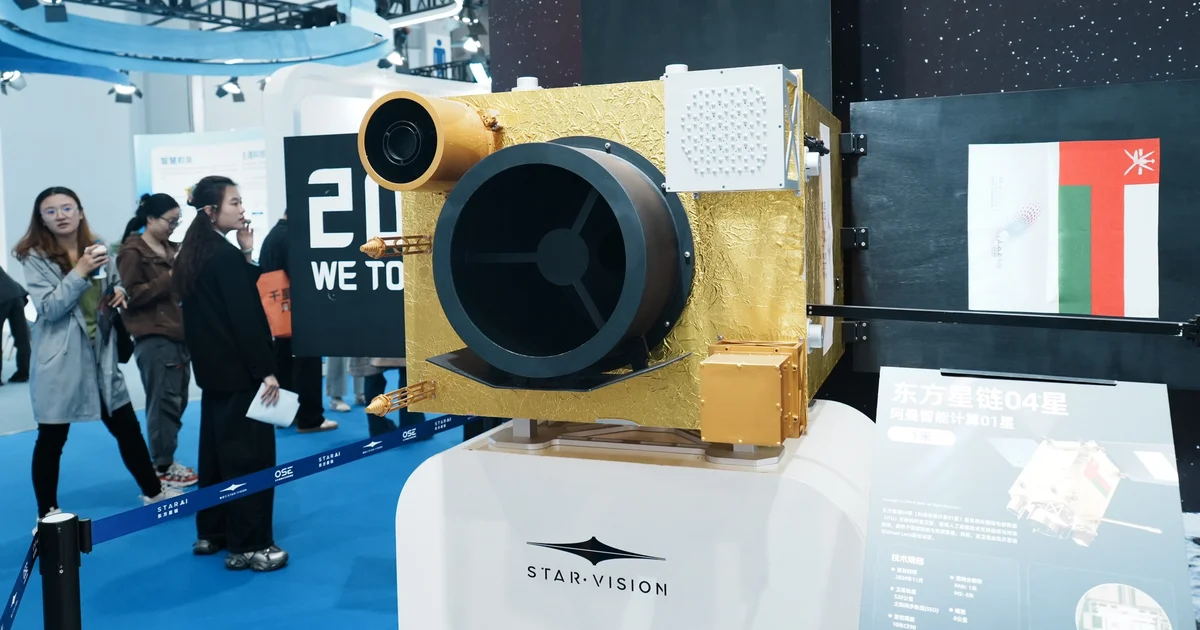
There is also evidence of participation beyond ownership, although it comes from the company itself. In a 4 November interview (Opens in new window) with Omani broadcaster Al Wisal, Oman Lens sales director Azzan Al Maamari said Omani personnel had participated in OL-1’s design and also in the design and manufacture of its next two satellites. He said the operations centre was entirely Omani-run. These claims are not independently verified, but they identify responsibilities against which future progress can be judged.
For emerging space economies across the Indo–Pacific, the attraction is clear. Developing every component domestically would be expensive and could postpone useful services for years. International cooperation allows countries to acquire services while developing their own expertise. The policy choice is which responsibilities to retain, which to acquire gradually and which to continue buying abroad. A government need never build its own satellite to benefit from stronger domestic expertise. It still needs people who can compare bids, question technical advice and decide when a different supplier offers a better solution. The test of capability is therefore partly commercial: does each mission make the country a more informed customer, with greater freedom to negotiate the next deal?
That progression is not automatic. Operating a satellite does not necessarily confer the ability to modify its software, diagnose unfamiliar failures or design a replacement. A local facility can provide valuable employment while leaving crucial decisions with an overseas supplier. Scholarships can produce highly qualified graduates without providing the projects, positions and technical access needed to use their skills at home.
Governments can make that progression explicit in their purchase decisions. Successive missions could assign domestic teams greater responsibility for integration, testing, fault diagnosis and design changes. Contracts could specify access to engineering documentation and software, alongside opportunities for local suppliers. Training totals would then sit beside evidence of what graduates can actually do and which decisions they are authorised to make.
These are commercial and institutional questions as much as technical ones. Facilities require sustained operating budgets, experienced staff and a pipeline of projects. Graduates need careers that reward specialised knowledge. Local companies need opportunities to supply equipment or services. A satellite program can help create that demand, but its industrial benefits depend on how purchasing, training and research are connected.
Omani accounts describe expansion (Opens in new window) beyond the first satellite phase as conditional on its results. That creates an opportunity to assess learning alongside technical performance and customer demand. The public announcements do not specify whether that assessment will include domestic learning. But the principle travels: governments commissioning successive spacecraft can use each purchase to secure greater domestic responsibility. Staging hardware purchases does not, by itself, stage capability development.
The senior partner’s role should be assessed on the same basis. STAR.VISION offers a route into spacecraft development and associated infrastructure. Whether that route increases Oman’s choices will depend on the partnership’s terms and implementation. Cooperation can build autonomy without eliminating international dependence; the useful distinction is between dependence that leaves room to learn and dependence that prevents it.
Funding, intellectual-property access and the division of engineering authority remain unclear. Oman’s announcement therefore presents a policy ambition whose implementation deserves scrutiny. For governments across the Indo-Pacific, the useful measure is what changes between one purchase and the next: can domestic teams specify more, solve more and choose among more partners? A satellite eventually needs replacing. The expertise acquired in building and operating it should make the next decision less dependent on its supplier.












Leave a comment