


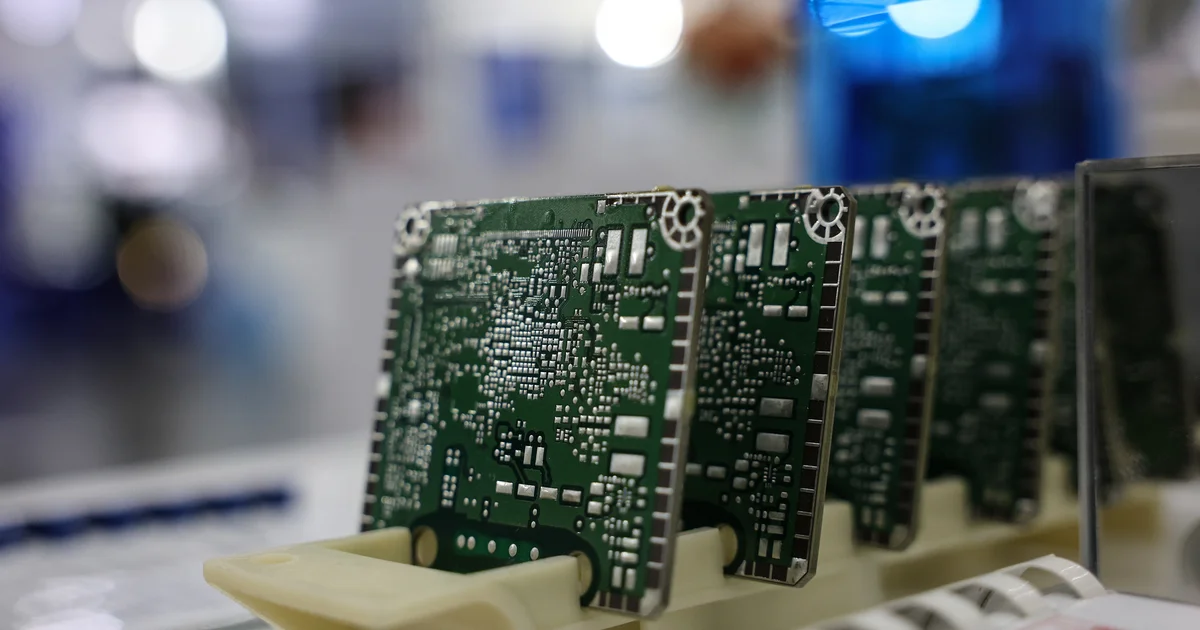
The Siam Silica strategy therefore looks to have strong foundations. Prioritising human capital development (training a skilled workforce), specific and achievable capacity expansions, and promoting regional integration are sound policy objectives. New Lowy Institute research (Opens in new window) recommended prioritising regional cooperation and collaboration to drive stronger integration and avoid policy duplication as some of the most effective interventions if Southeast Asia governments are looking to expand semiconductor activities in the region.
One major barrier to success, outside the scope of the current policy, will be Thailand’s weak economic security alignment with the US.
For years, US economic security objectives have sought to exclude China from benefiting from advanced semiconductor innovation and technology originating in the US. Epitomised by the export controls (Opens in new window) under the “small yard, high fence” policy, Washington has set various red lines about Chinese access to semiconductors based on US intellectual property. However flawed (Opens in new window) this policy may be, without a shift in US priorities in the near term – which seems unlikely (Opens in new window) – Southeast Asia needs to position itself within the US economic security umbrella.
Southeast Asia, including Thailand (Opens in new window), has been a consistent source of leakage for US export controls. The lack of institutional capability to enforce sophisticated, US-aligned export controls meant the region is a porous border, which has enabled illegal smuggling of advanced semiconductors to China. This is no longer sustainable.
Malaysia’s government has recognised this and made serious efforts (Opens in new window) to better align with Washington’s interests. Thailand has not. If Thailand is serious about developing stronger capabilities across the semiconductor supply chain, it will need to follow Malaysia’s example.
The US semiconductor export controls have involved forcing allies in Europe and East Asia into alignment. Collectively, the US and its allies represent over 90% of total foreign direct investment into Southeast Asia’s semiconductor supply chain since 2003. For Thailand, it is more than three-quarters. Despite the plummeting opinion (Opens in new window) of the US as a trusted partner in the region, for semiconductors it will remain indispensable.
At the same time, China is transforming its indigenous semiconductor industry into an increasing source of competition for Southeast Asia. As ASEAN’s trade balance in semiconductors with China reverses (Opens in new window) and China remains an insignificant investment partner, this gives the region little option but to align with the US and its allies.
The trade deals Southeast Asian governments signed (Opens in new window) with the Trump administration in 2025 were the first explicit attempts to pull Southeast Asia into Washington’s economic security orbit. While critical minerals were a focus, semiconductor supply chains are the more substantial growth opportunity (Opens in new window) for Southeast Asia, and the US is arguably a more salient partner for such an economically consequential industry. While the region is resistant to choosing sides in the broader economic contest between China and the US, it has little choice when it comes to semiconductor supply chains.
Thailand needs to internalise that reality if it is to become an essential node in the region’s semiconductor future.














Leave a comment