


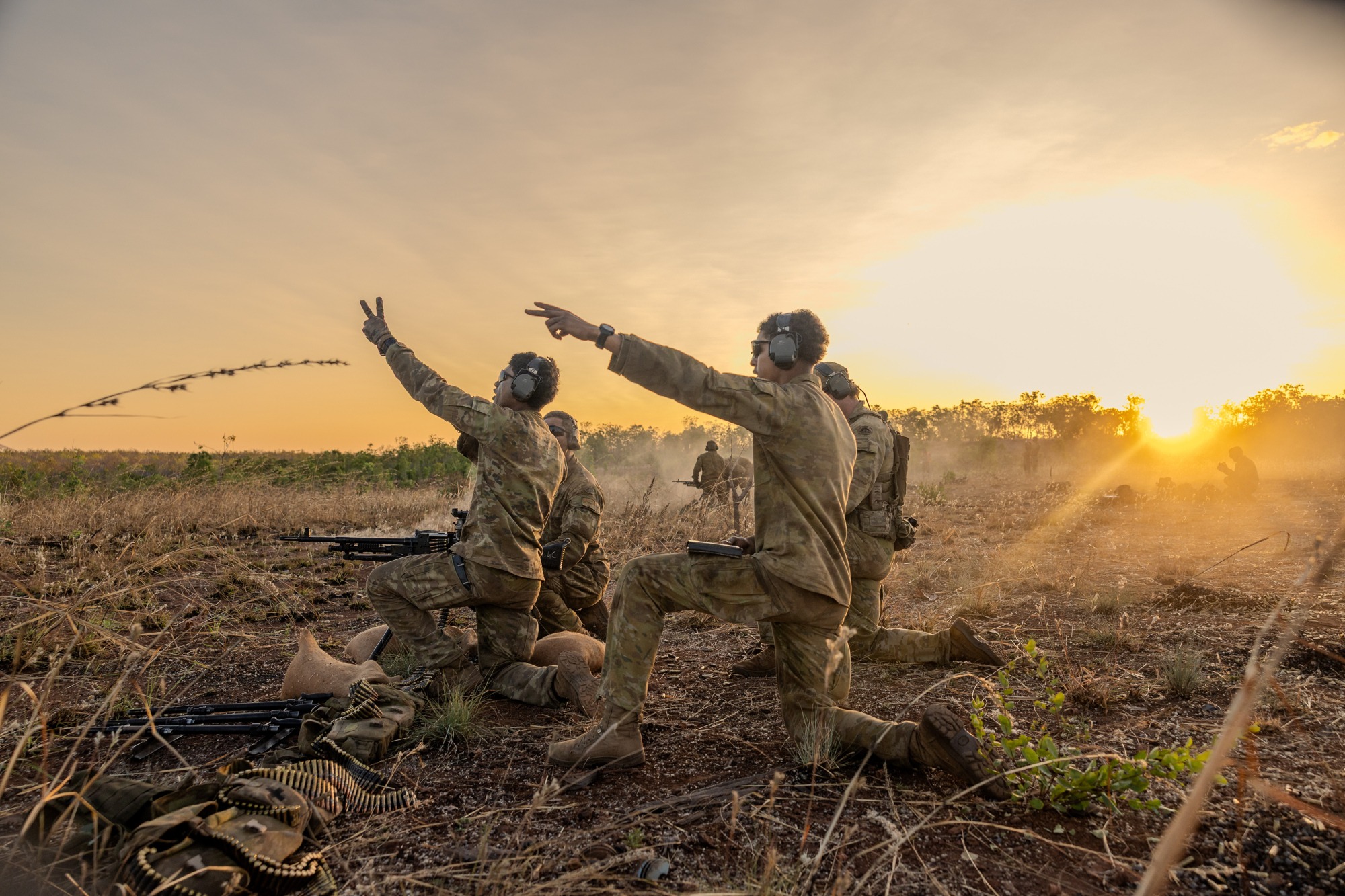
The Australian Army and the Northern Territory government are aligned on defence strategy. The next step is implementation.
The 2026 National Defence Strategy (NDS), released on 16 April, established Australia’s strategic direction for an era of intensifying strategic competition. Later that month, the Northern Territory government followed with its own defence strategy at NT Defence Week. On 6 July, the Australian Army released its 2026 contribution to the NDS. The close alignment between the latter two documents is unsurprising because both seek to implement the NDS, albeit from different institutional perspectives. The more interesting question is whether that alignment is sufficient to translate strategy into capability.
Australia’s strategic challenge has shifted. Considerable effort has gone into defining the strategic environment and the capabilities Australia requires. The harder task is implementation. Strategy establishes direction, but capability is generated through institutions, infrastructure, industry and people. Success will increasingly depend on how effectively governments, Defence and industry coordinate the decisions and investments needed to generate and sustain a persistent northern defence posture.
The relationship between the army’s contribution and the Northern Territory’s defence strategy illustrates both the progress that has been made and the work that remains. The army’s document describes a land force transforming for littoral operations, long-range effects, integration across the Australian Defence Force and continual adaptation. The Northern Territory focuses on maritime sustainment, the army’s littoral pivot, northern theatre logistics, basing, ranges and innovation. The army’s contribution explains how land power will support the NDS, while the territory’s strategy explains how northern Australia can help sustain that effort through infrastructure, logistics, industry and workforce development.
These are complementary responsibilities rather than competing priorities. The army must organise, train and equip forces for operations. The Northern Territory is responsible for many of the civilian systems upon which Defence’s expanding northern posture will increasingly depend. A persistent military presence requires resilient ports, transport corridors, energy, communications, housing, maintenance capacity and skilled workers. It must also accommodate increasing activity by allies and partners operating from northern Australia. Many of these enabling systems sit outside Defence’s direct ownership or control, meaning the army’s northern operating concept increasingly depends on decisions taken by governments, infrastructure owners and industry.
It would be naive to suggest the Northern Territory government is motivated solely by national security. Like every state or territory, it’s interested in attracting Defence investment, creating jobs and strengthening economic growth. Those objectives aren’t inconsistent with national defence. Australia’s northern posture increasingly depends on infrastructure, industry and workforces that support both civilian prosperity and military preparedness. The challenge isn’t to separate economic development from defence policy but to ensure they’re mutually reinforcing.
The relationship also works in the opposite direction. The Northern Territory’s ambition to strengthen its role as Australia’s principal northern defence jurisdiction depends on Defence maintaining and expanding its northern posture. Neither strategy will achieve its full potential unless the other is successfully implemented. Strategic alignment has created a shared implementation challenge.
The next step should be strengthening implementation rather than producing another strategy. Existing governance mechanisms between Defence and the Northern Territory should place greater emphasis on preparedness, implementation and measurable outcomes. The army should provide earlier and more detailed demand signals regarding future infrastructure, logistics and workforce requirements, allowing governments and industry to make long-lead investment decisions before demand becomes urgent. In parallel, the territory should continue identifying where civilian infrastructure can support Defence requirements, where capacity constraints exist and where regulatory or investment decisions could delay capability.
Implementation itself should be understood more broadly than project delivery. Generating capability requires three things to progress together: physical capability through infrastructure and logistics; institutional capability through planning, governance and regulation; and human capability through skilled workforces and industrial capacity. Delays in any one of these areas inevitably slow progress across the others.
Planning alone is insufficient. Existing exercises should increasingly test the broader enabling system rather than military formations only. Whole-of-system preparedness exercises should examine port capacity, logistics corridors, fuel distribution, maintenance arrangements, contractor availability, workforce surge, utilities and essential service resilience under operational conditions. They should include Defence, the Northern Territory government, infrastructure operators, industry, local government, education providers and Indigenous organisations because each contributes capabilities that become strategically significant during periods of heightened tension. Such activities would expose vulnerabilities early, strengthen coordination and provide governments with practical evidence about where further investment is required.
The greatest implementation risk is institutional latency – the time between recognising a strategic requirement, making investment decisions and delivering usable capability. Infrastructure, regulatory approvals, industrial investment and workforce development all operate on timelines measured in years rather than months. Unless decisions are taken early, implementation delays accumulate and narrow Australia’s strategic options long before a crisis emerges. Preparedness is a strategic capability because it preserves options before time becomes the constraint.
The NDS largely answers the question of what Australia needs to do. The challenge now is ensuring governments, Defence and industry can deliver those capabilities before deteriorating strategic circumstances compress the time available to act. In an era of shrinking strategic warning, implementation has become a determinant of national preparedness. That is where the army and the Northern Territory government can demonstrate the value of their strategic alignment.












Leave a comment