


Emerging technologies have long (Opens in new window) acted as force multipliers (Opens in new window) for terrorist actors, making it easier to plan attacks, increase their lethality, communicate and produce or distribute propaganda.
The extremist experimentation (Opens in new window) and use (Opens in new window) of drones follows this pattern. Uncrewed aerial systems existed as military technologies for decades, but their accessibility changed dramatically once commercial drones became cheap and simple enough for ordinary consumers to operate. Extremist groups on the battlefield subsequently adapted (Opens in new window) commercial systems for surveillance, propaganda and attacks. Domestic extremist interest has similarly grown (Opens in new window) as these systems have become more capable and easier to obtain.
Extremists did not need to develop the underlying technology. Commercial markets did much of that work for them.
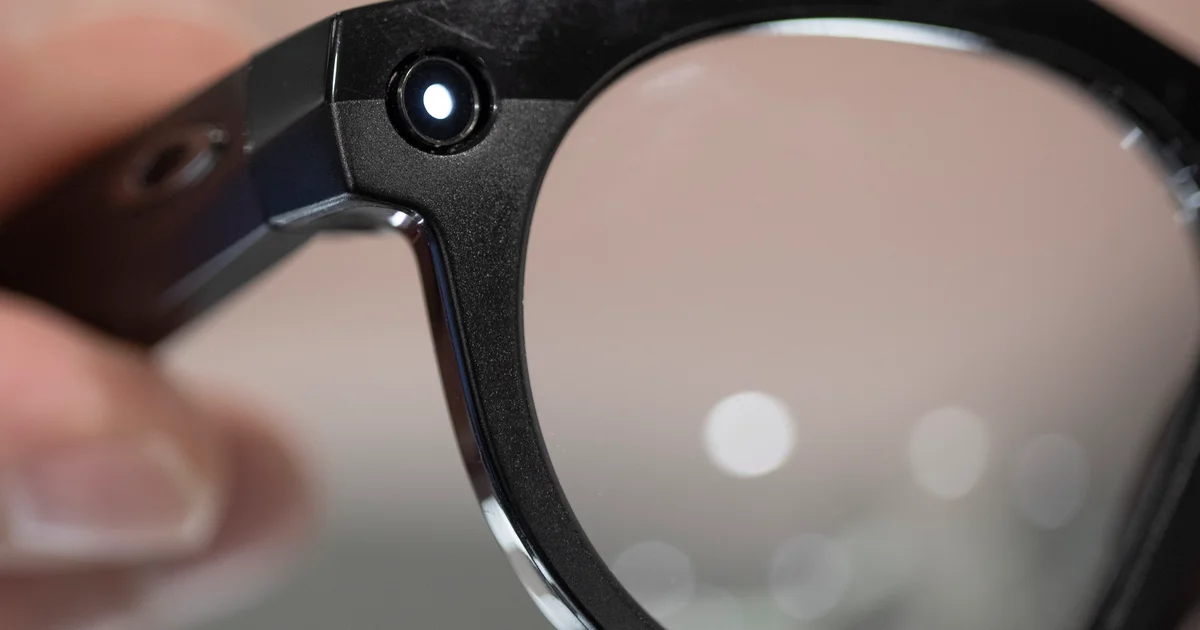
Smart glasses potentially follow the same logic, even if their implications are less dramatic. Their significance is not that they give extremists entirely new capabilities, but that they make existing ones easier to use. Someone planning an attack can already photograph a target, record video or communicate through a smartphone. Smart glasses make those activities hands-free, less conspicuous and increasingly integrated with artificial intelligence.
The January 2025 New Orleans attack provides an early example (Opens in new window). Months before Shamsud-Din Jabbar drove a vehicle into crowds on Bourbon Street, he travelled through the French Quarter wearing Meta smart glasses, recording footage as he cycled through the area. The glasses were not essential to the attack, but their use provides an early indication of the emerging consumer technology being incorporated into attack planning.
Smart glasses may also reinforce the propaganda dimension of extremist violence by making first-person recording easier. The continued circulation of footage from the 2019 Christchurch attack demonstrates the enduring propaganda value of attacker-generated first-person video. Additionally, the potential integration (Opens in new window) of AI into smart glasses may further expand their utility by allowing footage and information to be processed in real time rather than simply recorded.
The threat of extremist technological co-option is being recognised internationally. The latest (Opens in new window) United Nations General Assembly explicitly raised concerns about terrorist exploitation of emerging technologies and has called on states to consider additional measures to address their misuse.Such recognition is important, but governments have often struggled to identify the security implications of technologies before widespread adoption. Responses tend to focus on individual technologies or particular harms, while the threat from extremist use may only become obvious once those technologies are already widely available.
For policymakers, this points to the need for earlier assessment of how emerging consumer technologies might be co-opted. Price, availability and ease of use should be part of that assessment. A capability that currently requires specialist knowledge may present a different security problem if commercial development in future makes it usable by almost anyone.
This does not require treating every new technology as a security threat. The lesson from drones is not simply that extremists use drones. It is that a technology developed largely outside the extremist environment became relevant to them once commercial innovation made it cheap, capable and easy to use.
Smart glasses may be another example of the same process.










Leave a comment