



A data centre on Australian soil is not necessarily sovereign capability. The models, the intellectual property and the most important technical knowledge may remain overseas, and decisions about access, pricing, security and future development may still be made in foreign boardrooms. Australia could end up supplying the land, electricity and water while others retain the technology, knowledge and strategic control.
Foreign investment is necessary and should be welcomed, but investment and approval settings should also be used to build lasting Australian capability. It should support Australian research, workforce development, domestic access to computing power and participation by Australian companies. Government must also identify the capabilities that are too important to leave entirely in foreign hands. Sovereignty does not require Australia to build everything itself. It does require us to know what we must control, what we can safely share and what dependencies we are prepared to accept.
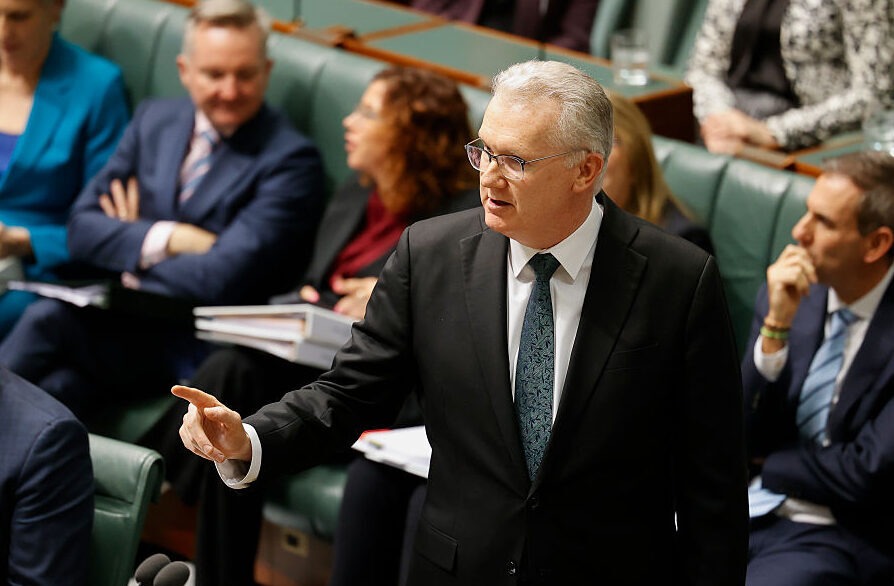
Albanese was right to defend Australian writers, artists, musicians and journalists, and his statement that creative work should not be taken without the creator’s control, including control over price and value, draws a clear moral line. But the standards must also deal with the systems themselves, particularly those used in government decisions, workplaces, health, justice, Defence, critical infrastructure and other areas where errors can cause serious harm.
The question is not whether these systems should be banned, but what evidence should be required before they are trusted. It is not enough to place a person somewhere in the process and describe the arrangement as human oversight. That person must understand the system well enough to question it, possess the authority to reject its recommendation and remain accountable for the final decision.
Albanese said that the central issues raised by AI are economic, legal, social, moral and spiritual rather than simply technical. He is right that AI cannot be left to engineers and technology companies alone, yet those wider issues cannot be separated from technical design. Bias, opacity, manipulation and loss of control do not appear in the abstract; they emerge from the way systems are trained, tested, deployed and connected to human decisions. Australia needs people who can work across the boundaries between technology, law, policy, ethics and operations. It must avoid the equally dangerous mistakes of allowing technical specialists to define the public interest or asking generalist policymakers to govern systems they do not understand. Values without technical competence become slogans, while technical competence without a governing purpose becomes capability in search of permission.
Professional judgement should therefore be treated as a national capability. AI should strengthen it, not replace it. This does not mean preserving every old job or process. But productivity cannot be measured only by how much labour or time can be removed from a process. It must also account for what knowledge, responsibility and resilience may be removed with it. An organisation that produces decisions more quickly while losing the capacity to understand them has not necessarily become more capable.












Leave a comment