


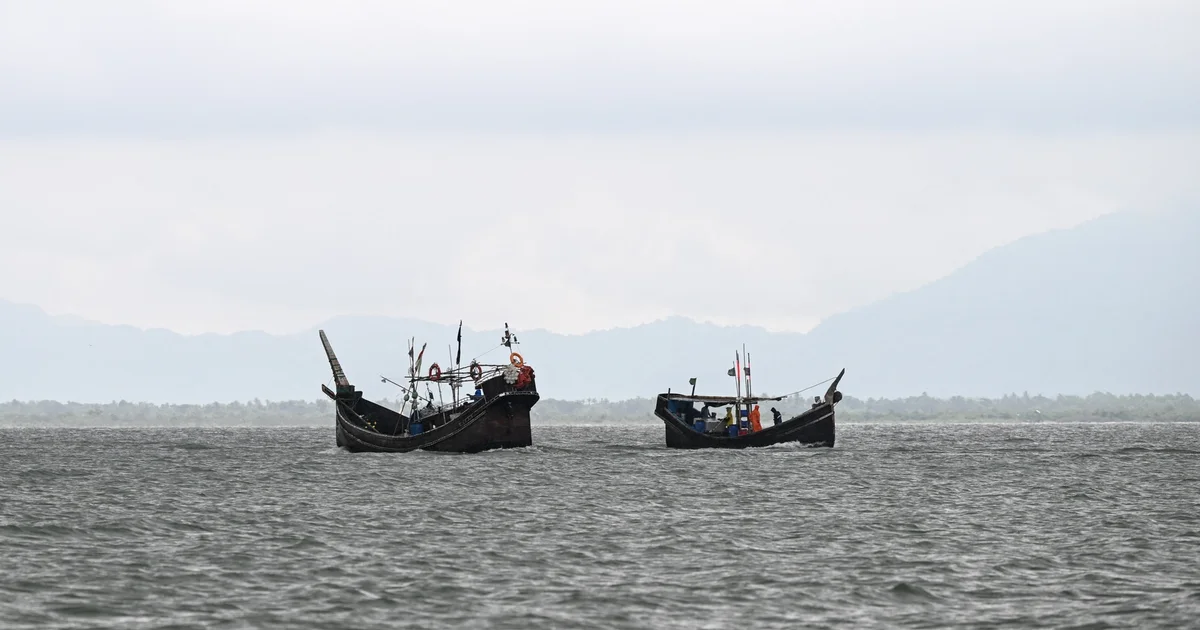
ASEAN members can build directly on existing regional frameworks (Opens in new window) to manage this crisis, aligning with the ASEAN 2045 Vision (Opens in new window) of a “resilient, innovative, dynamic and people-centred” region that “leaves no one behind.” We have already seen promising steps: Thailand recently granted work rights to over 40,000 long-term refugees from Myanmar, demonstrating what practical progress looks like.
Beyond ASEAN’s core member states, a recent report from the Asia Dialogue on Forced Migration (Opens in new window) highlights a critical role for ASEAN Dialogue Partners – including Australia and New Zealand. By stepping up support, these partners can help reduce deaths at sea while expanding humane, viable pathways for displaced communities.
Strengthening maritime cooperation is essential to stop the growing toll of dangerous journeys by sea. High-level platforms like the East Asia Summit and the Expanded ASEAN Maritime Forum – both of which include key Dialogue Partners – should be used to strengthen humanitarian cooperation on maritime governance, specifically on coordinated search-and-rescue efforts and safe disembarkation. Existing capacity-building programs must also incorporate mixed migration scenarios to better equip frontline responders when encountering vessels in distress.
Dialogue Partners can also help reshape the region’s response to human trafficking. Australia in particular is a major donor to this cause through its “ASEAN-ACT (Opens in new window)” program, but despite this investment Southeast Asia is currently battling a booming human trafficking industry linked to online scam compounds. To reverse this trend, law enforcement and border officials need targeted training to distinguish forced migrants and victims from criminal networks – a shift that would better protect victims of forced criminality and improve responses to maritime smuggling.
By championing both maritime safety and targeted anti-trafficking measures, Dialogue Partners can work with ASEAN to tackle this crisis at both ends: deterring dangerous journeys before they happen and saving lives when they do.
Beyond safety at sea, Dialogue Partners can also help ASEAN states improve conditions for displaced persons already living in host countries.
Many Dialogue Partners have extensive experience developing and implementing sustainable employment and education migration pathways for refugees, and could offer support to design better pathways within existing agreements for migrants. This could include pathways that allow refugees to travel to other countries on skilled or education visas, opening up opportunities to access school, university and/or training programs as a step towards accessing work rights.
Dialogue Partners can also provide technical and financial support for effective “temporary stay” arrangements across ASEAN. These will look different in each country, but supporting documentation processes to enable access to health, education and livelihoods would make a tangible difference not only to individual lives but also regional stability.
Improving these conditions helps host countries as much as displaced populations. When refugees are able to work and access basic services legally, they can contribute to local economies, lighten the load on host country resources, and support broader regional stability.
Displacement will remain a defining regional challenge for years to come, and no single country can manage it alone. By deepening cooperation on maritime safety, anti-trafficking, and access to livelihoods, ASEAN and its Dialogue Partners can build a more stable, prosperous, and people-centred region in line with the ASEAN Charter.












Leave a comment