


Twenty-five years on: what Australia gave Afghanistan, and what it still owes
On 14 September 2001, Prime Minister John Howard announced that Australia would invoke the ANZUS Treaty. On 11 October, Australia established Operation Slipper, its first operation in Afghanistan. By early December, the first Australian special forces personnel had arrived in the country. A quarter of a century later, the anniversary is arriving of this 20-year war, the longest in our history. It now attracts little attention from the government or commentators. But issues remain unresolved, and the people who fought it, the families who waited, and the Afghans who stood beside them deserve better than silence.
From a safe country to heat and gunfire: what Australia gave
Think about what those who deployed from Australia, whether in uniform or as civilians, left behind: a peaceful, green and orderly country that much of the world would call a paradise, where children walked to school without a second thought. Then think about where they went to serve: a land of fierce, dry heat, where a routine patrol could become a firefight and every hour was lived on guard. They went because their country asked them to go, and many went more than once. In this mission they were not alone: Afghan interpreters, soldiers and local workers (cleaners, guards, contractors) shared the same danger, and they stayed after the Australians left.
The commitment began with a special forces task group, the first parts of which reached Afghanistan in December 2001. It grew to include a reconstruction task force in Uruzgan Province, announced in 2006, and later a mentoring effort that partnered Australian soldiers with the Afghan National Army’s 4th Brigade, 205th Corps. Australia worked alongside the Netherlands in Uruzgan until 2010. And the Australian Defence Force’s Provincial Reconstruction Team helped build a 23-classroom girls high school in Uruzgan’s capital, Tarin Kowt, with female engagement teams deployed to meet Afghan women directly. In all, some 39,000 Australian Defence Force members served over twenty years, alongside diplomats, police, aid workers and civil officials. A Senate committee later described it as Australia’s longest conflict-zone commitment since Federation.
The financial cost is harder to pin down. Defence told the Senate it spent A$8.4 billion on Operations Slipper and its successor, Highroad, between 2001 and 2021, and the Department of Foreign Affairs and Trade (DFAT) put the operating cost of its diplomatic presence from 2006 to 2021 at about A$566 million. Other estimates ranged from A$7.8 billion to A$13.6 billion, and the committee itself called the evidence on costs incomplete. Australia also provided roughly A$1.5 to A$1.8 billion in development and humanitarian assistance over the period.
What was achieved, and what was lost
Defence told the Senate that its principal success was helping to deny terrorists a base in Afghanistan, and the Senate committee concluded that al-Qaeda had been defeated there in the initial campaign. DFAT’s submission to the Senate inquiry said that the number of children with access to education rose from 0.8 million to 9.2 million, 39 percent of them girls. By 2021, nearly 1 million girls were enrolled in secondary school. These gains were real, and for 20 years they made life better for millions of Afghans.
The losses were heavy. Forty-one Australians died in the line of duty. The Roll of Honour, which counts those who died as a result of their service, lists 47. Around 263 were wounded. Some witnesses told the Senate that two decades of engagement had done little to build lasting governance and had propped up an ineffective government. In August 2021, as foreign forces withdrew, the Taliban seized power. The strategic questions are still open: what was Australia trying to achieve, and did its objectives match its means? A Senate committee started that work in 2021 and acknowledged that the engagement would be analysed for years to come. That analysis should continue, in public.
The duty of care at home: veterans and their families
The Royal Commission into Defence and Veteran Suicide reported that at least 1,677 serving and ex-serving ADF members had died by suicide between 1997 and 2021, more than 20 times the number of Defence personnel killed in active duty in the same period. It estimated the true number of preventable deaths at upwards of 3,000. Its remit covered all ADF service, not Afghanistan alone, but the war falls squarely within that period. The commission found that the complex compensation claims process itself had harmed the mental health of ex-personnel, and the then Defence chief apologised unreservedly for the military’s failures. The Senate’s own interim report on Afghanistan highlighted the effect of the war crimes revelations on veterans’ mental health.
Behind each statistic is a family: spouses who absorbed the strain, children who grew up with a parent who came home changed, parents who buried a son or daughter. They serve too, in their own way. The commission made 122 recommendations, including establishing a new statutory body to support the wellbeing of serving personnel and veterans. The test of whether the country meant what it said at the memorials is whether those recommendations are delivered – and delivered quickly.
Unfinished business with Afghan partners
Australia closed its Kabul embassy on 28 May 2021. DFAT later told a parliamentary committee that Australia had evacuated 4,100 people, two-thirds of them women and children. By October, more than 26,000 visa applications from Afghans had reached the government, against an initial offer of 3,000 humanitarian places. More than 100 former embassy security guards were at first sent rejection letters for humanitarian visas of one category before later being approved for another. These figures matter, but numbers alone cannot determine whether Australia has met its obligations to the Afghans who directly supported its mission.
I saw that relationship at close range while working directly with the International Security Assistance Force (ISAF) as a cultural and political instructor to help expats understand the country where they were serving: its communities, political structures, customs and local realities. I saw how much the international mission relied on Afghan interpreters, government officials, advisers, guards, drivers and other local employees. They did not simply provide a service under an ordinary employment arrangement; they accepted serious risks because they believed they were helping to build a more secure future for Afghanistan.
That experience is why this responsibility is personal to me. Many of those people have rebuilt their lives in Australia, but others have faced prolonged uncertainty, separation from family members or difficulty obtaining clear decisions about their cases.
Australia should commemorate the service of its personnel while also recognising the Afghan interpreters and advisors – known as ‘oga pa oga’ in Pashto and ‘shona ba shona’ in Dari – who stood shoulder to shoulder with them on the heated battlefield. There is a historical precedent: Australia has honoured the Papua and New Guinean civilians – known as the ‘Fuzzy Wuzzy Angels’ – who carried supplies and evacuated wounded Australian soldiers during World War II.
A relationship older than the war
Australia and Afghanistan did not meet in 2001. Formal diplomatic relations date to 1969, and the human connection is far older. From the 1860s, some two to three thousand camel drivers arrived from Afghanistan and opened the continent’s interior. They were known collectively as ‘Afghans’ or ‘Ghans’, a name still used for the train service that crosses Australia’s inland railway, the Ghan. Three cameleers and 24 camels were commissioned for the Burke and Wills expedition in 1859. One of them, Dost Mahomet, a Pashtun from Ghazni, southeast of Kabul, lost the use of his left arm to a camel and was later awarded 200 pounds by the Victorian government. His grave near Menindee, in far-western New South Wales, was restored in 2006.
The label was broader than the place: many cameleers came from what is now Pakistan, including Abdul Wade, from Quetta, who helped fund the Adelaide Mosque. They built mosques in the desert and endured racism in return. Their descendants, and later Afghan refugees and former interpreters, are part of the Australian story. The relationship was never only about security.
Why Afghanistan still matters, and what Australia should do next
The UN Monitoring Team reported in February 2026 that al-Qaeda continued to be active in Taliban-controlled Afghanistan and operated on both sides of the Afghan–Pakistan Durand line. It provides training and advisory services, particularly to the Pakistani Taliban, and the leader of al-Qaeda’s South Asian affiliate and his deputy were reported to remain in Kabul. The Taliban authorities’ denial of any terrorist presence in Afghanistan was called ‘not credible’.
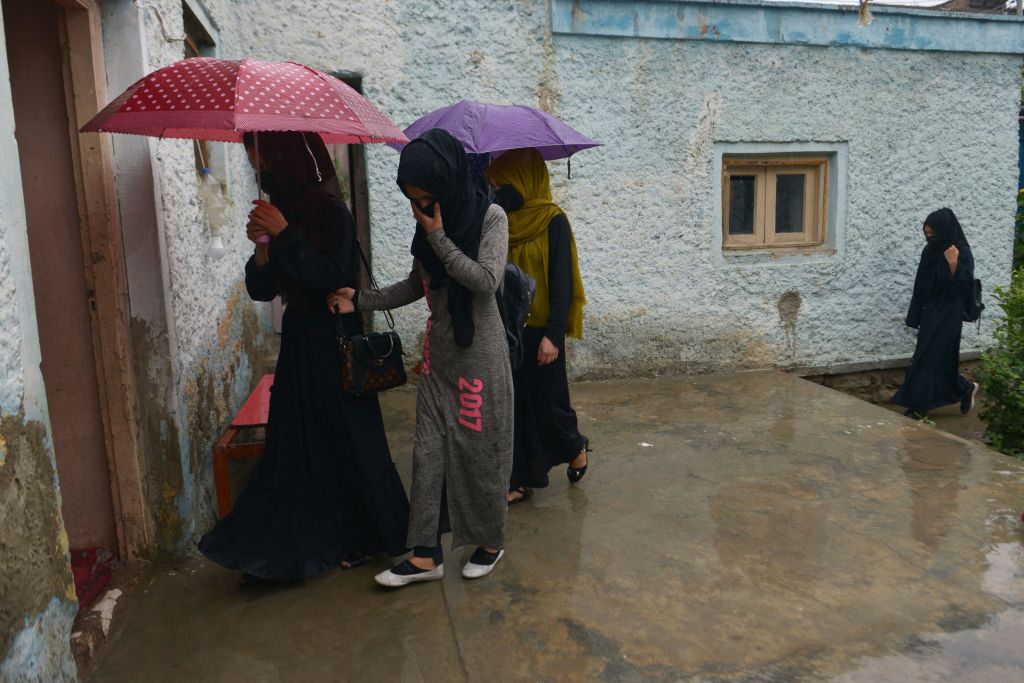
The humanitarian picture is as grim. The UN estimates that 21.9 million Afghans – 45 percent of the population – need assistance in 2026 and says that by mid-September only about 31 percent of the funding required had been secured. More than 2.8 million Afghans returned from Iran and Pakistan in 2025 and over 1.2 million in 2026, and a magnitude 6-plus earthquake flattened villages in the east. About 2.4 million girls are shut out of secondary school, a figure the UN’s education agency says could approach 4 million by 2030. Against this, Australia’s budget estimate for aid to Afghanistan in 2026–27 is $50 million.
A to-do list
If Australia were serious about what’s left from the war, it would:
- Commission an independent, whole-of-government review of it, building on the Senate’s 2022 work, to examine objectives, decisions and the exit;
- Deliver the Royal Commission into Defence and Veteran Suicide’s recommendations with deadlines and public reporting;
- Finish the work on Afghan partners: timely visas, family reunions and public accounting of who was left behind;
- Scale up humanitarian and education support, including community-based and online schooling for Afghan girls, with the support of Afghan policy makers;
- Engage the Taliban pragmatically on counterterrorism, aid access and consular issues, without conceding legitimacy, and with Afghan Australians involved in shaping that policy.
Those who served did their duty. The nation’s part of the bargain is to understand what that service achieved, what it cost, and what it still owes – to veterans and their families, to Afghan partners and to the people of Afghanistan.
Twenty-five years after the first Australian deployment, remembrance should be more than ceremony. It should be the beginning of an honest national conversation.









Leave a comment