


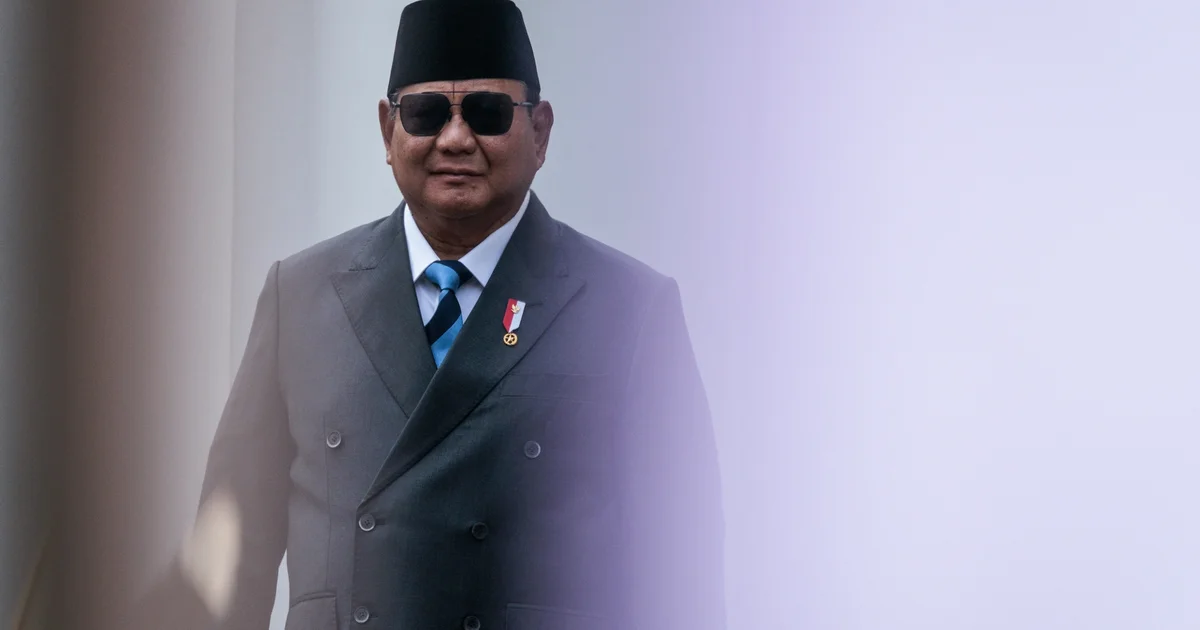
Prabowo chose Beijing for his first state visit as president, touting more than US$10 billion (Opens in new window) in bilateral deals to help underwrite his growth targets. Jakarta has since actively lobbied Beijing to bankroll priority projects – from the multibillion-dollar eastward extension of the Whoosh high-speed rail line (Opens in new window) from Bandung to Surabaya to reviving stalled development in the new capital, Nusantara (Opens in new window). In his recent state budget address (Opens in new window), Prabowo lauded this financial alignment, celebrating the successful issuance and top ratings of Indonesia’s yuan-denominated “Panda Bonds” as proof of economic resilience.
Yet, this dependence has steadily eroded Indonesia’s leverage across various socioeconomic aspects, constraining Jakarta’s ability to push back when Chinese actions conflict with its interests.
Consider the quiet devastation of the domestic manufacturing base. In recent years, Indonesia’s labour-intensive textile and garment sectors, once the lifeblood of working-class employment in West and Central Java, have reeled under waves of cheap substitutes of Chinese imports. The bankruptcy of household-name titans like Sritex (Opens in new window) and the shuttering of dozens of factories have displaced hundreds of thousands of workers. However, rather than imposing decisive safeguard tariffs or confronting Beijing over trade distortions, Jakarta has repeatedly hesitated (Opens in new window), fearful of triggering retaliatory measures or alienating Chinese financiers.
Even in the critical mineral sector, where Jakarta ostensibly wields its strongest hand, the government was forced into a telling compromise.
Under Jokowi, Indonesia initiated an ambitious downstreaming (hilirisasi (Opens in new window)) policy to compel foreign smelters, predominantly Chinese-owned, to invest in domestic processing rather than simply extracting and exporting raw nickel ore. Under Prabowo, whose economic nationalist agenda has intensified state intervention, Jakarta sought to tighten its grip with measures (Opens in new window) including stricter mining quotas, royalty hikes, and mandatory divestment rules to transfer equity to Indonesian state entities. While foreign investors across the board grew uneasy over the increasingly volatile regulatory climate, only Chinese investors pushed back forcefully. In May 2026, the China Chamber of Commerce in Indonesia (CCCI) delivered a rare and blunt protest letter (Opens in new window) directly to Prabowo, copied to China’s embassy in Jakarta, warning that abrupt mining quota cuts, proposed royalty hikes, and aggressive enforcement threatened stalled projects and capital flight. This pushback laid bare the structural limits of Indonesia’s resource nationalism against a counterpart holding deep refining technology and monopsonistic purchasing power. Although the contest remains active and Jakarta continues to wield mining quotas, the state’s regulatory assertiveness encountered an unyielding counterpart in Beijing. Confronted with the risk of widespread smelter idling and damage to high-priority national targets, senior ministers engaged in emergency consultations, (Opens in new window) quietly postponing planned mineral royalty hikes and entertaining exceptional, case-by-case quota adjustments.
Eventually, pragmatic economic considerations compelled Jakarta to recalibrate: to safeguard broader capital flows and secure Chinese commitments for higher-value domestic priorities such as integrated EV battery ecosystems, Prabowo moved to reassure investors by establishing an investment acceleration task force under Presidential Decree No. 4/2026 (Opens in new window) to bypass bureaucratic gridlock and expedite licensing. When Chinese Foreign Minister Wang Yi visited Jakarta in August 2026, he called upon Indonesia to provide a “safe, stable, and favourable business environment (Opens in new window).” Beijing clearly expects Jakarta to play nice with Chinese companies to secure continued capital backing.
Equally glaring is Jakarta’s silence regarding the socio-environmental costs (Opens in new window) wrought by Chinese-dominated nickel hubs in Central Sulawesi and North Maluku. Captive coal plants, deforestation, toxic runoff, and poor labour safety records have fuelled fierce domestic backlash. These issues stem not solely from Chinese investors but are compounded by Indonesia’s own institutional weaknesses (Opens in new window). Indeed, Jakarta’s recent wave of crackdowns on illegal mining (Opens in new window) is driven primarily by state revenue recovery rather than genuine environmental remediation. Thus, Jakarta rarely raises Chinese miners’ socio-environmental toll publicly or systemically to Beijing, fearing that bilateral friction could deter future manufacturing investments. Officials treat the ecological and human damage as an acceptable cost of doing business, socialising the fallout at home while shielding Chinese operators from accountability.
This deepening economic reliance has softened Jakarta’s diplomatic tone. When Chinese nationalistic netizens (Opens in new window) pushed back against Indonesian regulatory shifts as troubling and untrustworthy, Jakarta maintained silence. Yet, when Singaporean outlets like The Straits Times reported (Opens in new window) on Chinese investor anxieties and questioned Indonesia’s fiscal trajectory under a “Sell Indonesia (Opens in new window)” outlook, pro-government circles and nationalist online mobs erupted in outrage, mounting hostile “Sell Singapore (Opens in new window)” campaigns. These dynamics reveal diplomatic restraints toward Beijing.











Leave a comment