


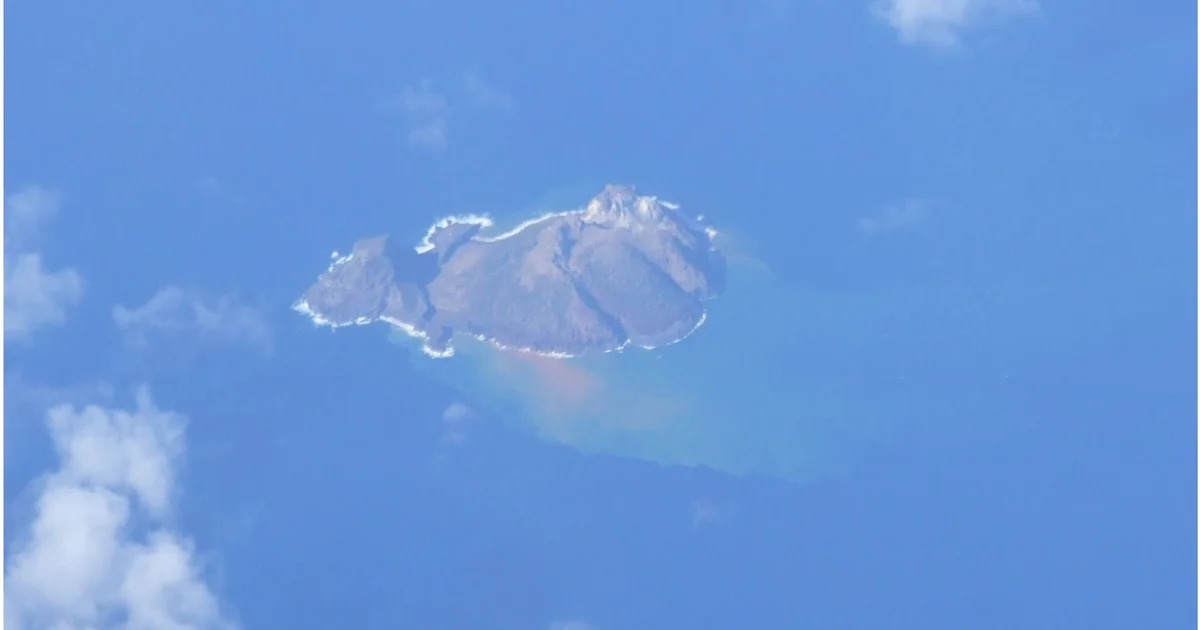
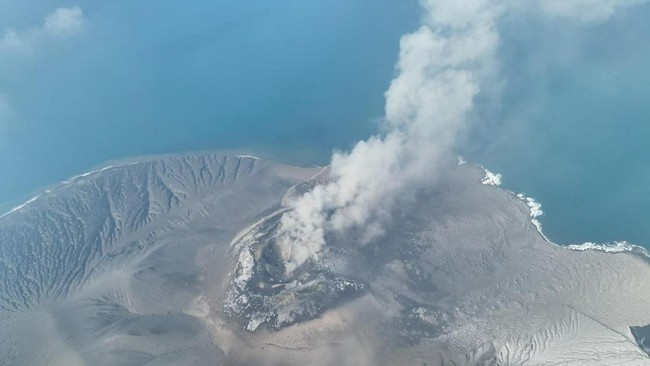
The islands are small at approximately 0.7 and 0.6 square kilometres, are physically isolated and uninhabited, and due to volcanic activity unsuited for permanent human habitation. Nevertheless, the geopolitical significance of the islands has grown as a result of developments in the law of the sea.
Under the 1982 United Nations Convention on the Law of the Sea (Opens in new window), islands generate the same maritime entitlements as continents. Countries that are solely comprised of islands or parts of islands can also claim the distinctive status of an “Archipelagic State” under the Convention. This gives a special legal entitlement to connect and enclose all of their islands and thereby exercise sovereignty over the islands and the interconnecting waters. Vanuatu is one of only 22 countries – along with Fiji, Papua New Guinea, and Solomon Islands – that are entitled to this special status. New Caledonia is also an archipelago but as a French overseas territory it is not a recognised archipelagic State due to its lack of independence.
Vanuatu is seeking to resolve not only the territorial dispute over the islands, but also the related maritime boundary with France, which in itself can only be resolved once the island dispute is settled. This mixed land and maritime element of the dispute is critical as it takes it beyond Law of the Sea Convention forums that would otherwise be available for the resolution of the maritime dispute, such as that utilised by the Philippines in the 2016 South China Sea Arbitration.
How Vanuatu’s claim is responded to by France is difficult to predict. Formal bilateral negotiations had taken place in 2018 and 2019, with recent rounds in November 2025 and July 2026 (Opens in new window). However, it would appear that Port Vila ultimately came to the view that the negotiations had reached an end point and that formally requesting France to agree to allow the dispute to be decided in The Hague was the only way forward to break the impasse.
France is not legally required to accede to Vanuatu’s request, and this is a novel aspect of the dispute. The International Court rarely sees disputes come to it by this legal route. France will be mindful, however, that its status as a founding member of the United Nations and the International Court – and having already been involved in 16 contentious cases before the court (Opens in new window) – will place it under pressure to accede to Vanuatu’s request.
This is not France’s only island territorial dispute. The status of the French Overseas Territory of Mayotte (Opens in new window) in the Indian Ocean is contested between Comoros and France. France would be concerned about any precedent that may be set by how it responds to Vanuatu’s claims, and how that may be received in New Caledonia against the backdrop of the local independence movement (Opens in new window). Vanuatu, however, would appear to be prepared for a French rebuff and has suggested that its fallback option would be to seek an Advisory Opinion (Opens in new window) from the International Court.
Whatever the legal process, Port Vila seems determined to raise the dispute over Matthew and Hunter in The Hague.










Leave a comment