


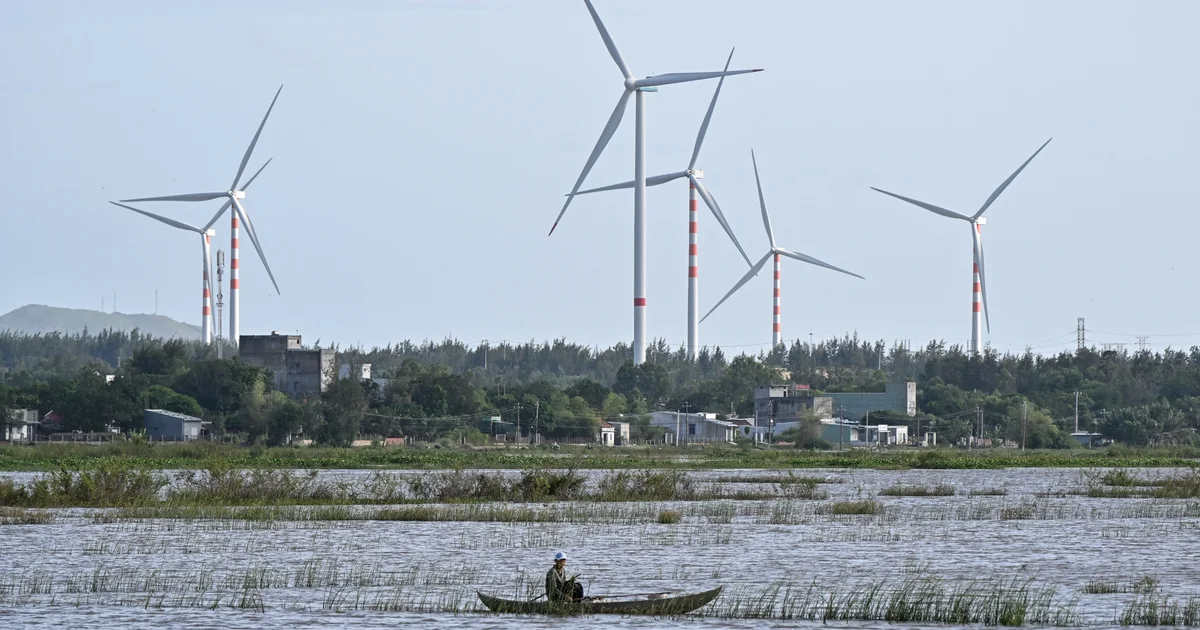
Consider offshore wind (Opens in new window). Building the industry requires coordination across marine spatial planning, electricity networks, ports, environmental assessment, fisheries, local industry, and investment regulation. Similar tensions arise as aquaculture, tourism, shipping, and conservation make competing claims on the same marine space.
Resolution 20 therefore calls for marine spatial planning to become a binding tool for coordinating uses of the sea, backed by stronger inter-agency coordination.
Implementation followed quickly. Just ten days after Resolution 20 was adopted, Vietnam’s government issued an action plan (Opens in new window) requiring revision of the Law on Marine and Island Resources and Environment, with an amended law to be submitted to the National Assembly in 2026. The proposed changes address important questions: how marine space is allocated and leased, what users will pay, and how competing claims are resolved.
This is the institutional infrastructure of a blue economy.
It also depends on people. Vietnam needs not only engineers, marine scientists, and environmental specialists, but also economists who understand ecological limits, planners capable of weighing competing uses of marine space, and managers who can negotiate among investors, regulators, and communities.
Here Australia has something useful to offer.
During the visit of Vietnam’s General Secretary and President Tô Lâm to Australia in August, the two countries agreed to enhance their Comprehensive Strategic Partnership. The joint statement (Opens in new window) commits the countries to deeper cooperation in marine science and monitoring and sustainable marine-resource management. It also calls for stronger cooperation in higher education, joint research, and professional development.
Rather than treating maritime cooperation, education, science, and climate as separate streams, Australia and Vietnam could bring them together around real marine-governance problems.
Joint interdisciplinary university programs could combine marine science with economics, environmental management, energy, and public policy. Executive education (Opens in new window) could bring together officials responsible for marine planning, fisheries, energy, environment, and investment. Joint policy laboratories could connect governments, universities, businesses, and coastal communities around actual marine-development decisions.
Australia is already being urged to invest in the region’s capacity (Opens in new window) to govern emerging ocean industries. Vietnam offers an opportunity to apply that principle on a larger scale.
This also reflects a changing bilateral relationship. Vietnam is a fast-growing (Opens in new window) middle-income economy seeking high-income status by 2045. Cooperation needs to extend beyond traditional development assistance towards building knowledge and institutions together.
Vietnam has the coastline, resources, and economic ambition to build a substantial blue economy. Whether it succeeds will depend on its ability to manage competing interests, protect marine natural capital, and turn new opportunities into broadly shared prosperity.
The infrastructure of Vietnam’s blue economy is therefore not only ports, vessels, and turbines. It is also institutions, knowledge, and people. Building that infrastructure could become a practical outcome of the Australia–Vietnam Comprehensive Strategic Partnership.









Leave a comment