


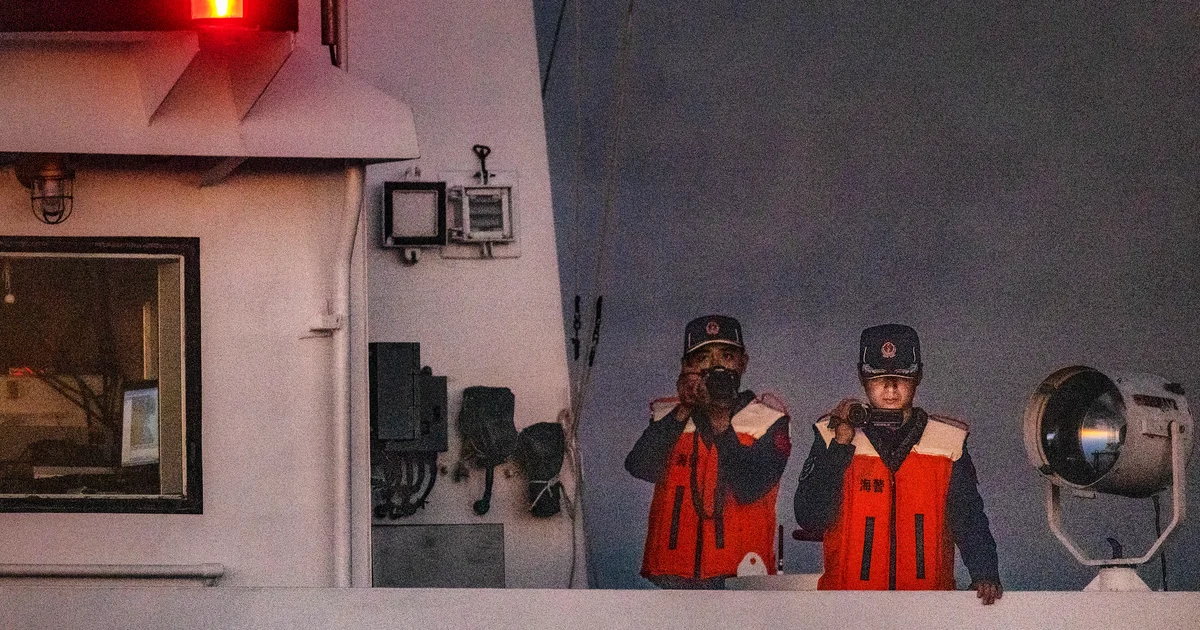
The strongest defence of the framework is that crisis management allows rivals to maintain deterrence while preventing accidents from escalating. US Army Pacific still treats 2027 as a readiness benchmark (Opens in new window), although news agency Reuters reported on 1 October, citing unnamed sources, that US officials considered a military operation before 2028 increasingly unlikely (Opens in new window). Pressure below the threshold of war nevertheless continues. On 23 October, Taiwan’s coast guard warned that coordinated Chinese militia and coast guard operations (Opens in new window) were increasing pressure on Taiwan, Japan and the Philippines.
The harder problem is scope. On 27 October, three Chinese warships and a coast guard ship passed together through Japan’s Osumi Strait, the first time Japan’s defence ministry has disclosed (Opens in new window) the two services travelling together through Japanese waters. Further south, the Liaoning carrier group sailed around the Philippines and did not answer Philippine radio challenges (Opens in new window), although Manila said there was no cause for alarm (Opens in new window). By 28 October, Taipei counted 53 Chinese vessels, 34 of them warships (Opens in new window), between southern Japan and the Philippines.
The Liaoning ran a similar loop (Opens in new window) in October 2024. Ship movements alone do not prove coercion. But the US intelligence community did expect Chinese pressure on Japan to intensify (Opens in new window) through 2026, while US–China channels do not directly connect the vessels involved.
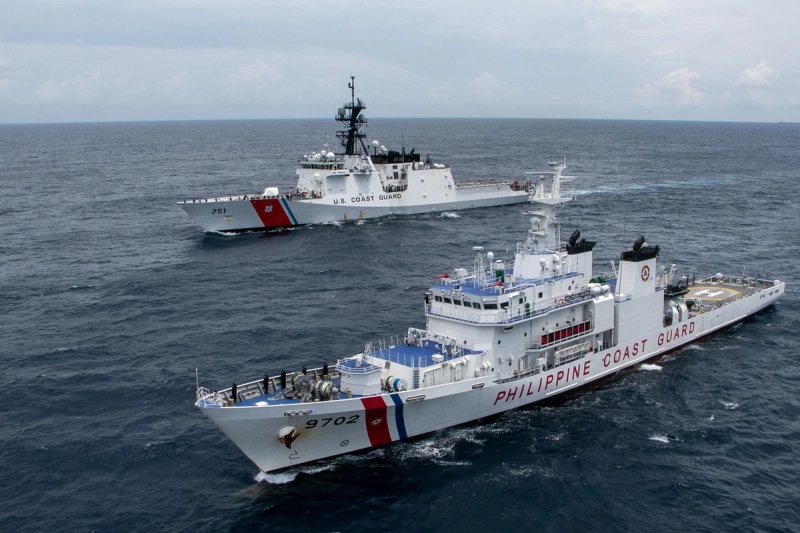
Regional channels do exist. Japan and China opened a defence hotline in 2023 (Opens in new window), and Manila and Beijing agreed in 2024 (Opens in new window) to improve maritime communications, including a future coast guard link. In August, The Interpreter reported that the Japan–China hotline had barely been used (Opens in new window) since its first call in May 2023. Manila said in March that amendments to its coast guard agreement were under discussion (Opens in new window). The gap is not an absence of channels but their coverage, reliability and coordination. A US–China memorandum alone cannot establish procedures for Chinese coast guard captains and Philippine or Japanese commanders when their ships meet.
Two further gaps compound the problem. The first is meaning. Xi has defined stability as including competition within proper limits (Opens in new window), and within days of the summit Beijing’s foreign ministry invoked the leaders’ consensus on Taiwan (Opens in new window). A US military official described Washington’s aim as enabling “both strategic stability and deterrence by denial (Opens in new window)”. Washington views allied exercises as credible deterrence; Beijing can portray them as breaching that consensus.
The second is implementation. Nuclear risk offers another test. US and Chinese officials met at least three times this year (Opens in new window) on the margins of the five nuclear powers’ dialogue, with Washington seeking more advance notice of missile tests. The reported meetings establish engagement, but not a shared launch-notification procedure.
The calendar now matters. Trump is expected in Shenzhen (Opens in new window) for APEC on 18–19 November, and Xi in Miami for the G20 on 14–15 December (Opens in new window).
Two indicators deserve attention. The first is operational: whether both governments agree on the memorandum’s purpose and scope, sign it, and use its procedures when an interception goes wrong. The second is whether the PLA’s November–December peak drill season (Opens in new window) passes without a large exercise around Taiwan. Neither would prove the framework caused restraint, but together they would suggest stability is becoming practice rather than language.
The region should also look beyond the bilateral line. Incidents involving coast guards and allies can also escalate. Extending rules for unplanned encounters to coast guards, and linking allied, regional and US–China channels, would do more for stability than another summit communiqué. Without that, the formula will have stabilised the conversation, not the competition. High-level stabilisation will remain incomplete where maritime incidents are most likely to occur.








Leave a comment