


To judge by a recent article in The Economist (Opens in new window), the answer is still yes. Given that The Economist has been the influential flag-bearer for liberal politics and economics for over a century, this comes as no surprise. What is more surprising at this historical juncture, however, is that the author chose to make this point in the context of a critique of China’s “eco-authoritarianism”.
The key failing of the Chinese approach to environmental management in this reading is that its top-down approach means that “the government does not listen to the people that its environmental policies harm. And sometimes it does not listen to environmentalists, either.” Much the same could be said of the Trump regime, of course. Trump has gone much further by systematically undermining the authority and capacity of the Environmental Protection Agency and appointing another climate change sceptic (Opens in new window) to oversee a “National Climate Assessment”.
By contrast, China’s bossy, interventionist, undemocratic government can point to some notable real-world achievements in defence of its approach to policymaking. Apart from lifting millions of people out of poverty at an extraordinary speed and scale, it has managed to do so without some of the horrors that accompanied the industrialisation process in places like Britain (Opens in new window).
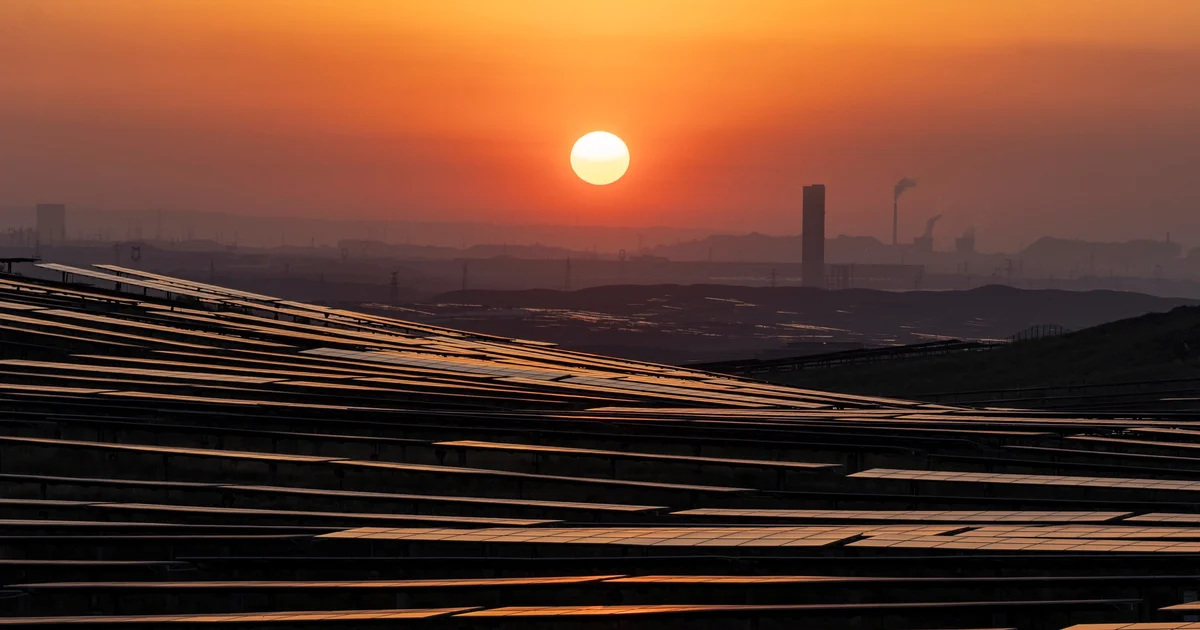
True, no one knew what the implications for the environment would be when the industrial revolution began, but we do now. It’s to China’s credit that its autocratic leaders recognise this and have at least tried to balance economic development and environmental sustainability. CO₂ emissions in China seem to be plateauing (Opens in new window) and it accounted for 60% (Opens in new window) of newly installed global additions to renewable energy stocks in 2025.
Meanwhile, America accounted for a third of the global increase in CO₂ emissions in 2025 (Opens in new window), as coal usage increased. Nor is this a uniquely American problem either, of course. Australia, another champion of free markets and business-friendly policies, continues to allow massive fossil fuel developments that climate scientists (Opens in new window) warn will further exacerbate its own and the world’s environmental problems.
At least in China they talk about the necessity of developing an “ecological civilisation (Opens in new window)” predicated on a “moderately prosperous” standard of living. This is another reality policymakers in the Global North are unwilling to confront: it may not be possible to have endless economic expansion and consumption on a finite planet without crossing critical planetary boundaries (Opens in new window) and risking catastrophe.















Leave a comment