


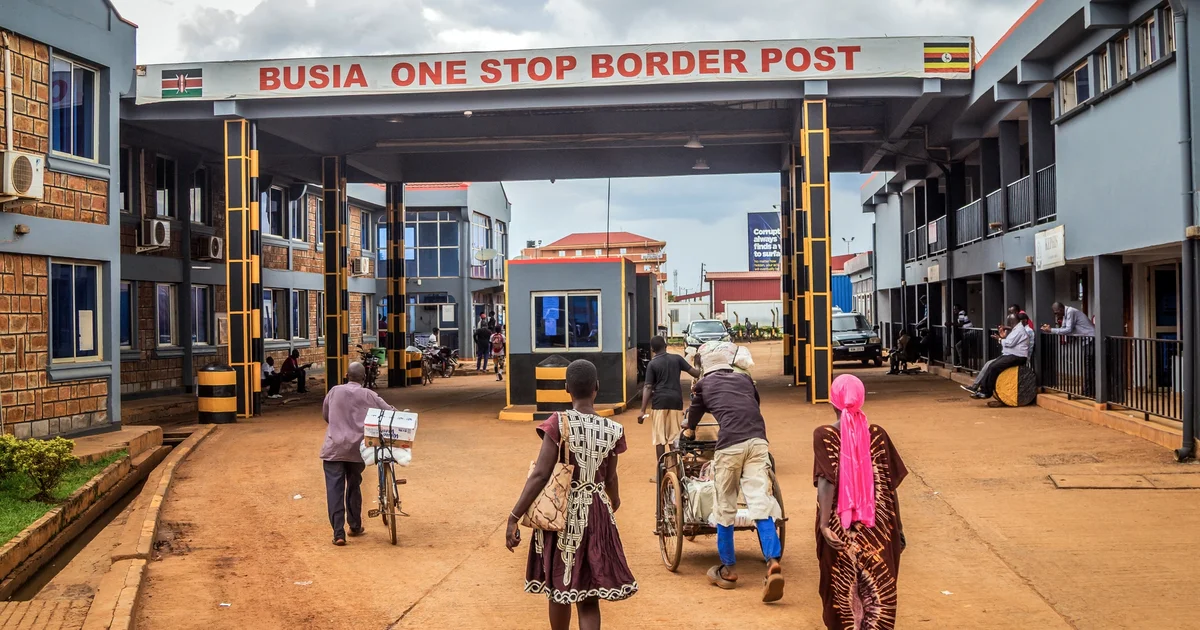
The Kenyan patient’s journey raises questions about detection and notification across borders. Before Ebola was identified, he passed through several Congolese health facilities, a land border into Uganda and an international airport. At each of those points, detection depends on more than the equipment and training that the indices count. It also depends on whether an overstretched clinician suspects Ebola and can test for it, whether a sick person can afford to stop and seek care, and whether what one country knows reaches the next.
That last condition depends on trust between governments. The Commission found that countries that report outbreaks risk border closures and economic disruption, a prospect that can make delayed reporting or limited data sharing a rational choice rather than a moral failure. This outbreak has produced exactly those penalties: in May, governments including Canada, Jordan, Bahrain and the United States imposed entry restrictions (Opens in new window) of the kind WHO advises against. Surveillance is an interdependent function, and national systems become more effective when countries trust each other enough to share what they find.
Financing makes that cooperation harder.
First, there is far less of it than the system needs: development assistance for health fell an estimated 21% in 2025 (Opens in new window), to its lowest level in 15 years (Opens in new window), and in July the WHO–Africa CDC plan for this outbreak was more than US$400 million short (Opens in new window) of funding.
Second, what financing remains is more national in focus and bilateral in form (Opens in new window). Country-based agreements leave gaps in resourcing for joint investigation, information sharing and coordination between countries, and for the support people need to report illness and isolate. Global mechanisms must cover these costs when they fall outside individual country programs.
Shrinking aid has given African calls for health sovereignty new urgency, but there is a risk that sovereignty comes to be read as self-sufficiency. The Accra Reset, an initiative on reforming global health governance led by the President of Ghana, makes this distinction in its high-level panel report (Opens in new window), treating cross-border health intelligence, interoperable surveillance and governed data-sharing as shared public goods, with the aim of enabling countries to take their own decisions while continuing to cooperate. Effective collaboration with neighbours is an exercise of sovereignty, not a concession of it.
The measure of what has been learned from Nairobi will not be whether the next infected traveller is caught at an airport. It will be whether a clinician in Beni can get a sample tested within hours, whether the individual or family asked to isolate can afford to do so, and whether relevant information reaches officials across the border on time.











Leave a comment