


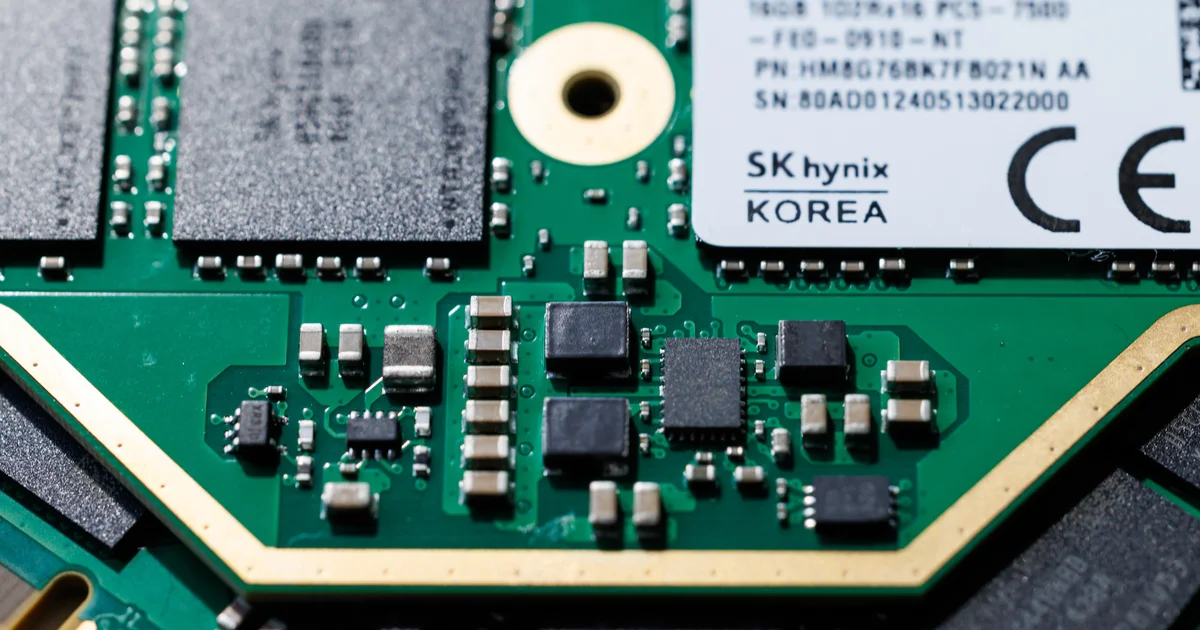
In June, Lee promulgated his “Three Mega Projects for the Great Leap Forward (Opens in new window)” industrial policy agenda, which is built on semiconductors, data centres and physical AI (technologies like humanoid robots which interact with the physical world). The overarching and lofty objective is for Korea to become the world’s number three AI power.
As part of Lee’s policy announcement, SK Hynix and Samsung pledged to spend US$520 billion (Opens in new window) to build four huge chip fabrication facilities in southwestern Korea.
The 2027 budget has followed up with over US$15 billion worth (Opens in new window) of supporting initiatives, mostly focused on building the requisite power and infrastructure for these colossal fabs.
Southwestern Korea, a traditional stronghold of progressive parties, is located far away from Korea’s current chipmaking hubs, prompting allegations (Opens in new window) of pork-barrelling.
Aside from potential political motivations, a much more fundamental question is whether demand for HBM will continue to grow at such a rapid clip.
The growing calls emanating from frontier US AI labs for a deceleration in the AI development race, caused a frisson of anxiety (Opens in new window) on the KOSPI.
Another fear is that China will replicate its success in eroding Korean market share, which it has already done across (Opens in new window) major export categories including automobiles, shipbuilding, consumer electronics and petrochemicals. Surging exports of semiconductors have reversed Korea’s historic trade deficit (Opens in new window) with China.
China’s national champion for DRAM and HBM, ChangXin Memory Technologies (CXMT) has now become China’s most valuable (Opens in new window) listed company.
Its global market share for DRAM is increasing rapidly, having reached 10% (Opens in new window), up from 4% last year. With SK Hynix, Samsung and Micron prioritising HBM development, US companies including Apple (Opens in new window) are testing CXMT’s chips for usage in iPhones – causing consternation (Opens in new window) among US senators.
Mid-September reports (Opens in new window) from the Korea Semiconductor Industry Association suggest that Korea’s lead over CXMT in HBM has narrowed from five years to three years. It remains to be seen, however, whether CXMT will be able to close this gap without access to the most advanced lithography machines, which Dutch company ASML is prohibited from shipping to China.
Korea’s instinct to protect its golden goose is eminently understandable and sensible.
The greater risk may be that the focus on AI and enabling sectors diverts capital, talent and policy attention from traditional industries which are far larger employers.
In sectors such as shipbuilding (Opens in new window) and electric vehicle batteries (Opens in new window), Korea has adroitly carved out a niche as the main global ex-China supplier despite its broader loss of market share. Even these competitive redoubts, however, are under threat (Opens in new window).













Leave a comment