


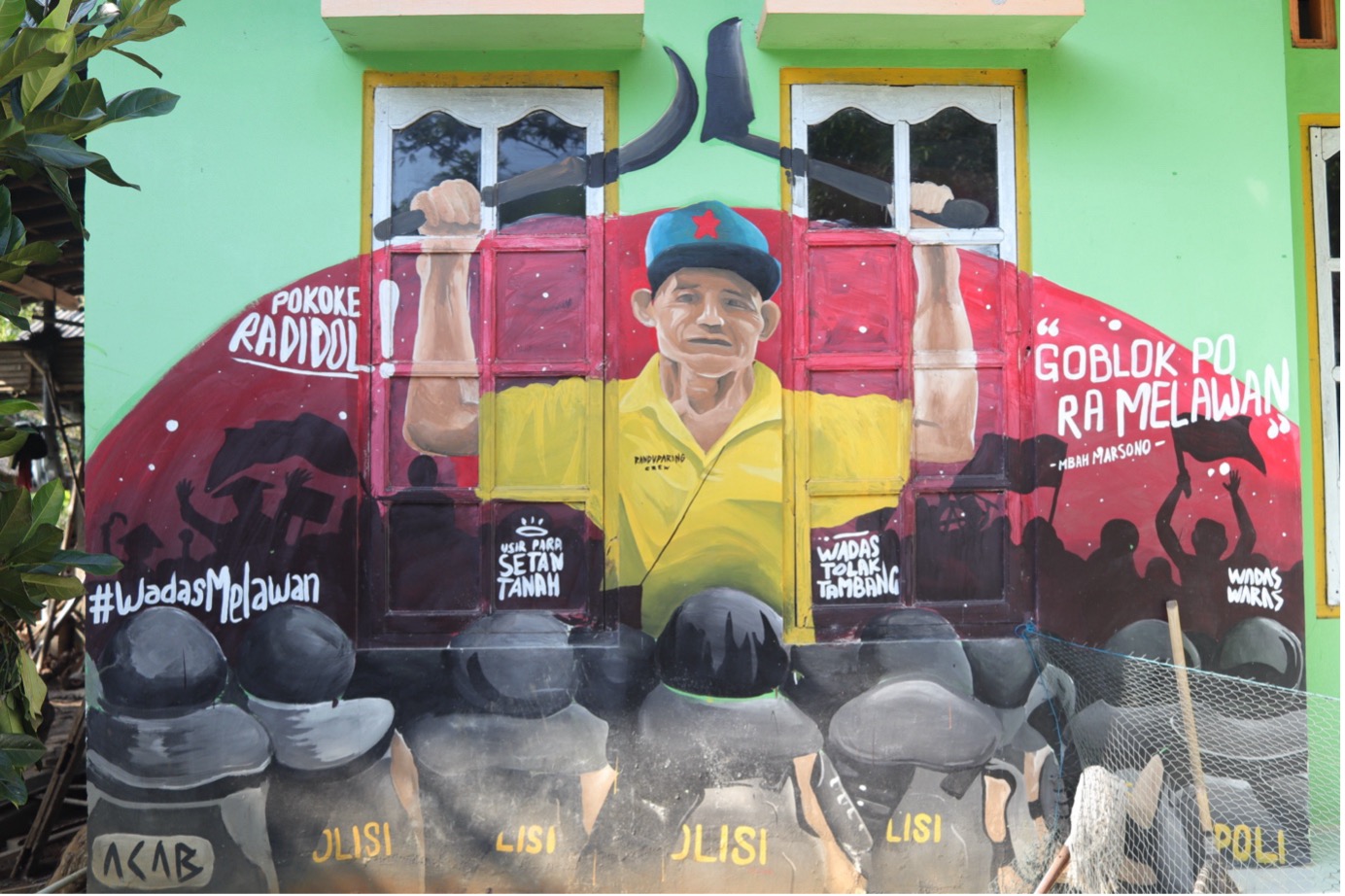
On 22 September 2026, the Indonesian parliament struck the gavel to enact the Law on Agrarian Reform (UU Reforma Agraria), marking an important milestone in Indonesia’s long struggle for agrarian justice. The new statutory framework includes several important and strategic provisions that expand the legal architecture of agrarian rights. These provisions guarantee the fulfilment, restoration, and recognition of people’s rights to land and agrarian resources, and establish mechanisms for resolving agrarian conflicts, restoring land rights, redistributing land, and providing de jure legal protection for communities defending their land.
Ratified just two days before National Peasants Day, the law appeared to offer a significant promise to farmers, Indigenous groups, fishermen, women, labourers, the urban poor, and other marginalised communities long affected by entrenched inequalities in land tenure and agrarian conflict. Yet its enactment also exposes a persistent paradox in Indonesian agrarian politics. The law indicates a potential expansion of agrarian rights at a time when conflicts over plantations, infrastructure, mining, and other development projects continue to reveal how difficult those rights are to exercise in practice. The CSO Konsorsium Pembaruan Agraria (Agrarian Renewal Consortium/KPA) reported that between 2021 and 2025, agrarian conflict cases increased by approximately 33 cases, or 13%, per year.
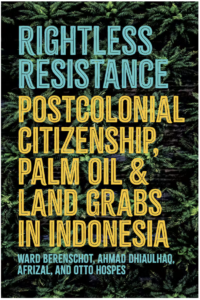 This tension between the formal expansion of rights and their limited practical effectiveness provides a useful entry point into a recently published book, Rightless Resistance: Postcolonial Citizenship, Palm Oil, and Land Grabs in Indonesia, by Ward Berenschot, Ahmad Dhiaulhaq, Afrizal, and Otto Hospes. The book asks why rural communities so often struggle to defend their interests against palm oil-related land grabbing despite mobilising in resistance. Its answer is that many rural Indonesians are not literally without rights, but are effectively “rightless” because legal protections are repeatedly weakened, circumvented, or rendered ineffective.
The central question raised by the book therefore becomes especially timely in light of the new law: what does it mean to expand agrarian rights in a political system where rights have so often failed to constrain more powerful actors? Rightless Resistance meticulously and convincingly shows how rightlessness shapes the forms of resistance available to rural communities, and consequently, their outcomes. But conflicts related to state-sponsored land dispossession, for example in places in Takalar and Wadas that I examine in my own research, also suggest that rightlessness can be reproduced through the process of dispossession itself with active state work, and that its form may vary across different political-economic regimes of land control.
Rightless resistance
At the centre of Rightless Resistance is a deceptively simple question: why do rural communities so often fail to resolve their grievances against palm oil companies despite actively resisting corporate land grabbing? Berenschot, Dhiaulhaq, Afrizal, and Hospes answer this question through the notion of rightlessness. Drawing on political economy and debates over colonial history, capitalism, and postcolonial citizenship, they argue that rural Indonesian confronting land grabbing are not literally without rights. Rather, they are effectively rightless because the legal protections available to them are so weak, difficult to enforce, or systematically undermined that they offer little protection in practice. The authors define rightlessness as “the absence of effective legal protection of one’s interest” (p9), producing what they describe as a “particularly accommodative form of collective action that avoids invoking, and engaging with, legal provisions or rights” (p9). Citizen rights, in other words, may exist formally, but can be rendered ineffective through procedural obstacles and collusive relations between state authorities and corporate actors (p11).
The distinction between formal rights and their practical effectiveness is crucial to the book’s argument. The authors do not portray rightlessness as the straightforward product of a unitary state deliberately stripping citizens of their rights. Instead, it emerges through historically contingent relations among state authorities, corporate managers, politicians, local elites, and other powerful actors whose combined practices weaken the implementation of laws and regulations. Informalised state institutions and crony capitalism are central to this process, as the book argues: bureaucratic decisions are shaped not only by formal rules but also by wealth, political connections, patronage, and collusion (p31). The result is a political environment in which formally recognised rights can coexist with their systematic ineffectiveness.
The authors trace this condition to both colonial legal legacies and contemporary political economy. Weak protections for land rights, legal and regulatory “backdooring”, and collusion between politico-bureaucratic and business actors combine to make corporate actors the principal underminers of rural land rights. These dynamics have deep historical roots. Colonial land law enabled the Dutch to claim extensive authority over land and natural resources, while postcolonial state institutions inherited and reworked these structures of control. Democratisation and decentralisation after the fall of Suharto did not necessarily equalise access to political power. Instead, the authors argue, they strengthened regional political classes and gave economic elites new opportunities to shape political and bureaucratic decisions (pp2-33). Expensive electoral politics further encouraged relations of mutual dependence between politicians and business actors.
Related

“Murni top-down”: a look at Prabowo’s village cooperatives
The unravelling of community-driven development
Such relations matter because they influence how laws governing land and plantations are made and implemented. Well-connected companies can lobby for favourable lower-level regulations, exploit ambiguities between different levels of law, or rely on discretionary enforcement by state authorities. The book describes this as legal and regulatory “backdooring”: a system in which rules remain formally in place while corporate actors find ways to weaken their practical force (pp42-45). These processes are reinforced on the ground through the cooptation of village elites, the circumvention of meaningful consent, close relations with local government officials, and at times, the use of private security personnel, hired thugs, police, or military actors to intimidate or suppress protest.
To support this argument, the authors deliberately move “beyond case studies” by drawing on a systematic qualitative and quantitative comparison of 150 conflicts between rural communities and palm oil companies, supplemented by interviews with community leaders, activists, journalists, government officials, and company representatives. More intensive interviewing was conducted in fourteen selected cases across West Sumatra, Riau, West Kalimantan, and Central Kalimantan. This broad comparative design enables the authors to identify recurring patterns in how grievances emerge, how communities frame their claims, which strategies they adopt, and what kinds of outcomes follow. Palm oil provides a particularly significant arena for this analysis because of the sector’s central role in land use transformations and agrarian conflict in Indonesia.
The second part of the book concerns how rightlessness shapes resistance itself. The authors identify three major sources of grievance: the acquisition of community land without meaningful consent, disputes surrounding profit-sharing arrangements, and alleged breaches of company licences or concession boundaries (Chapter 3). Communities commonly demand the return of land, improved profit-sharing arrangements, or monetary compensation. Yet the book also finds that their collective actions tend to remain relatively peaceful and modest, taking forms such as demonstrations, petitions, road blockades, and hearings with local governments.
For Berenschot and colleagues, the striking feature of these conflicts is not simply that communities resist, but how they formulate their claims. Palm oil conflicts tend to concern the terms on which communities are incorporated into the palm oil economy rather than a wholesale rejection of capitalist expansion. Faced with an unfavourable legal and political environment, communities often make relatively modest demands and frame grievances through customary claims, social obligations, and moral expectations rather than through explicit reference to statutes, regulations, or abstract principles of justice (Chapter 4). Their resistance is therefore “rightless” not because they lack grievance or political agency, but because rights-based discourses and legal claims rarely provide an effective foundation for collective action. Instead, communities seek to strengthen their bargaining position through informal connections, political brokerage, and ad hoc negotiation with powerholders.
This point is one of the book’s more provocative claims. Communities frequently appeal to local government officials to investigate their grievances or pressure companies on their behalf, even while avoiding explicit legalistic or rights-based claims. The authors interpret this apparent contradiction pragmatically: communities recognise that formal law offers limited leverage and therefore pursue strategies more likely to yield at least partial concessions. Their modest claims are thus not evidence of passivity, but adaptations to a context in which more ambitious legal demands are unlikely to succeed. Even NGO support—in the form of community organising, legal assistance, advocacy, or political brokerage—rarely transforms the structural imbalance confronting communities (Chapter 5).
The same condition of rightlessness is reproduced through the institutions meant to resolve agrarian conflicts. Communities rely heavily on informal third-party mediation, often involving government officials, yet these processes are frequently compromised by the same informal relations between authorities and companies that helped generate the conflicts in the first place (Chapter 6). Distrust of government impartiality is therefore widespread. Formal litigation efforts offer little more certainty. Based on their examination of eighteen court documents, the authors argue that Indonesian courts are generally ineffective at resolving palm oil conflicts and tend to privilege procedural correctness over substantive justice (Chapter 7).
Nor do alternative non-judicial mechanisms necessarily overcome these limitations. The authors cite the Roundtable on Sustainable Palm Oil (RSPO) as an example of a supposedly independent grievance mechanism (Chapter 8). Communities, however, face substantial administrative barriers when attempting to use it. Complaints may be dismissed because required documents are incomplete or appeals are not lodged within stipulated deadlines. Even where the RSPO reaches decisions favourable to communities, weak monitoring can allow companies to delay or avoid implementation. In some instances, cases are formally closed before promised remedies have actually been delivered.
The cumulative effect is bleak. Most of the conflicts examined in the book remain unsolved for long periods, with communities eventually abandoning their struggles or accepting outcomes that fall well short of their original grievances (Chapter 9). The authors’ quantitative analysis finds no statistically significant relationship between favourable outcomes and factors such as NGO involvement, conflict resolution mechanisms, or adat status. Their qualitative analysis instead points repeatedly to four interconnected obstacles: the weakness of Indonesia’s land tenure framework, inadequate mechanisms for resolving palm oil conflicts, collusion between companies and political powerholders, and communities’ limited organisational and legal capacities.
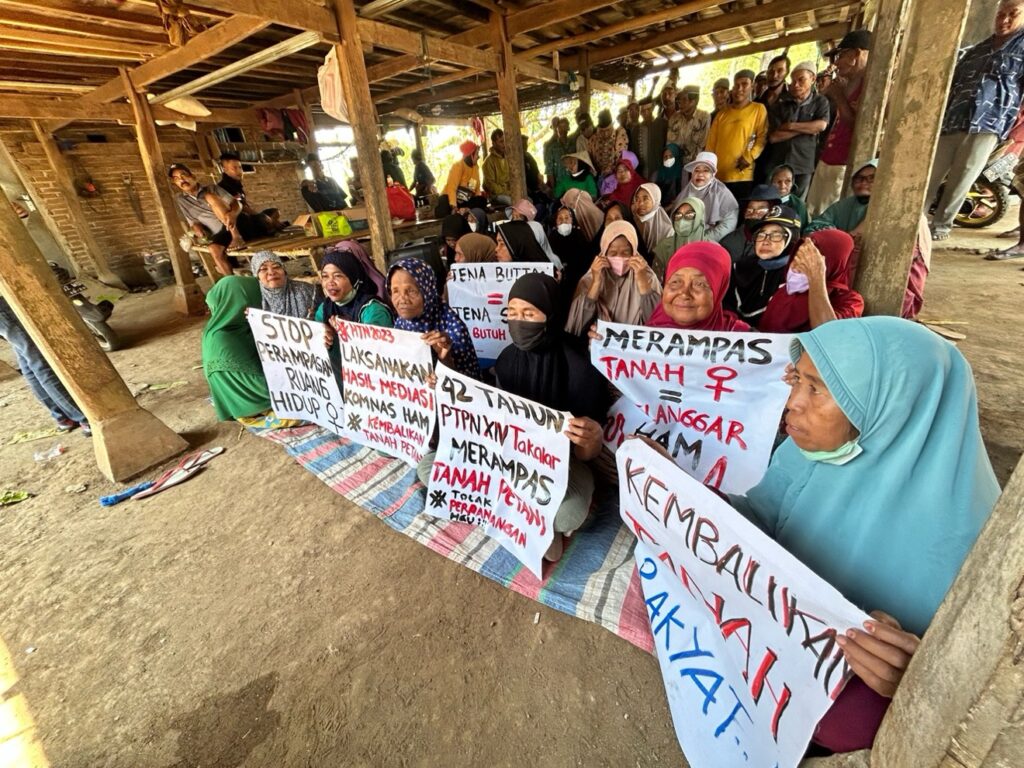
Women farmers and activists used both rights-based and non-rights-based language to resist a state-sponsored land grab in South Sulawesi, September 2023 (Photo: author)
The reproduction of rightlessness
Rightless Resistance’s most compelling insight is that weakly enforceable rights shape the forms of resistance adopted by communities facing agrarian conflicts. Because formal law provides an unreliable basis for defending land, rural Indonesians are rendered effectively rightless and tend to rely on customary norms, informal negotiation, and political brokerage. They moderate their demands and struggle to challenge the underlying distribution of power. In this account, rightlessness helps enable dispossession: corporate actors, working through collusive relationships with political and bureaucratic authorities, weaken the laws and regulations intended to protect rural communities. But might the relationship also run in the opposite direction? That is, can processes of dispossession themselves reproduce rightlessness?
Agrarian conflicts beyond the palm oil sector suggest that they can. In my own research on state-backed land dispossession in Wadas (Central Java) and Takalar (South Sulawesi), regulatory, institutional, discursive, and coercive mechanisms deployed to facilitate development projects have further diminished communities’ capacity to make their existing rights effective. In both cases, communities nevertheless pursued legal avenues and articulated rights-based claims, though with little to no success. In Takalar, for instance, affected communities pressed the government to establish an Agrarian Reform Task Force to address a long-running land conflict vis-à-vis a state-owned sugar plantation. In Wadas, villagers pursued legal challenges while recognising from the outset that litigation was unlikely to stop the infrastructure project. Legal action, however, remained valuable as a means of asserting their rights and making their grievances publicly visible.
These cases complicate the relationship Rightless Resistance draws between effective rightlessness and “rightless” forms of claim-making, particularly because of the authors’ narrow conception of citizenship. Communities can recognise the weakness of legal institutions while continuing to invoke rights and to use those institutions strategically. Rightlessness, in other words, need not imply an absence of rights-consciousness or rights-based discourse. People may invoke rights precisely while experiencing how difficult it is to make those rights consequential.
The comparison also raises a broader question about the scope of the book’s argument. Does rightlessness operate in the same way across different political-economic regimes of land control? The palm oil conflicts examined by Berenschot and colleagues largely pit rural communities against corporations that cultivate informal relationships with bureaucrats, politicians, local elites, and security actors. In conflicts involving state-backed infrastructure or agribusiness, by contrast, state institutions may be more directly involved in producing and legitimising the project around which dispossession occurs.
This does not necessarily undermine the authors’ argument that rightlessness is rooted in postcolonial citizenship. It suggests, however, that the mechanisms through which rightlessness is produced and experienced may vary according to the configuration of state and corporate power involved. Seen this way, rightlessness is not only a condition that precedes agrarian resistance. It can also be reproduced through the conflicts, institutions, and development processes through which communities attempt to make their rights effective.
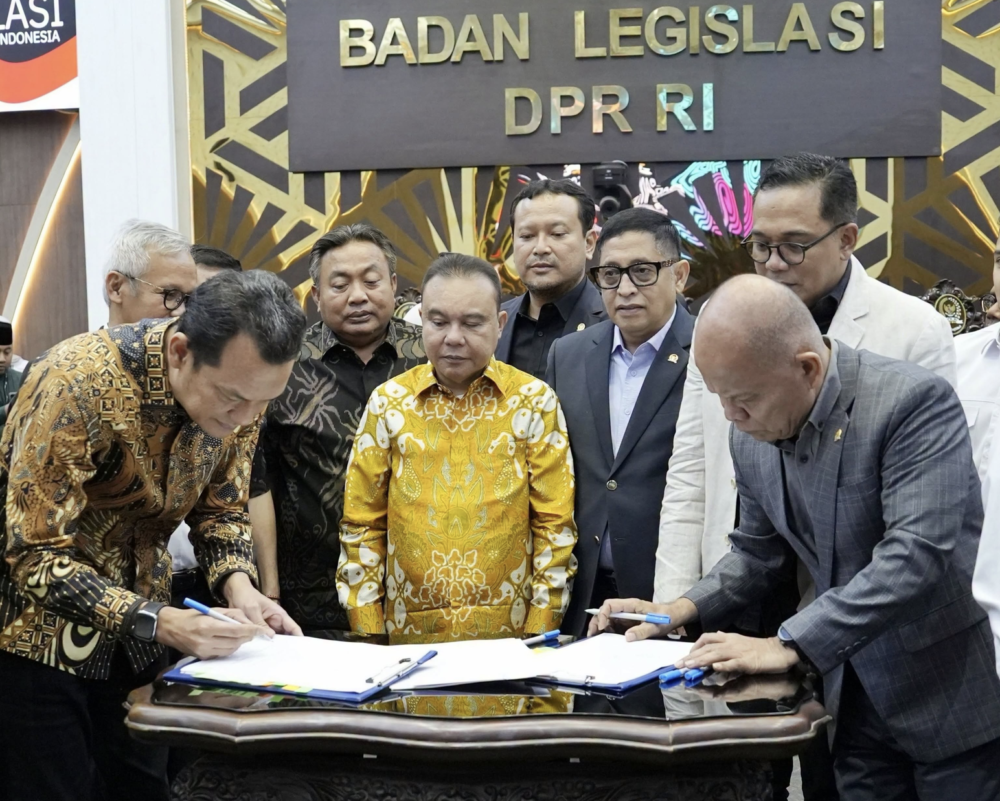
Deputy Speaker of the DPR, Sufmi Dasco Ahmad, oversees the agreement on the final version of the RUU Reforma Agraria, September 2026 (Photo: Prof Dr Ir Sufmi Dasco Ahmad SH, MH on Facebook)
Agrarian reform and the new face of oligarchy
Let us return to the newly ratified Law on Agrarian Reform Regulations, which gives Rightless Resistance an unexpectedly timely relevance. Intended to advance the mandate of the 1960 Basic Agrarian Law, the new framework seeks to address structural agrarian conflicts, restore land rights, reduce inequalities in land tenure, and strengthen mechanisms for resolving disputes. In this sense, it speaks directly to many of the institutional weaknesses identified by Berenschot and colleagues: overlapping authority, inadequate conflict-resolution mechanisms, weak protection of land rights, and unequal power relations surrounding concessions and land acquisition.
Yet the book also gives reasons to be cautious about treating new formal protections as sufficient in themselves. If rightlessness is produced not simply by the absence of law, but by the ways in which laws are weakened, circumvented, or rendered ineffective through political and economic relations, then we must ask whether the new legislation can make agrarian rights consequential in practice.
Related
“Murni top-down”: a look at Prabowo’s village cooperatives
The unravelling of community-driven development
This is particularly important because the law will be implemented within a political economy in which the boundaries between business power and political authority remain deeply blurred. Haji Isam, whose expanding business empire and political connections have made him a prominent symbol of contemporary Indonesian oligarchic capitalism, illustrate precisely the kind of relationship that Rightless Resistance places at the centre of its analysis. His prominence across both the Jokowi and Prabowo eras points to the persistence—and adaptation—of elite networks that connect capital accumulation to access to state power. The popular expression nyawit—derived from sawit, or palm oil, and increasingly used as a social and political critique of seizing opportunities for personal gain—captures, in vernacular form, the opportunistic accumulation that such networks have come to symbolise.
The challenge posed by the new law, then, is not just whether it expands the formal architecture of agrarian rights, but whether those rights can actually constrain the political and economic relations that have historically rendered them ineffective. The law might create new institutions and legal protections without necessarily transforming the social relations through which those protections are implemented. The coming years will show whether Indonesia’s new agrarian reform framework can transform the conditions Berenschot and his colleagues describe in their book—or whether rightlessness adapts alongside the institutions designed to overcome it.













Leave a comment