


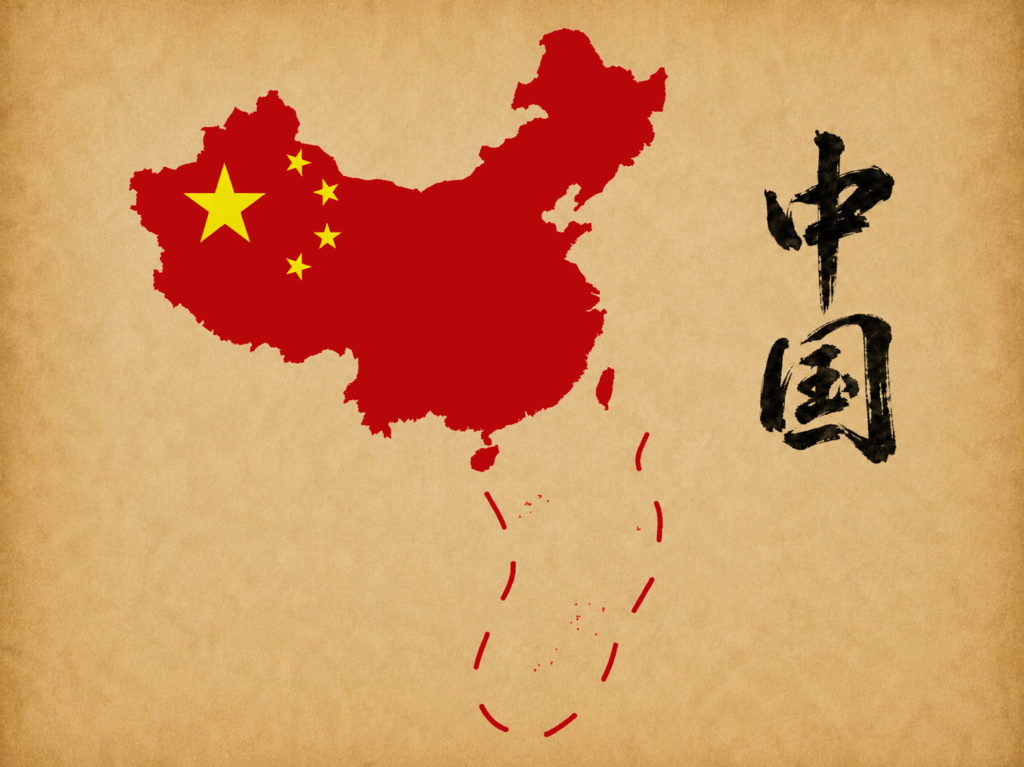

No one should expect diplomatic pressure alone to make Beijing abandon a sovereignty claim.
Ten years ago this month, a tribunal constituted under the UN Convention on the Law of the Sea handed China one of its most significant legal defeats in a generation. It rejected the legal basis for China’s claim to historic rights within the nine-dash line and upheld most of the Philippines’ submissions. Beijing’s response has never changed: the award is ‘null and void’, and a decade of legal criticism and diplomatic pressure has not budged it.
This is usually treated as China’s refusal to accept an unfavourable ruling. But 10 years of persistence points to a broader strategic logic. Beijing does not necessarily maintain sovereignty claims because it expects others to recognise them today. It maintains them because abandoning them would close options that may become valuable tomorrow.
A sovereignty claim is therefore more than a legal position awaiting settlement. It is a strategic asset. Its value lies in preserving legal, diplomatic, political and military options for whenever the regional balance changes.
A claim can lose legal credibility without losing political utility. By repeatedly asserting it through official statements, maps, domestic legislation, diplomatic notes, administrative practice and operations at sea, Beijing prevents the dispute from reaching strategic closure. The claim remains available as a bargaining position, a justification for future action and a narrative that later Chinese leaders can revive when circumstances become more favourable.
China’s official maps and Coast Guard Law illustrate this approach. They reinforce sovereignty claims through legal, administrative and political instruments, regardless of whether they alter other states’ formal positions. The immediate purpose is not necessarily to persuade. It is to preserve the claim, normalise its repetition and ensure that it does not disappear through neglect.
Stop asserting a claim long enough and the political narrative behind it may weaken. Other governments and institutions may begin treating the matter as settled. Keep asserting it, however, and the dispute remains open. Even without recognition, the record of continuous assertion can later be invoked as evidence that China never accepted the opposing position.
The strategy depends on patience. Beijing does not need to know exactly how the regional picture will change. It needs only to ensure that its claims remain intact if it does.
One possibility is a further shift in the economic and military balance. If China’s relative power continues to grow, resisting its claims may become more costly for neighbouring states. Governments that reject Beijing’s legal position today may be less willing or able to challenge Chinese actions tomorrow.
Another is political or diplomatic change. Governments change, alliances weaken and national priorities shift. A claimant state facing economic pressure or domestic instability may decide that continued resistance is no longer worth the cost. A future reduction in US regional engagement could similarly alter the calculations of states that now rely on its support.
A major crisis or conflict could create a third opening. Strategic disorder can rapidly change facts on the ground, patterns of control and the diplomatic language governments are prepared to accept. Beijing does not need to predict which disruption will occur. It needs only to avoid surrendering the legal and political arguments it might use if one does.
This pattern extends beyond the South China Sea. In the East China Sea, Beijing continues to assert its position despite there being little prospect of near-term agreement with Japan. Chinese research institutes and state-linked commentary have also begun testing historical arguments relating to the Batanes Islands in the northern Philippines. These cases have different legal histories, but the method is recognisable: maintain the argument, repeat it consistently and prevent alternative positions from becoming uncontested.
Taiwan is the most consequential example. Beijing’s one-China principle asserts that Taiwan is part of China and that the government of the People’s Republic of China is the sole legal one representing China. Many governments maintain different one-China policies that do not endorse Beijing’s sovereignty claim over Taiwan.
Beijing’s long-term effort is therefore not limited to seeking formal recognition of its position. It also seeks to narrow the practical space between its principle and other governments’ policies. Diplomatic statements, international organisations, corporate language and military activity all provide opportunities to place Beijing’s preferred account into wider circulation.
Repetition has another value even when it fails to produce immediate agreement. Governments and institutions may begin avoiding language or engagement that Beijing opposes, not because they have formally accepted its position, but because they wish to reduce friction. That gradual adjustment can change the practical environment without any formal policy decision being announced.
None of this means that international law, diplomatic pressure or reputational cost are pointless. The 2016 ruling clarified maritime entitlements, strengthened the Philippines’ legal position and denied legitimacy to expansive claims based on historic rights. Continued diplomatic support also makes it harder for Beijing’s position to become accepted simply through repetition.
But these efforts should not be judged by whether Beijing eventually concedes. Australian statements reaffirming the award do not necessarily prove that Canberra expects China to change its formal position. Their more realistic value lies in maintaining legal clarity, supporting affected states and preventing Beijing’s interpretation from becoming the regional default through fatigue or silence.
For Australia and other supporters of the rules-based order, the task is not to discover the combination of pressure that will finally make Beijing abandon its claims. It is to recognise that Beijing may have no intention of doing so and to prepare for a competition with no natural endpoint.
That requires sustained legal, diplomatic and strategic investment. Freedom-of-navigation activity, support for the Philippines and other affected states, and resistance to attempts to collapse the distinction between Beijing’s one-China principle and other governments’ policies all remain necessary. But they should be treated as long-term commitments, not as stages in a campaign expected to produce an eventual Chinese concession.
China is not simply refusing to admit that it lost an argument. It is ensuring that the argument never closes.
For Beijing, keeping a sovereignty dispute alive is not a failure to resolve it. It is the strategy.














Leave a comment