



Japan is seeing the same bill through critical minerals. Since Beijing tightened rare earth export controls on Japan in January, mentions of rare-earth risk in Tokyo Stock Exchange filings have doubled (Opens in new window) – and two-thirds of some 200 recent filings said the curbs are already hurting business or pose a credible risk. Few report a major earnings hit yet. But the risk has entered financial language: production could be affected, alternative sourcing may be needed, inventories must be managed more carefully. This is not the cost of war but rather the cost of operating under persistent coercive risk.
The market signal is therefore mixed, not absent. Taiwan’s equity market rose more than 60% in the first half of this year on demand for artificial intelligence – even as foreign investors pulled a record US$137 billion (Opens in new window) from emerging Asian equities, with Taiwan and South Korea bearing the brunt as investors trimmed crowded chip positions. Markets are good at pricing visible earnings and liquidity flows. They are less good at pricing the slow accumulation of redundancy costs.
Shipping and insurance make the problem concrete. Some US$2.4 trillion in goods (Opens in new window) – more than a fifth of global maritime trade – moved through the Taiwan Strait in 2024. As long as the route stays open, that figure looks like proof of efficiency. If grey-zone pressure begins to affect shipping expectations, it becomes an exposure. The Red Sea offered a preview: war-risk premiums ran at a nominal 0.05% of hull value (Opens in new window) before the Houthi attacks; by early 2024, underwriters were quoting as much as 1% for a single seven-day passage – a twentyfold jump in months.
No insurer reprices the Taiwan Strait after every standoff. But none can leave the scenario out of its stress tests – and the Red Sea showed that once underwriting conditions trip, adjustment takes weeks, not decades.
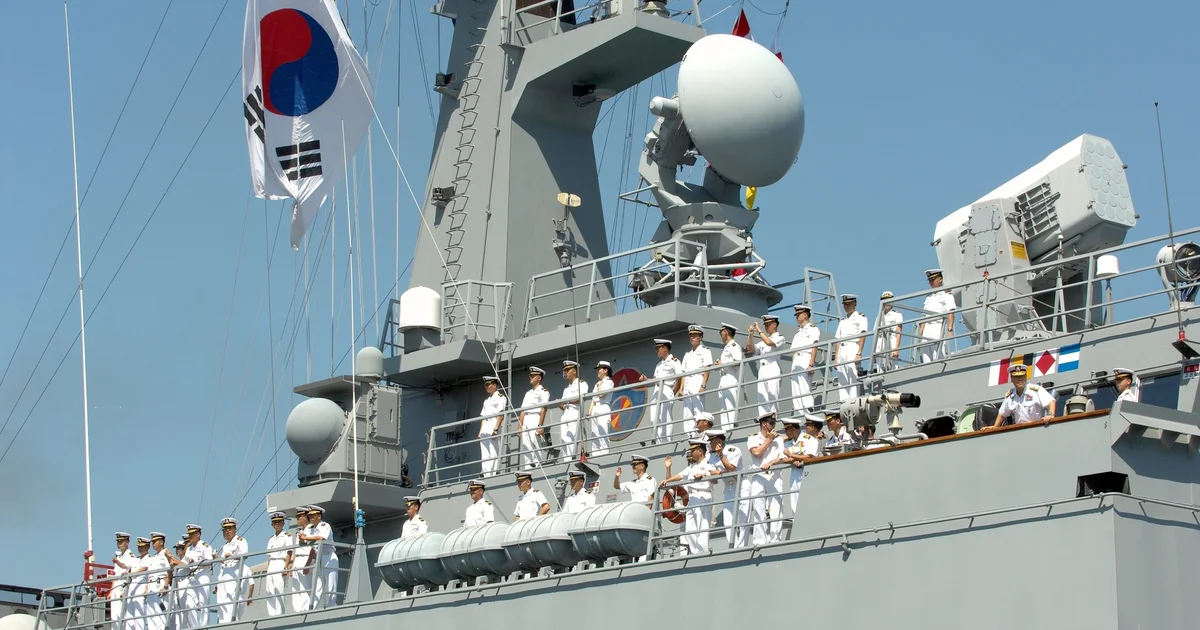
Governments are paying too. Global military spending reached US$2.887 trillion in 2025 (Opens in new window), with Asia and Oceania recording the fastest annual rise since 2009. Japan has pledged to hit its defence target of 2% of GDP two years early (Opens in new window); Taiwan’s defence budget grew 14% last year. Policymakers no longer treat interdependence as a sufficient substitute for security.
Trade still constrains conflict, but it does not automatically provide safety. Governments are buying back security through defence budgets, subsidies, and stockpiles; companies through redundant production, backup suppliers, and less-efficient logistics. The old bargain was simple: efficiency brought stability. The new bargain is harsher: efficiency still brings profits, but security must be paid for separately.
None of this means capital is leaving East Asia. The engineers, supplier networks, and end markets are still there and irreplaceable – which is exactly why companies are staying and paying more. The choice was never efficiency or security. Firms now fund both at once.











Leave a comment