


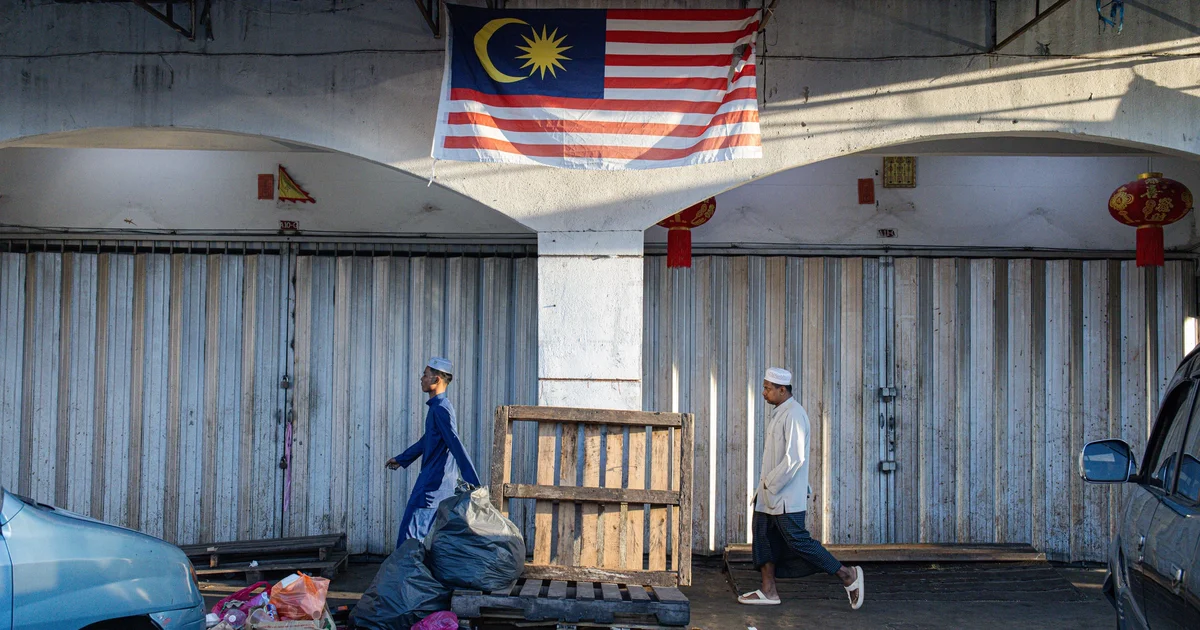
There are 215,600 refugees and asylum-seekers registered with the UN High Commissioner for Refugees (UNHCR) in Malaysia as of the end of February 2026 (Opens in new window). Of this figure, 193,824 are from Myanmar, with Rohingyas accounting for two-thirds to number 126,144.
Last week, 166 civil society organisations and more than 140 individuals from Malaysia and beyond, called (Opens in new window) for the “immediate halt to the planned deportations of Rohingya, and other people of Myanmar fleeing violence”, declaring that “cozying up to genocidaires while criminalizing their survivors is not only illogical but also immoral.
Reports this week suggest that nearly 1,500 Myanmar migrants are about to be sent home (Opens in new window) from Malaysia, the first of 5,000 that Kuala Lumpur says agreed to “voluntary” repatriation from detention centres. Media reports show buses arriving (Opens in new window) at the Lumut naval base in Perak.
Malaysia’s foreign and home ministries have not responded to a query on what proportion will be Rohingya. But Myanmar communities in Kuala Lumpur and Malaysian government-linked sources told me no Rohingyas are on the list of deportees “as far as they know.”
Refugees repatriated to Myanmar face possible forced conscription to fight in the ongoing civil war. Male Myanmar refugees recount how they are viewed with suspicion upon returning and could be accused of supporting opposition groups fighting the military junta. Such accusations could lead to torture and imprisonment.
In 2023, Anwar stood before the UN General Assembly and said (Opens in new window): “We are deeply horrified by the continued post-coup violence and instability in Myanmar. The barbarism and depravity inflicted upon the people of Myanmar is indefensible.”
Back then, Anwar called for the support of the international community to maintain “the necessary pressure on the military authorities to reverse their course.”
Today, the international community must ask the same of Anwar.










Leave a comment