


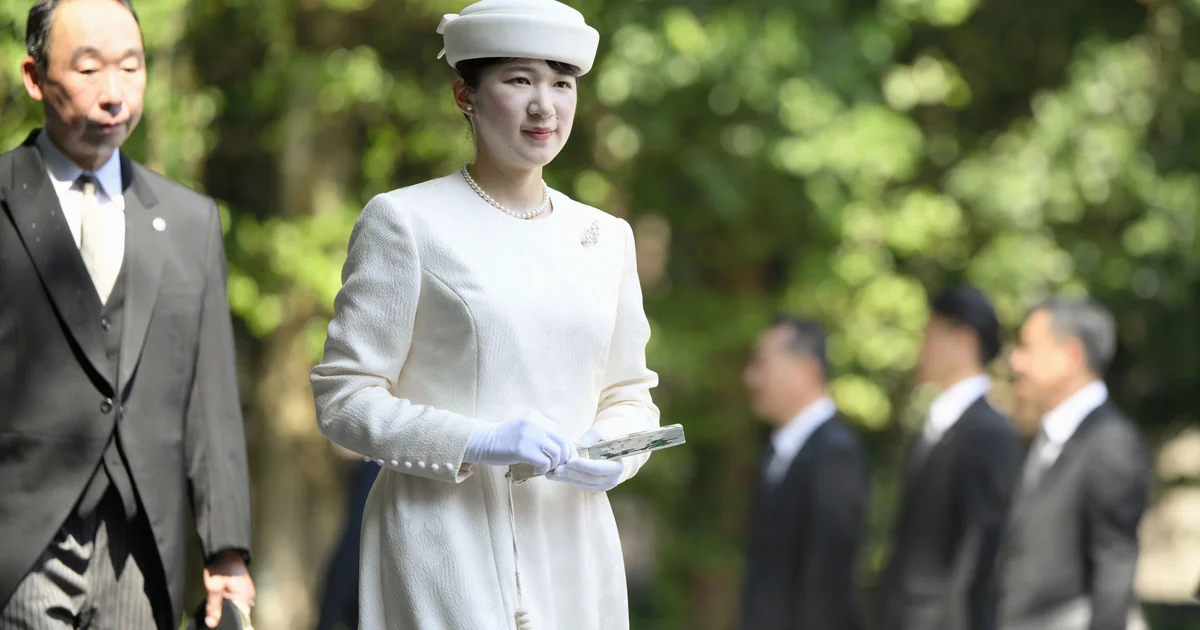
Public opinion points in a different direction. A Mainichi Shimbun survey (Opens in new window) conducted in March found that 61% supported allowing a female emperor. More broadly, opinion polls over the past two decades have generally placed support between 60% and 90%. Public support for a female emperor is therefore clearly higher than support among political leaders, even if this does not imply similar support for full female-line succession.
The age pattern in the opinion polls is noteworthy. Older respondents were more supportive than younger ones, reversing the usual generational divide on support for separate surnames and same-sex marriage. Older Japanese may not interpret imperial succession primarily as a gender-equality issue. Being more attached to the institution itself, they may accept a female emperor pragmatically if the shortage of male heirs threatens its survival.
The issue has also drawn international attention. In October 2024, the UN Committee on the Elimination of Discrimination against Women called on (Opens in new window) Japan to amend the Imperial House Law. Tokyo rejected the recommendation. The government argued that imperial succession concerned the foundations of the Japanese state and that limiting eligibility to male-line men did not constitute discrimination against women under the convention. In January 2025, Japan directed that its voluntary contributions to the UN human rights office not be used (Opens in new window) for activities related to the committee and cancelled (Opens in new window) a planned visit to Japan by committee members.
International attention returned after the latest reforms. Following the law’s passage in July 2026, the United Nations reiterated its support for more inclusive policies advancing women’s rights. A spokesperson for Secretary-General António Guterres said (Opens in new window) he encouraged countries to adopt policies that empower women across all areas of life.
The episode reflects a broader pattern in Japan’s gender politics, where public support for reform often runs ahead of political action. Similar gaps can be seen on two other major issues: allowing married couples to use separate surnames and legalising same-sex marriage. Japan’s wider difficulties with gender equality are also reflected in its ranking (Opens in new window) of 118th out of 148 economies in the World Economic Forum’s 2025 Global Gender Gap Report.
Imperial succession gives this domestic pattern an international dimension. As one of Japan’s most visible national institutions, the imperial family helps shape how the country is perceived abroad. Other constitutional monarchies have shown that succession rules can be adapted while preserving the institution itself. By retaining male-only succession, Japan therefore risks reinforcing perceptions that it continues to lag behind comparable democracies on gender equality.
Taken together, the recent reforms may buy the imperial family time. But they leave Japan with an important contradiction: political leaders remain reluctant to alter male-line succession even as much of the Japanese public is willing to contemplate a female emperor, and many other monarchies have abandoned gender-based preferences in succession.













Leave a comment