


For decades, northern Australia has been discussed as a frontier for economic development. More recently, it has become central to Australia’s defence strategy. Yet we continue to approach the region much as we always have: jurisdiction by jurisdiction, sector by sector and project by project.
That approach no longer matches the strategic environment.
The world has entered a period of greater strategic competition, economic fragmentation and climate disruption. Supply chains have become strategic assets. Critical infrastructure is increasingly contested. Energy security, digital infrastructure and industrial capability are now matters of national security as much as economic policy.
Against this backdrop, northern Australia has become one of Australia’s most important strategic platforms.
That was a recurring theme in the 2026 Developing Northern Australia Conference in Alice Springs last week. While discussions ranged across mining, agriculture, defence, infrastructure, Indigenous partnerships and workforce development, a common thread emerged: the future of the north will depend less on individual projects than on the connections between them.
This was reinforced during the ministerial panel, where discussion repeatedly returned to the need to think beyond jurisdictional boundaries. Northern Territory Treasurer Bill Yan emphasised the inseparability of energy security and national security. He described the current investment opportunity as a once-in-a-generation chance to build the foundations for economic growth, industrial capability and defence resilience.
Western Australian Minister for Regional Development Stephen Dawson similarly argued that northern Australia should be viewed as a national asset rather than a collection of state and territory interests. He pointed to the sealing of the Outback Way as an example of infrastructure that required national thinking. Stretching 2,800 km across Western Australia, the Northern Territory and Queensland, this is more than a transport project. It is strategic infrastructure that can strengthen freight resilience, disaster response, biosecurity, supply chains and national mobility.
The broader lesson is that challenges such as energy security, housing, workforce development, transport and critical infrastructure cannot be solved through isolated policies or administrative boundaries. They require coordinated investment that treats northern Australia as an interconnected strategic system.
Northern Australia has many of the ingredients required to strengthen Australia’s resilience: globally significant critical minerals, extraordinary energy potential, strategically important defence infrastructure, expanding agricultural capability and growing digital connectivity.
The challenge is ensuring these opportunities reinforce one another rather than develop in isolation.
Capability is not created by building one processing plant, one energy project or one data centre. It emerges when infrastructure, industry, technology and people are connected through reliable energy, transport networks, digital systems, skilled workforces and resilient supply chains.
AI provides one example. Its success depends on strategically located data centres, abundant, reliable and affordable energy, secure digital infrastructure, skilled workforce and policy settings that bring those elements together.
Critical minerals provide another example. Strategic advantage increasingly lies not in extraction alone but in processing, advanced manufacturing and intellectual property. That requires industrial ecosystems rather than isolated mining operations.
Energy security provides another example. It is no longer simply an economic sector. Reliable, affordable and diverse energy is an enabler on which defence, manufacturing, mining, digital infrastructure and communities all depend.
Food security demonstrates the same principle. Producing more food is only one part of national resilience. It also depends on fuel, water, transport, logistics, storage, workforce and supply chains that can withstand disruption.
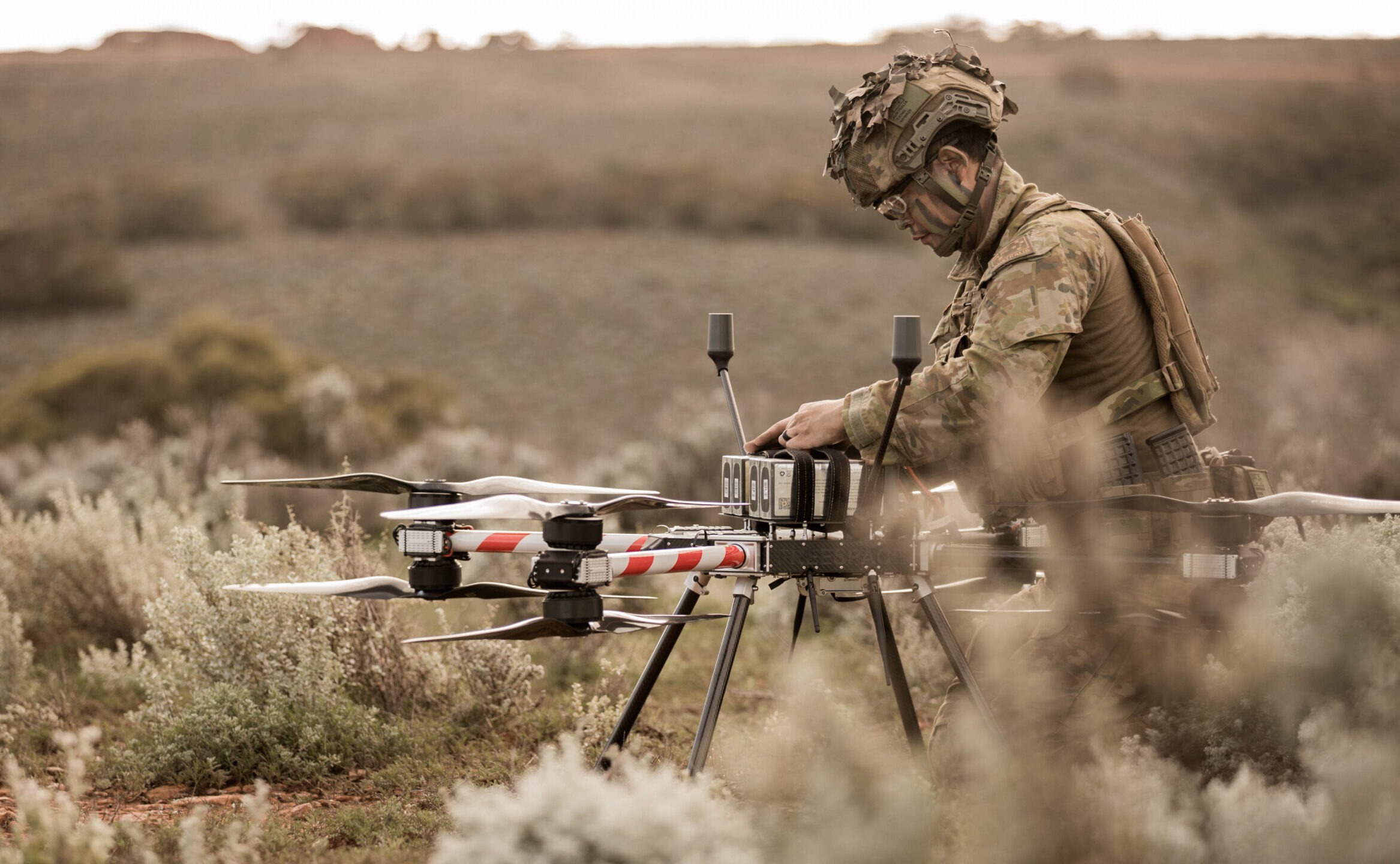
Defence capability reinforces the same lesson. Modern military capability increasingly relies on civilian systems: commercial ports, transport networks, communications, energy infrastructure and skilled workforces. Civilian resilience and defence resilience are becoming increasingly inseparable.
Across all these sectors, capability ultimately depends on people, and Indigenous partnerships are central to this future.
The future workforce, infrastructure and industries of northern Australia will be stronger when Indigenous partnerships are embedded from the beginning of projects. Our First Nations people were the first mappers, miners and engineers of this continent. As custodians of Country, their connection to Country, expertise in land and environmental management, and growing economic participation are critical to building resilient communities and sustainable capability across northern Australia.
This has important implications for how Australia approaches northern development.
First, governments need to move beyond traditional portfolio boundaries. National resilience does not sit neatly within defence, infrastructure, agriculture or energy portfolios. It depends on how those systems interact.
Second, resilience must become a design principle rather than an afterthought. For decades, many systems have been optimised for efficiency. But the lowest-cost supply chain is not always the one that performs best when disrupted.
Third, governments need to create the conditions for collaboration and long-term investment. Markets remain essential, but they cannot independently coordinate the infrastructure, workforce, regulation and strategic planning required to build nationally significant capability.
Finally, success should be measured not only by the projects delivered but by the capability ecosystems those projects create.
One of the strongest impressions from the conference was that many organisations are already moving in this direction. Across government, industry, Indigenous organisations and research institutions, there is growing recognition that no single sector can deliver northern Australia’s future alone.
The challenge now is embedding this thinking into policy, planning and investment.
Northern Australia should no longer be viewed simply as a destination for projects. It should be understood as an interconnected strategic system where defence, energy, infrastructure, resources, digital capability, agriculture and communities reinforce one another.










Leave a comment