


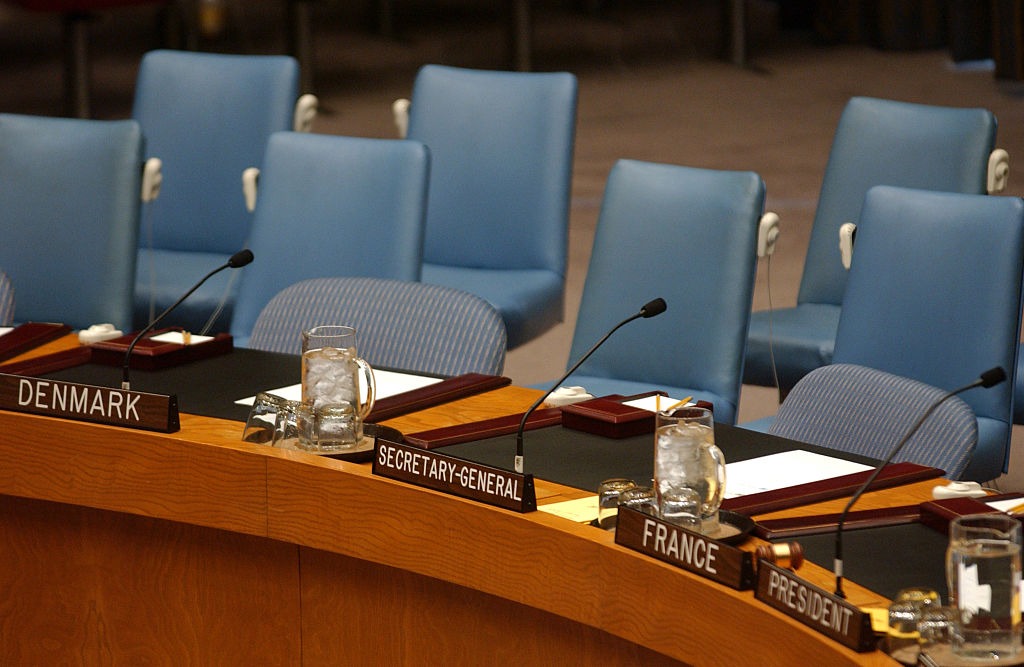
For 80 years, there was an expectation that when international crises threatened to spiral into war, the United Nations would be at the centre of efforts to prevent it.
Yet during the recent Middle East crisis, as regional powers mobilised to prevent a wider conflict, one actor was conspicuously absent from the diplomatic front line: the United Nations itself.
Over the past decade, a quiet but significant shift has taken place in international diplomacy. Countries once considered peripheral to global crisis management have become indispensable intermediaries. These countries have developed reputations for convening adversaries, maintained channels of communication that others cannot and facilitated negotiations in conflicts far beyond their own borders.
Oman has become the trusted back channel between the United States and Iran, repeatedly hosting sensitive talks that few others could convene. Qatar, too, has established itself as perhaps the world’s most active mediator. It has brokered negotiations between the United States and the Taliban, facilitated hostage and ceasefire talks involving Hamas, supported dialogue in Sudan and Chad and acted as an intermediary in disputes stretching from the Horn of Africa to Latin America. Turkey has positioned itself as a bridge between East and West, hosting negotiations between Russia and Ukraine, brokering the Black Sea Grain Initiative and maintaining dialogue with actors that increasingly refuse to engage directly with one another.
Perhaps the most striking example is Pakistan. Few countries would appear less likely to emerge as an international peacemaker. It is simultaneously managing persistent insurgencies, political instability and economic pressures at home while navigating volatile relationships and unresolved border disputes with both Afghanistan and India. The Line of Control in Kashmir remains monitored by one of the United Nations’ oldest observer missions – a reminder of the organisation’s long-standing role in Pakistan’s own security landscape.
Yet during the ongoing Iran crisis, Islamabad emerged as an important diplomatic intermediary, hosting the first direct, high-level negotiations between Washington and Tehran in decades and helping create space for de-escalation. The peace effort ultimately did not endure. But the symbolism was unmistakable: a country struggling to contain conflict within and along its own borders had become a more visible diplomatic intermediary than the organisation created to maintain international peace and security.
These countries are not impartial arbiters. They mediate where they have influence, relationships or strategic interests. Their diplomacy can be highly effective, but it is necessarily selective. That is precisely why this trend matters. The United Nations was never intended to compete with regional powers; it was created to provide a universal mechanism for maintaining international peace and security.
It was not always this way.
During the Cold War – hardly an era characterised by strategic consensus – UN Secretary-General U Thant demonstrated that the office could exercise meaningful political leadership. His quiet diplomacy during the Cuban Missile Crisis helped create space for de-escalation between Washington and Moscow. And his engagement in the Congo and successive Middle East crises showed that even amid intense superpower rivalry the secretary-general could act as a trusted intermediary when others could not.
The office was understood not simply as an administrator of the international system but as an active diplomatic instrument – expected to convene adversaries, create political space and help prevent regional crises from spiralling into wider conflict.
Preventive diplomacy became one of the United Nations’ greatest advantages. It was relatively inexpensive, politically flexible and, when successful, often invisible. Its success was measured not by the crises it managed, but by the conflicts that never occurred.
The gradual retreat of UN political diplomacy has not been the result of a single decision. It reflects the cumulative effects of geopolitical rivalry, institutional caution and the growing confidence of regional powers to act independently. The result is an international system in which mediation has become fragmented, improvised and increasingly dependent on circumstance rather than institution.
For countries such as Australia, the strength of the international system is not an abstract principle but a strategic necessity. Australia has long relied on a stable, rules-based order because no middle power, however capable, can shape the international environment alone. Effective multilateral institutions provide something regional diplomacy cannot: legitimacy, continuity and a universal framework that extends beyond the interests of individual states.
The world’s peace architecture was never meant to depend on whichever state happened to have the right relationships at the right moment.
The real crisis is not that regional powers have become more active diplomats. It is that the United Nations’ absence from major diplomatic crises has become normal.












Leave a comment